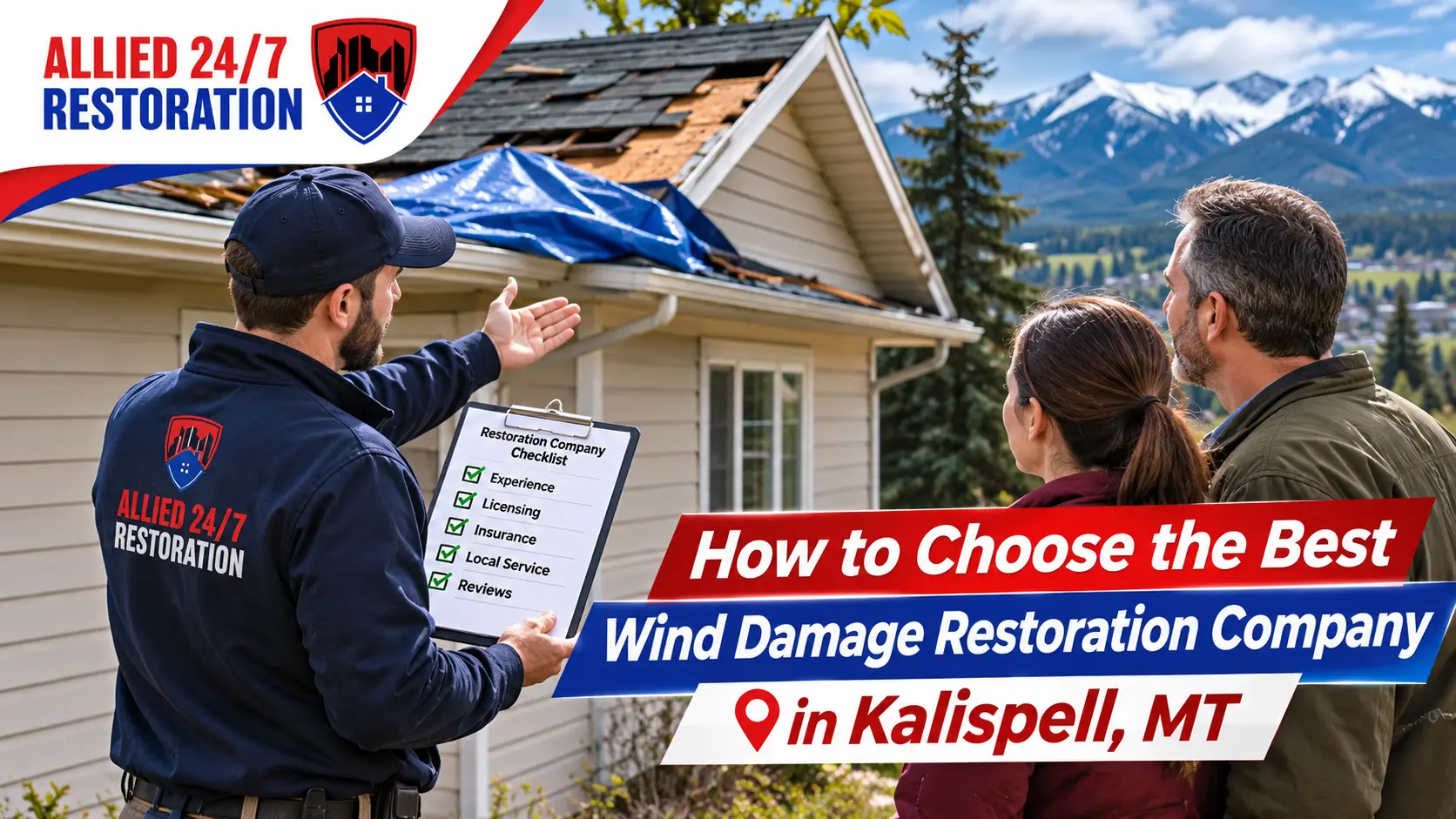
Last night’s windstorm peeled shingles off your roof and cracked a window on the north side of the house. Now you need help fast, but the first company that answers isn’t always the right one. Wind rarely hits just one spot. It can tear up roofing and siding, break windows, and even stress the framing underneath. That’s why picking the right wind damage restoration company around Kalispell matters. Before you sign anything, look hard at their experience and how they inspect. Check their qualifications, their written estimates, and how they communicate.
Why Does Choosing the Right Wind Damage Restoration Company Matter?
The crew you hire sets the course for everything that happens after the storm. A sloppy first look leads to a sloppy repair plan that misses damage you can’t see from the yard. Weeks later, a brown stain shows up on the ceiling. Now you’re paying twice.
Wind Damage May Affect More Than the Visible Exterior
Strong gusts lift shingle edges and pull siding loose. Gutters bend. Window seals can crack with little sign from outside. Each gap lets rain in, and water can sit inside a wall for weeks. Understanding how wind damage can lead to water damage inside your home helps explain why a good inspector checks the obvious hit first and then follows the water.
Poorly Planned Repairs Can Lead to Further Problems
A tarp is not a roof. Temporary protection keeps weather out for now, while permanent repairs fix the real cause. Both are important parts of the wind damage restoration process. If an inspector skips the attic or never checks behind loose siding, that damage stays after the crew leaves. A documented assessment and clear restoration plan help prevent this.
What Experience Should a Wind Damage Restoration Company Have?
Plenty of companies say they do restoration. Fewer have spent real time on windstorm damage in homes like yours. That background shows up in small ways. An experienced crew asks sharper questions on the first visit and catches problems before they turn into costly surprises.
Look for Experience With Similar Wind Damage Projects
Ask what wind jobs they’ve finished lately. A team that has replaced storm-torn roofing and re-hung siding knows where to look. They spot trouble faster. Property type matters too, since older homes behave differently than new builds. Ask for photos of completed projects similar to yours.
Check References and Previous Customer Feedback
Get phone numbers for two or three recent customers and actually call them. Ask if the crew showed up on time and if the work has held up since. Read independent reviews on several sites and look for patterns. One glowing review proves very little.
Can the Company Provide a Thorough Wind Damage Assessment?
Every solid restoration plan starts with a proper look at the property. Rush that step, and the estimate becomes guesswork. Guesswork turns into surprise costs down the road. A careful assessment covers the outside and inside of your home and ends with records you can keep.
Ask What the Storm Damage Inspection Includes
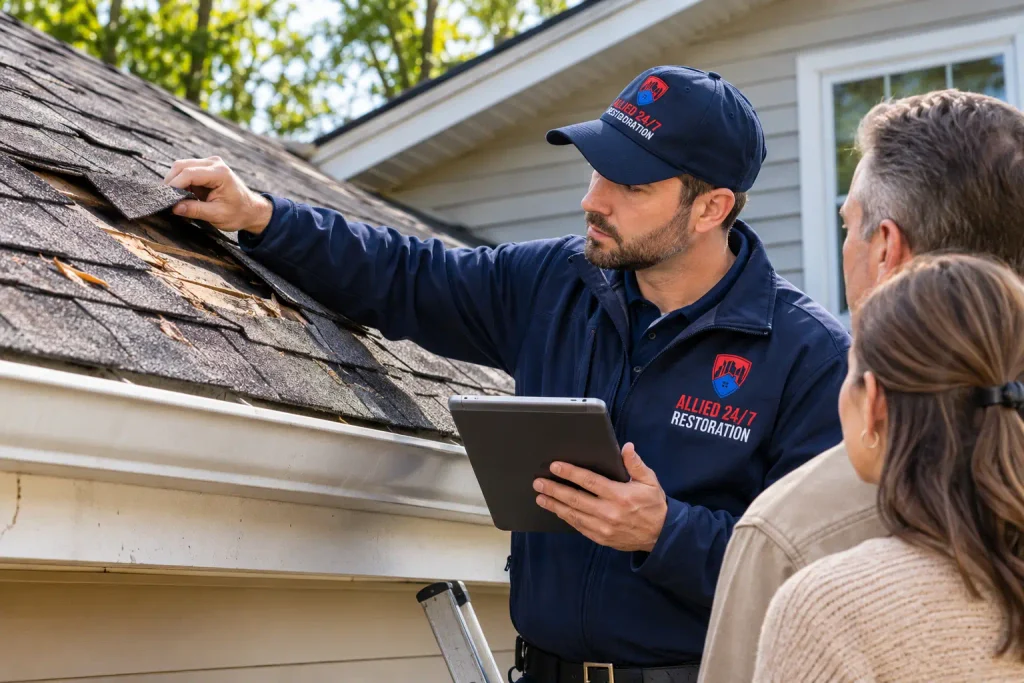
Expect the roof covering and exposed roof components. Siding and gutters belong on the list, along with windows and doors. Inside, they should look for stains or damp spots that signal water intrusion. These visible signs of wind damage can help guide the inspection, although a slick roof may not be safe to walk yet, and no visual check finds every hidden problem.
Expect Clear Documentation of the Findings
Ask for dated photos and written notes on what they found. The report should describe the work they recommend. Ask how they separate storm damage from old wear. Solid records help when you meet your insurance adjuster. The report should also note what wasn’t inspected.
Which Qualifications and Insurance Should Homeowners Verify?
Check the paperwork before anyone climbs a ladder at your house. It takes a few minutes and can save you from a very costly mistake. A real business hands over its license and insurance details without fuss. If they stall, treat that as your answer.
Confirm Registration and Relevant Professional Qualifications
Montana replaced contractor registration with a state construction contractor license in January 2026, run by the Department of Labor and Industry. Ask for the license number and check the department’s online licensee lookup. Ask about training tied to your job too. A license shows the business is on file. It doesn’t prove good workmanship.
Ask for Proof of Insurance and Bonding
Liability insurance covers damage the crew might cause. Workers’ compensation covers their employees if someone gets hurt on site. Montana requires contractors to carry coverage or hold a valid ICEC. The state license doesn’t require a bond, so ask whether they have one. Get certificates and call the insurer to confirm them.
How Important Are Emergency Response and Local Availability?
A hole in the roof doesn’t wait for business hours. Rain can follow the wind that same night and soak insulation and drywall. When your home is open to the weather, response speed matters. So does knowing who will pick up the phone once the job begins.
Ask How Quickly the Company Can Respond
Valley crews book up fast after a big storm, so ask about real availability. Emergency response might mean tarping a roof or boarding up a broken window. These are among the first steps to take after wind damage to prevent further exposure while permanent repairs are arranged. That buys time but isn’t the final fix.
Consider Local Knowledge and Ongoing Communication
A crew that works around Kalispell and Northwest Montana often knows local suppliers and how our weather affects scheduling. Local doesn’t automatically mean better, though. Whether you live in Whitefish, Columbia Falls, or Bigfork, confirm they serve your address. Then ask who your main contact will be.
What Should a Wind Damage Restoration Estimate Include?
Read the estimate before you look at the bottom line. Price means nothing until you know what it pays for. Two bids can look close on paper and still cover very different work. Read every line, and ask about anything vague before you agree to it.
Compare the Scope of Work, Not Just the Total Price
A good estimate names each affected area and describes the repairs plainly. It lists materials and flags exclusions or spots that need a closer look. If one bid includes interior drying and another doesn’t, the prices aren’t comparable. A bid far below the rest may leave out work.
Review the Timeline, Payment Terms, and Written Agreement
Get the start date and expected duration in writing. Ask how payments are split and how hidden damage gets handled. Every promise made at your kitchen table goes in the contract, including workmanship terms. Never sign with blank sections or pay in full before the work is done.
How Should a Restoration Company Handle Insurance Documentation?
Insurance paperwork often runs alongside the repairs, and it can get confusing fast. The restoration company has one role. Your insurer has another. Mixing them up leads to false hopes and frustrating phone calls weeks later. Know who handles each piece before any work starts.
Ask About Damage Reports and Supporting Documentation
Ask what the company can hand you for insurance talks. Photos and written inspection findings are a good start. Repair descriptions and a detailed estimate round out the file. These records can make conversations with your insurer much clearer. They don’t guarantee approval or any payout.
Understand the Difference Between Restoration Work and Insurance Decisions
Your insurance company decides what’s covered based on your policy and claim details. Take questions about deductibles and coverage straight to your insurer or adjuster. Read any authorization form carefully before you sign it. A repair estimate is never a promise that insurance will pay.
What Warning Signs Should Homeowners Watch for When Hiring a Contractor?
Storm stress makes people rush. Some contractors count on that. Slow down, even when the roof is still leaking. Temporary protection can hold things while you verify the contractor and read the agreement. Even one of these red flags is reason enough to look elsewhere.
- Pressure to sign now. They push you to commit before comparing bids.
- Unsolicited urgency. A door knocker demands a decision on the spot.
- No paper trail. They won’t provide a written estimate or references.
- Shaky identity. They dodge questions about their business name, license, or insurance.
- Full payment up front. They want everything before the job is done.
- Fuzzy contracts. Repair descriptions are vague, and key terms are missing.
- Insurance guarantees. They swear your policy will cover every expense.
Frequently Asked Questions
How Do I Find a Reliable Wind Damage Restoration Company in Kalispell, MT?
Start with a team that has real wind damage experience and recent references you can call. Verify the Montana contractor license and insurance next. Then judge their inspection process and the detail in their estimate. Notice how well they keep you posted along the way.
Should I Get More Than One Wind Damage Restoration Estimate?
Usually, yes. Comparing two or three written estimates shows how the scope and materials differ. The lowest number isn’t automatically the best fit. Choose the one that clearly covers all the damage. A bid that skips part of the problem only looks cheaper on paper.
Can a Wind Damage Restoration Company Help With Insurance Documentation?
Many can. Expect photos and written inspection findings, along with a repair estimate. Those records show your adjuster what the storm did. Your insurer still makes the final call on coverage. Take policy questions to your insurance company or adjuster, not the crew fixing your roof.
Final Thoughts
Hiring well comes down to a handful of checks. Look for real wind damage experience and a thorough inspection. Verify the license and insurance. Ask for honest response times and a clear written estimate. These steps take an afternoon and can spare you months of trouble.
Allied 24/7 Restoration is based in Kalispell and serves homeowners across the Flathead Valley. Their wind damage restoration services start with a damage assessment and emergency board-up or tarping. The crew also clears debris and repairs roofing and siding. They handle drying when water gets inside and take emergency calls 24/7. Need help now? Reach out and bring the questions above.