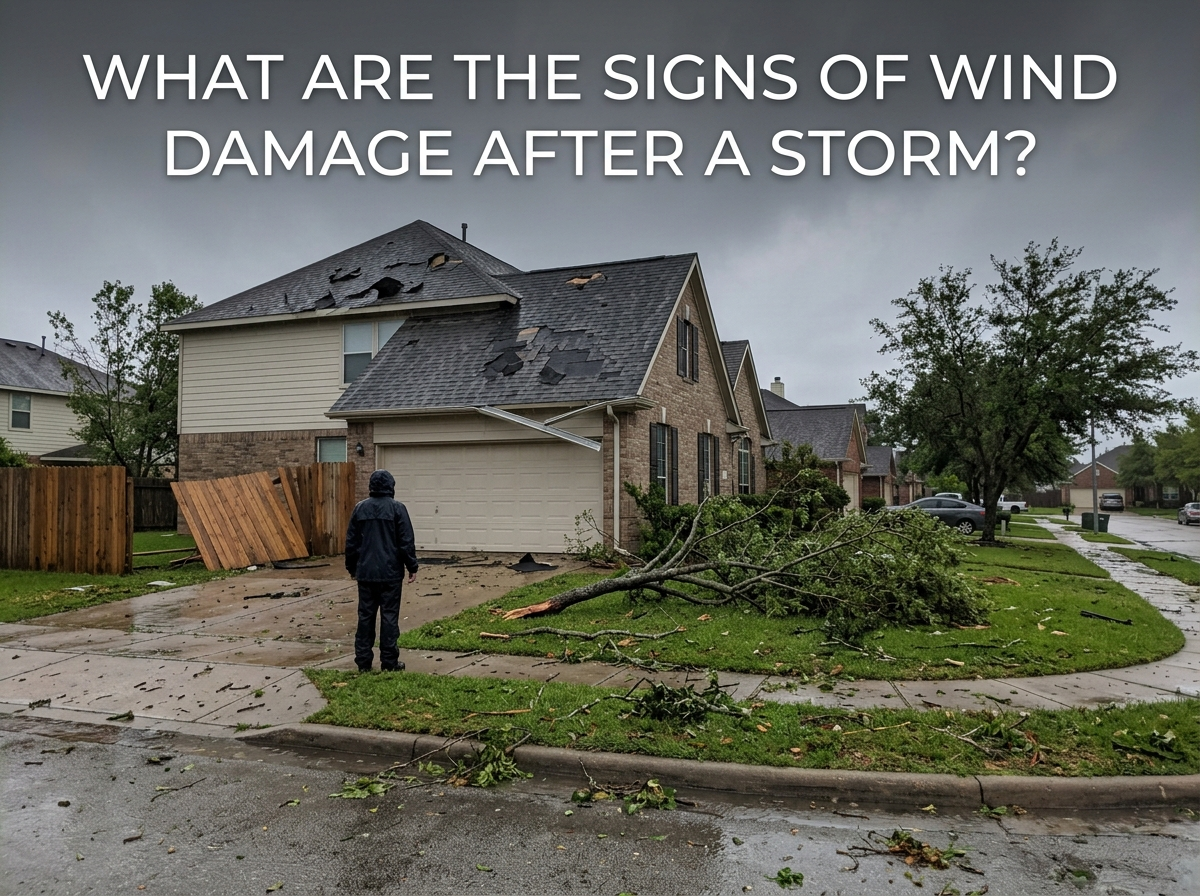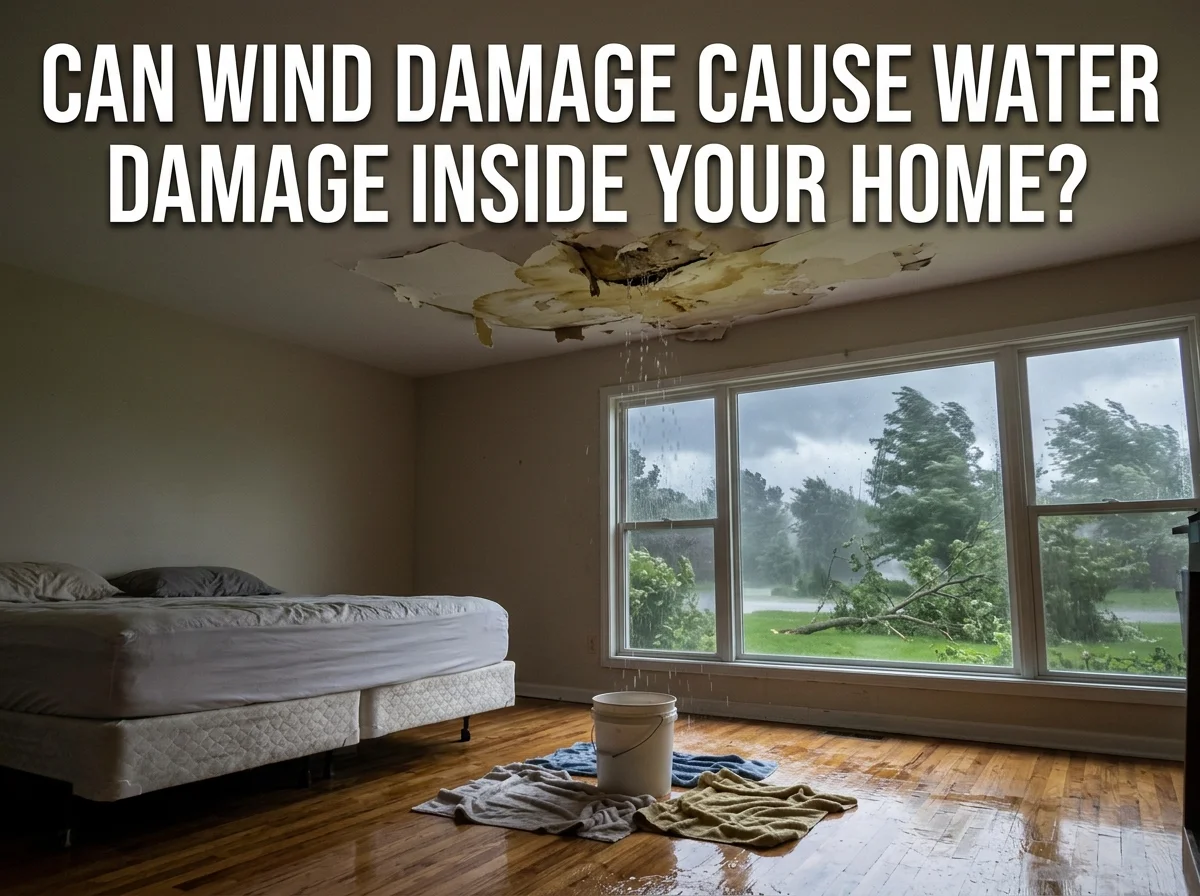
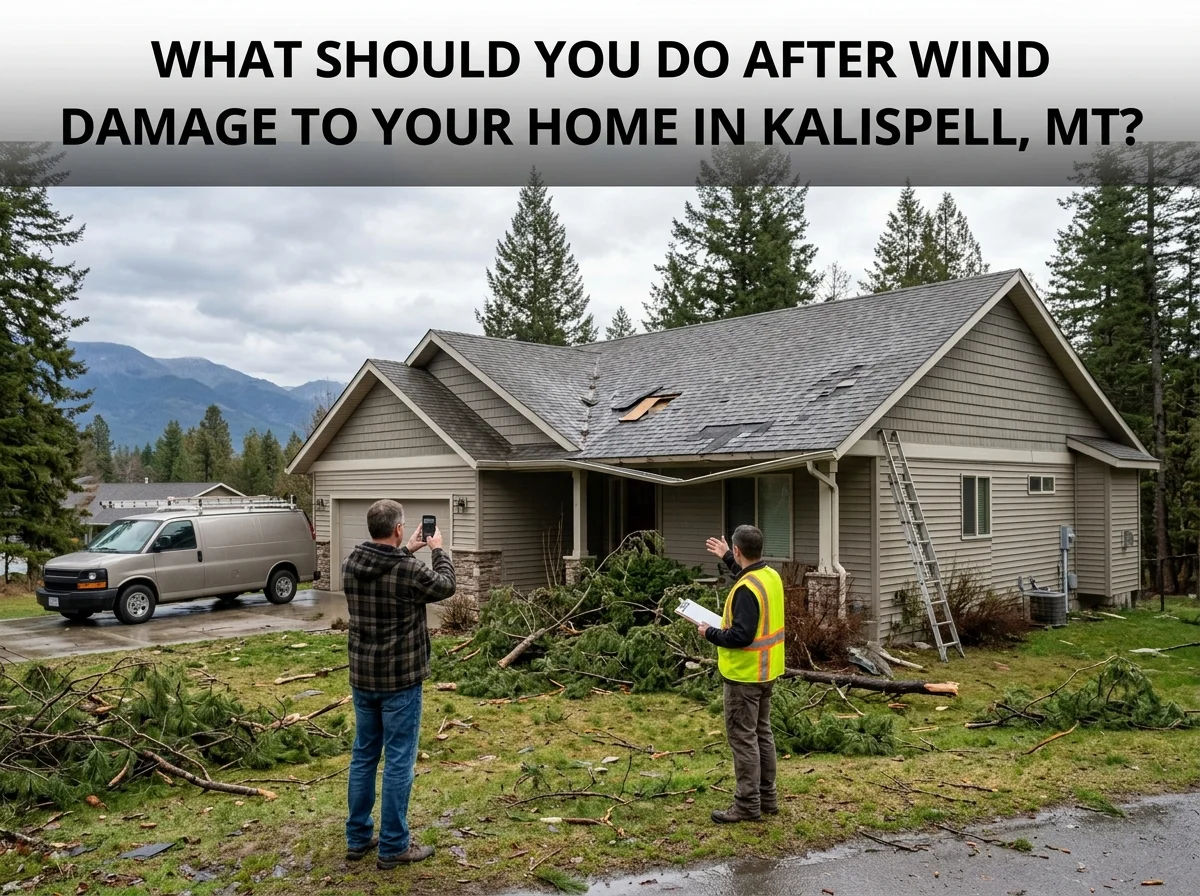
The gusts have died down, and now you’re staring at missing siding, a limb across the driveway, and maybe a window that didn’t hold. Knowing what to do after wind damage to your home in Kalispell, MT, starts with a sequence. People come first. Photos and notes come next, then temporary protection, then the call to your insurer, and only after that the larger repair decisions. Skip ahead, and you risk getting hurt or weakening a claim. Here is what to do after a windstorm, in the order that tends to work best.
Put Safety Ahead of the First Walk-Around
Stay inside until the severe windstorm has truly passed. Gusts can return in waves, and a lull isn’t an all-clear.
Downed power lines come first. Treat any wire on the ground or hanging low as live, even one tangled in a fallen tree that looks harmless. Do not approach the downed line. Make sure children and pets remain clear, and call 911 if the situation poses an immediate threat. Then report it to Flathead Electric Cooperative, which serves the Kalispell area. Fire officials have warned people away from downed lines after past Flathead Valley windstorms, and wet ground around them is a hazard too.
If you smell gas or hear hissing, leave on foot. Leave the building without operating switches or using your phone inside. From a safe location outdoors, call emergency services and notify the gas company. Then consider the house itself. Home damage after high winds can include a sagging roofline, shifted walls, or a tree resting on the structure, any of which may signal structural damage nobody can judge by eye. Stay out of those areas, and leave the verdict on safety to a qualified professional.
Document What You Can See From a Safe Location
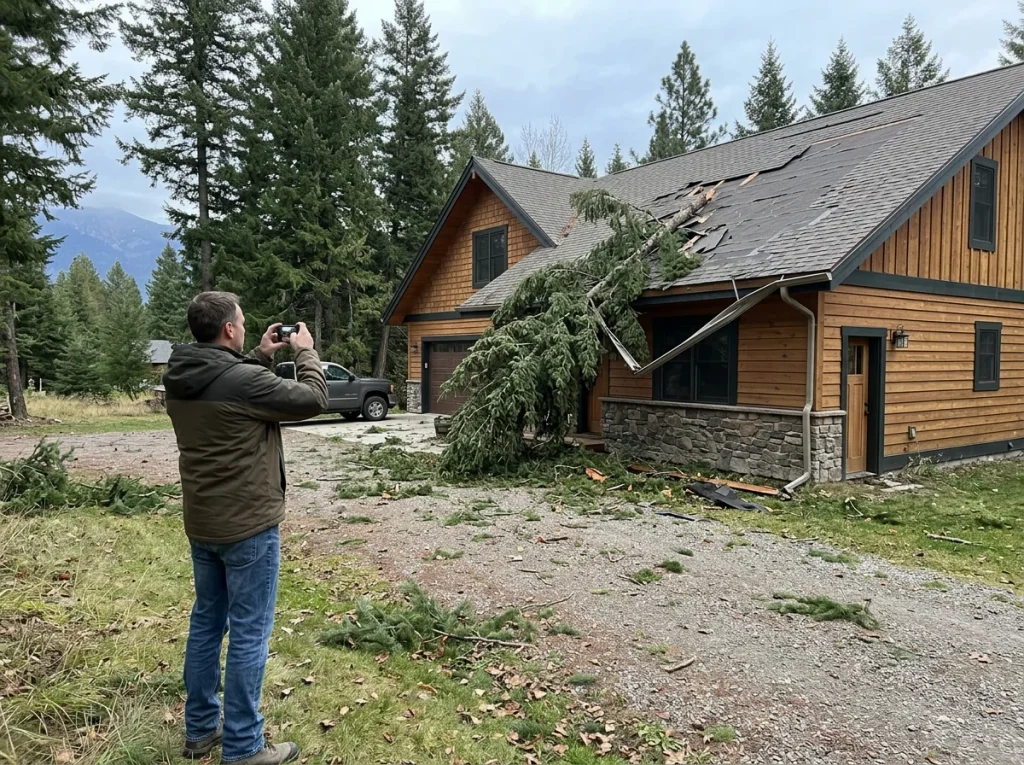
Once it’s safe, photograph what you can see from the ground, a doorway, or the yard. Shoot wide first so each image shows where the damage sits, then take close-ups. Stay off the ladder and off the roof; your phone’s zoom covers a lot.
Write down the date and approximate time the wind hit, plus a plain description of each problem. This is a record, not a wind damage assessment. A wind damage inspection by a qualified professional can come later, and a formal property inspection will fill in what you can’t see.
Inside, photograph affected belongings where it’s safe to reach them and start a simple inventory. Save every receipt for emergency steps, from plywood to a board-up service, and keep messages with your insurer in one folder.
Arrange Temporary Protection Without Risky DIY Repairs
Temporary protection has one job: limiting further exposure until the property can be assessed and repaired properly. It is not the repair, and treating it as one is how small problems turn into disputes later.
Some situations call for professional help. Broken windows or a door that won’t latch may need a board-up. A damaged roof with an open section needs temporary roof protection, and nobody should climb up after high winds to arrange it. Loose, damaged siding may only need to be kept clear of while it waits. If a room or exterior area looks unsafe, close it off and keep people out. Hazardous debris belongs in professional hands as well.
If it is safe to do so, move nearby belongings away from the damaged opening and arrange professional help rather than attempting makeshift repairs. Fastening tarps from a ladder in gusty conditions is dangerous work. Even good temporary protection doesn’t replace a full assessment and a repair plan.
Notify Your Insurer and Keep the Claim Records
As soon as everyone is safe, and you have basic photos, preferably on the same day or shortly thereafter, notify your insurance company. Policies vary with regard to the speed with which they wish to have notice, so please check yours, rather than assuming. While many homeowner policies cover wind damage, the circumstances of your loss can make a difference, and exclusions, limits, and deductibles can differ.
Request the records or photos that the company is looking for of the damaged property and whether there will be an adjuster coming to visit. Record the claim number, adjuster’s name, and a direct telephone number, and make note of each conversation with the date.
Inquire if the policy provides reasonable protection or repair for home wind damage and how to submit receipts to them. Do not expect any expense to be paid back. Address immediate safety concerns as soon as possible rather than waiting for the adjuster to arrive. Your policy may also require you to take reasonable steps to prevent further damage.
When to Seek Wind Damage Restoration in Kalispell, MT
You don’t need to identify all of the issues before calling. Simply describing what’s visible is enough for a restoration company to determine how they can help. Wind damage restoration is often beneficial when there might be a danger to any part of the property, when openings need temporary protection, when the damage is extensive or difficult to assess from the ground, and when trees or branches have fallen that could pose a hazard. It’s also useful when you do not know what to do next.
Not every incident needs a full project. A few shingles in the yard may be a simple repair. But emergency wind damage restoration, meaning quick protective work to secure a wind-damaged home, is a sensible call when weather is coming and the property is open. Ask Kalispell restoration providers what happens during an emergency visit, including how they secure damaged areas and decide which repairs are needed next.
How Wind Damage Repair in Kalispell, MT, Proceeds
The order of visits to complete the work will be similar depending on the damage that occurred. It typically starts with a professional evaluation of the impacted property to determine the emergency protection needs. The repair scope defines what will be repaired and in what order. Wind damage cleanup follows where necessary to remove storm debris and loose items from the exterior of the building so crews can safely perform their work. Then there are the repairs, and finally the walk-through to make sure what was left is all fixed.
A home with limited exterior damage won’t follow the same path as one with major structural concerns. The first may be fairly straightforward; the second can involve more stages and more specialists. Ask for the scope in writing, and be wary of anyone who promises exact dates or outcomes before looking at the property.
Leave Dangerous Storm Debris to the Right Help
Trees and limbs look simple and aren’t. A fallen tree can carry stored tension, so cutting it can make it shift or spring. Branches may hang overhead, held by almost nothing. Anything touching or near electrical equipment stays off-limits, even if the wires look fine.
Keep away from hazardous debris and arrange help: a qualified tree service for large pieces, the utility for anything tangled in lines, and a restoration company where debris sits on or against the building. After a past Flathead Valley windstorm, officials asked people not to call 911 about a downed tree unless it posed an immediate threat to life.
Common Questions After Wind Damage to a Home
Should I wait for the adjuster before calling a restoration company?
No, not when safety or protection is at stake. Notify your insurer promptly, and don’t delay urgent protective work. Policies vary, so ask your insurer how it handles emergency measures.
Is it safe to check my roof myself after high winds?
No. Look from the ground and use your camera’s zoom. A roof that appears fine can still be unstable, and falls are a real danger. If something seems wrong, arrange a qualified assessment.
What should I record after a windstorm?
Photos and video of visible damage, the date and approximate time, short descriptions, an inventory of affected belongings, receipts for emergency spending, and every message with your insurer.
When does emergency wind damage restoration make sense?
When safety is in question, or the property is open to the weather: unsafe areas, broken windows, a damaged roof, or debris you can’t handle yourself. Prompt help stabilizes things while the repair plan comes together.
Help Your Kalispell Home Move Toward Safe Recovery
Start with safety, photograph from the ground, avoid risky repairs, report the loss, and let the repair plan follow the assessment.
Allied 24/7 Restoration, based in Kalispell, offers wind damage restoration that includes emergency board-up, temporary roof tarping, debris removal, and repairs, with 24/7 availability. Professional help can assist with assessing the affected property, arranging protection, and planning the next steps. If wind has damaged your home, call (406) 756-4357 to talk through the damage and what should happen next.