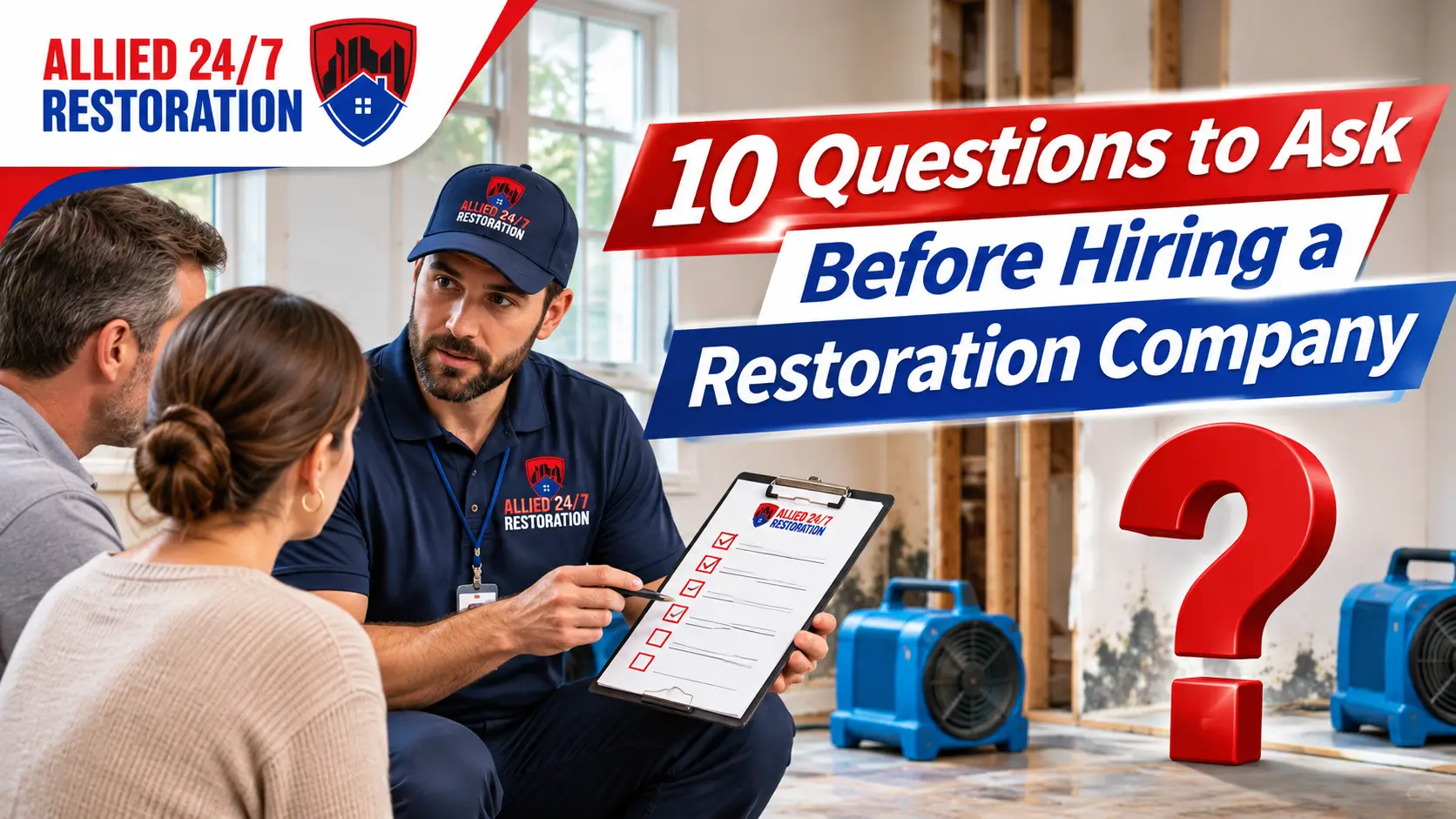
The wind finally dies down around midnight. You step outside with a flashlight and find shingles in the yard and a dark stain spreading across the bedroom ceiling. Now you need a restoration company, and you need one fast. That pressure is what makes hiring so hard. You’re tired, and every company on the phone sounds sure of itself. Most people don’t know what to ask, so they say yes to the first crew that shows up. A few direct questions change that. Ask about services, the damage assessment, emergency response, methods, insurance paperwork, costs, and communication. Below are 10 questions to ask before hiring a restoration company and what a solid answer should tell you.
Key Questions to Ask a Restoration Company
Restoration rarely happens in one step. A job often starts with an assessment and emergency protection. Then it moves into drying and cleanup. Some jobs end with full reconstruction. Each stage brings decisions you’ll need to approve. Ask these questions before you authorize a single hour of labor.
1. Do You Handle This Type of Property Damage?
Name the problem out loud. Maybe a tree limb came through the roof, or a pipe burst. Ask if that’s work the company handles regularly. Wind damage restoration and water damage repairs often go hand in hand. Then ask how far they go. Some crews tarp the roof and dry the walls, then hand you off. Others carry the job through repairs and reconstruction. Know which one you’re getting before day one.
2. How Quickly Can Your Team Respond to the Damage?
Wet drywall doesn’t wait for Monday morning. An open roof gets worse by the hour. Ask whether the company takes emergency calls after hours and on weekends. Response time depends on your location and how many calls followed the same storm. Expect an honest estimate, not an exact minute. Then ask about the first visit. Will the crew just look around, or arrive ready to tarp and pull water?
3. What Will You Check During the Initial Damage Assessment?
The obvious damage is rarely the whole story. Missing shingles grab your attention. But wind can also loosen flashing and push rain into hidden insulation. Ask what the technician plans to check, from the roof to the attic, including possible hidden water damage behind walls and ceilings.
Next, ask how they’ll record what they find. Photos come first. Moisture readings and written notes back them up. A vague walk-through produces a vague plan. Some problems also stay hidden at first, and that’s normal. They may only turn up once the crew opens a wall.
4. What Immediate Steps Will You Take to Prevent Further Damage?
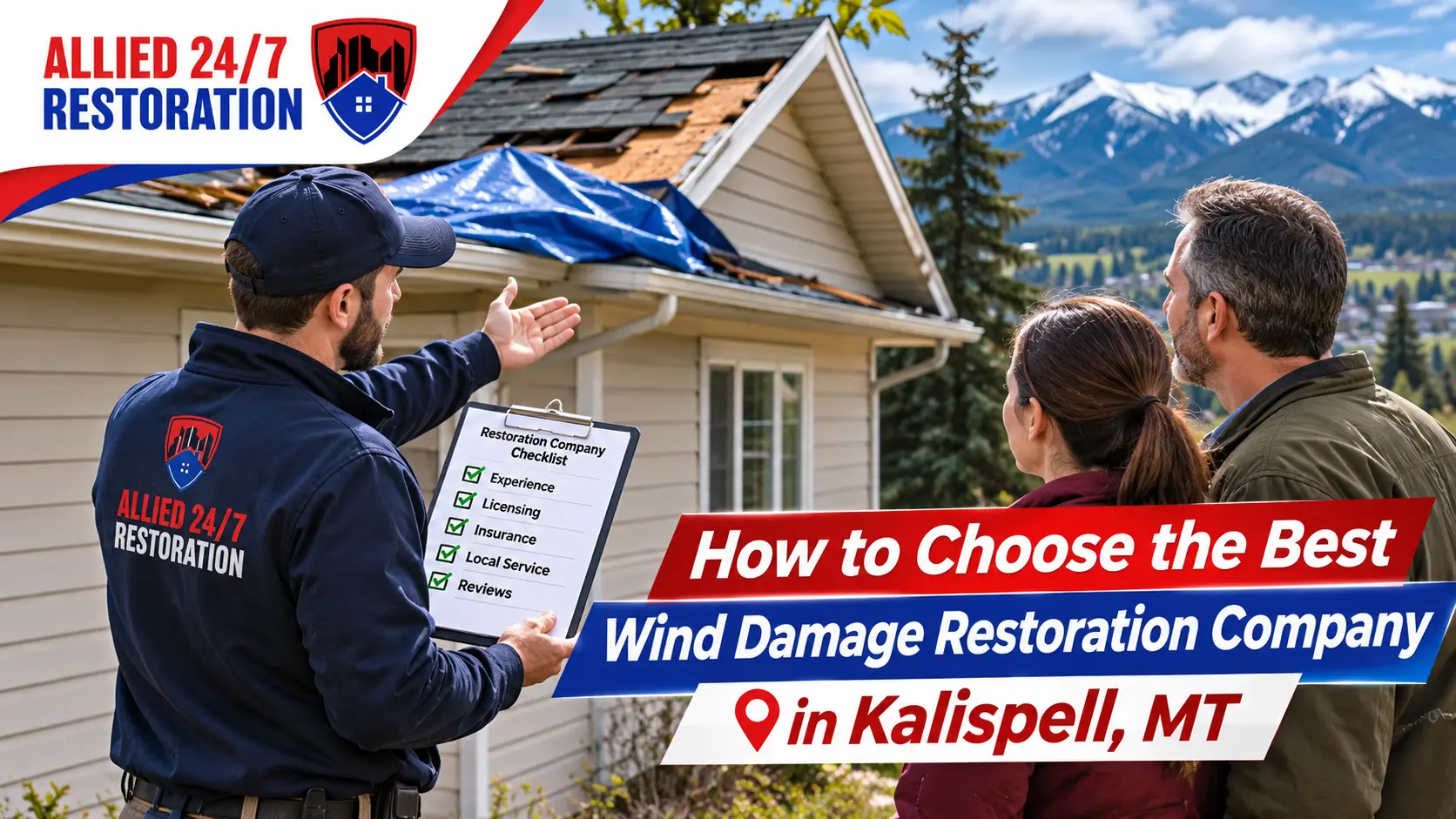
Temporary fixes and permanent repairs are two different jobs. The first stops things from getting worse. The second rebuilds. Ask what the company plans to do right away and why. That might mean tarping a roof or boarding a window. These are often the first steps in wind damage restoration. Then ask what can wait. A small leak by a roof vent may only need a quick cover for now. A soaked basement can’t sit.
5. What Restoration Methods and Equipment Will You Use?
Equipment should fit the problem. A water damage restoration job might call for moisture meters and air movers. Dehumidifiers often join them. A wind job leans more on tarps and plywood. Ask what the company plans to bring and what each piece does. Expect a plain-English answer. If a crew sets six fans in your living room, ask how long they’ll run. Then ask how the team will confirm the room is dry.
6. How Will You Document the Damage and Support the Insurance Process?
Insurance claims run on paperwork. Photos help, and so do inspection notes and written estimates. Ask what records the company provides and whether it talks with your adjuster. Be clear on roles. The restoration company documents the damage and its work. Your insurer decides what your policy covers. No restoration company can guarantee claim approval or payment. Be wary of anyone who hints otherwise. Filing the claim is still on you.
7. Can You Provide a Written Estimate and Explain What It Covers?
A handshake won’t help when the final bill arrives. Ask for a written estimate. It should spell out the scope of work. Labor and materials should each get their own line. Equipment belongs on there too. Then ask what’s left out. Exclusions are where surprises like to hide.
Restoration jobs change once walls come open. A crew may find wet framing behind drywall. Or the roof decking may be worse than expected. Ask how the company handles that moment. The right crew stops and explains what it found. It documents the change. Then it gets your approval before going further.
8. What Is the Expected Project Timeline, and How Will You Keep Me Updated?
Nobody can promise an exact finish date on day one. The timeline depends on the damage and how much rebuilding the job needs. So ask the company to walk you through the phases. Stabilization usually comes first. Drying or cleanup follows. Repairs and reconstruction come last, if needed.
Ask who will send updates and how often. A quick text every couple of days beats two weeks of silence. Delays do happen. Materials get backordered. Crews uncover hidden damage. When that occurs, the company should tell you right away and adjust the schedule openly.
9. Who Will Perform and Supervise the Restoration Work?
You’re letting people into your home. You should know who they are. Ask whether the crew will be employees or subcontractors. Some companies use both. Neither is automatically better, but it changes who answers for the work. Ask about the training and experience of your assigned crew. Then ask who supervises the job day to day. One name and one phone number are ideal.
10. What Warranty or Follow-Up Support Do You Provide?
The job isn’t over when the trucks pull away. Ask whether the company offers a workmanship warranty. If so, find out what it covers and for how long. Ask about exclusions and how to file a claim. Before you sign off, do a final walkthrough room by room. Request copies of key documents. Then ask one last thing. If a problem shows up next month, who do I call?
What Should You Do With the Answers Before Making a Decision?
Good questions only help if you weigh the answers. Lay them side by side if you called more than one company. Look for the crew that gave direct answers instead of sales talk. Before you sign anything, run through this quick check. Each point ties back to a question above.
- They handle your type of damage.
- The assessment was explained clearly.
- Urgent stabilization needs are identified.
- Methods and equipment fit the damage.
- You know who handles insurance documentation.
- The written estimate shows scope and cost.
- You understand the timeline and update plan.
- You know who supervises and who handles follow-up.
If anything still feels fuzzy, call back and ask again. Read the estimate and the authorization form before you sign. Get important terms in writing. In a true emergency, don’t let paperwork delay basic safety steps. These steps to take after wind damage to your home can help you sort out what comes first.
Frequently Asked Questions
Property owners usually have a few more questions once the first shock wears off. Most of them circle back to insurance or paperwork. Here are straight answers to three common ones. Each answer is short on purpose. That way you can get back to dealing with your property.
Should I Contact My Insurance Company Before Hiring a Restoration Company?
Yes. Contact your insurer early, but don’t let that delay urgent protection. Review your policy and report the damage the way your insurer requires. Many policies expect you to take reasonable steps to prevent further damage. The roles stay separate, though. Your insurer makes coverage decisions. The restoration company handles the physical work. It also documents the damage and the work.
Can a Restoration Company Help With Wind and Storm Damage?
Yes. Many restoration companies handle wind and storm damage, though the scope varies. Some focus on emergency tarping and board-up. Debris removal is often part of that first push. Others stay on to dry out wet areas and finish repairs or reconstruction. If you’re in Kalispell or Whitefish, ask each company which parts of the recovery it will take on.
Should I Get a Written Estimate Before Restoration Work Begins?
Yes. A written estimate should be in place before major restoration work begins. It spells out what the job includes and what it will cost. Urgent stabilization is the exception. A crew may need to tarp a roof or remove standing water before anyone knows the full repair scope. Even then, any added work or cost change should be explained and documented first.
Final Thoughts
Clear questions protect you from vague plans and surprise bills. Before you hire, know what the company handles. Learn how it checks for damage and what tools it plans to use. Read the written estimate closely. Make sure you understand the timeline. And know who to call once the work is done. Those answers tell you a lot.
Allied 24/7 Restoration works with homeowners and businesses in Kalispell and across the Flathead Valley. That includes Columbia Falls and Bigfork. The team handles wind damage restoration, from emergency tarping and board-up through repairs. It takes on water and sewage damage too. Crews also handle fire damage and flood cleanup. Mold remediation is on the list as well. If your property has damage, contact Allied 24/7 Restoration to discuss your situation and find out what the next steps should be.