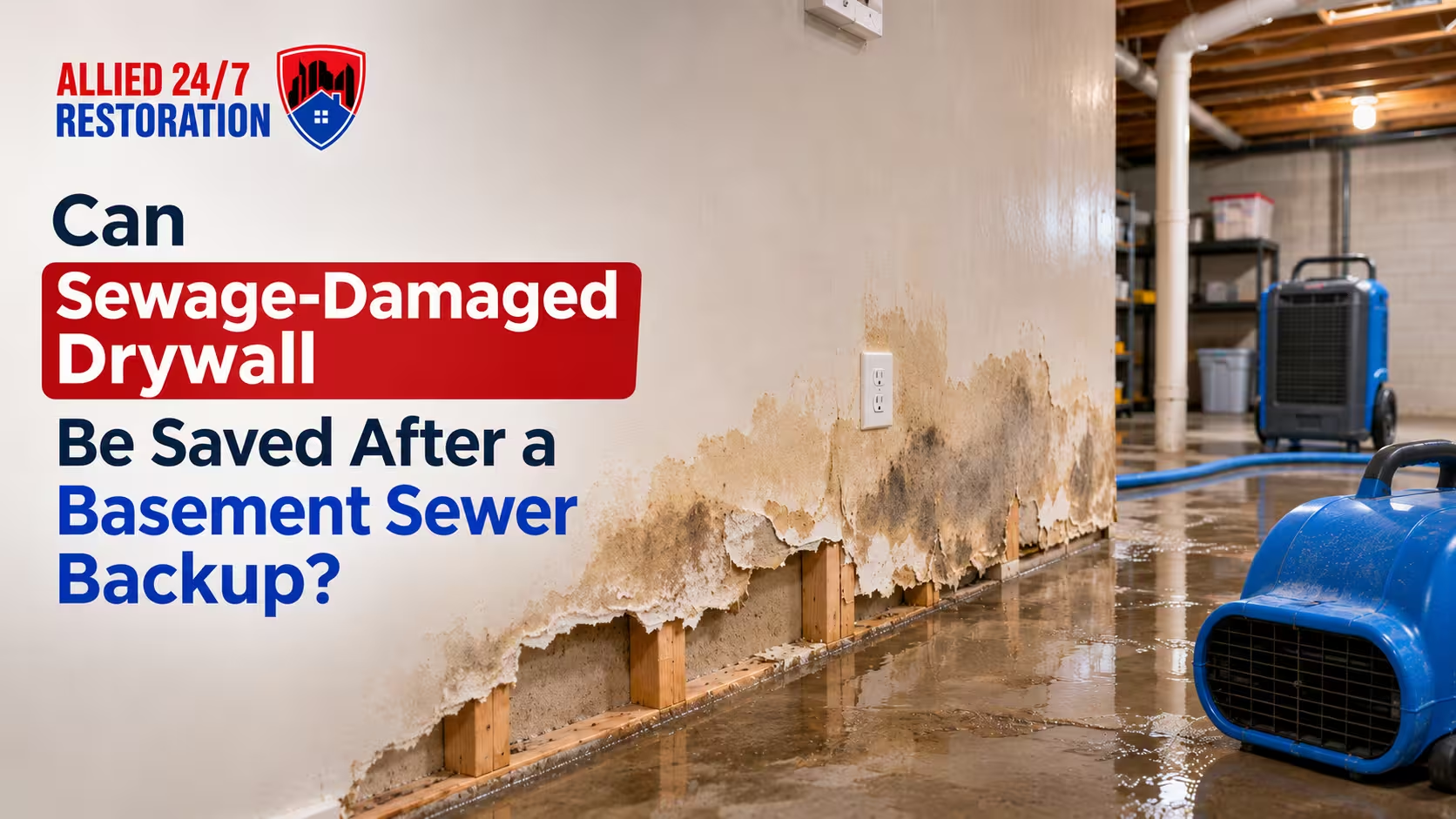
You went downstairs and found sewer water pooled along the bottom of your finished basement walls. Now you need to know what stays and what goes. A sewer backup is not the same as a burst supply line, because it carries bacteria and waste that soak into porous drywall. Here’s the straight answer. Sewage-damaged drywall that took a direct hit generally needs removal and replacement, because no cleaning method can make it safe to keep. That doesn’t mean every wall in the basement comes out. Unaffected sections and some wood framing may stay once a professional confirms their condition.
Why Is Drywall Difficult to Save After a Sewage Backup?
Nobody designs drywall to handle water, and wastewater is the worst kind. The problem comes from two directions at once: what the board is made of and what sewage carries into it.
How Does Drywall Absorb Sewage Contamination?
Gypsum board is a chalky mineral core pressed between two sheets of heavy paper. Both layers are porous building materials, so they pull liquid in instead of shedding it. The drywall paper facing acts like a wick and draws dirty water up and sideways through the sheet. Gypsum board absorption then takes over as the core soaks up whatever reaches it. That water can carry contamination past the visible stain and onto the back face of the board.
Why Is Sewage Different From Ordinary Water Damage?
A leaking supply line brings clean water into your walls. A sewer backup brings human waste along with bacteria, viruses, and other microbial contamination. The IICRC S500 standard, the restoration industry’s main water damage reference, treats sewage as Category 3 water, its most contaminated class. Drying can sometimes rescue drywall after a clean leak. Cleaning and drying sewage-contaminated drywall can’t reach what has already soaked deep into the paper and core. Spraying disinfectant on the surface or painting over it won’t fix that either.
Which Signs Indicate That Basement Drywall Needs Replacement?
Start with what you can see and smell from a safe distance. These signs point toward replacement, though none of them alone tells you how far the damage really goes.
- The drywall sat in sewage or took a direct splash from the backup.
- The board feels soft, looks swollen, or crumbles near the floor.
- The paper surface shows stains, bubbles, or peeling.
- A sewage odor hangs on after the standing water is gone.
- Insulation behind a damaged section looks wet, sagging, or dirty.
- Moisture shows up on baseboards and wall surfaces well above the floor.
Wet walls after a sewer backup can look normal a foot above the stain line. Sewage water in wall cavities often moves where you can’t see it, so visible damage gives you a starting point rather than the final boundary. Treat these signs as a reason to call for an assessment, not as the assessment itself.
Does Every Basement Wall Need to Be Removed After a Sewer Backup?
No. The removal decision for basement drywall water damage should follow the actual contamination and moisture, not a blanket rule for the whole basement. A wall that sat in sewage needs a very different decision than a wall across the room that stayed dry. Here’s how the main situations usually break down.
| Material or condition | General restoration consideration |
| Drywall directly contaminated by sewage | Generally requires removal and replacement |
| Drywall with possible contamination beyond the visible waterline | Requires assessment to set the affected boundary |
| Drywall confirmed dry and unaffected | May stay if its condition is suitable |
| Insulation directly exposed to sewage | Generally requires removal and replacement |
| Deteriorated materials or materials holding contamination | May need removal based on professional assessment |
The real removal line depends on how far contamination spreads, how much moisture the materials hold, and what shape they’re in. A professional assessment sets that line, and unaffected drywall stays only if it actually checks out on inspection.
What Happens to Insulation and Other Materials Behind Sewage-Damaged Drywall?
The wall cavity tells the rest of the story. Behind the drywall, you may find wet insulation, damp framing, and wall cavity moisture that never showed on the surface.
Why Can Contaminated Insulation Be Difficult to Salvage?
Fiberglass batts and most other insulation behave like a sponge. They soak up contaminated water, hold it against the studs, and dry very slowly inside a closed wall. Sewage-damaged insulation with direct contact generally needs removal and replacement, since ordinary drying won’t make it safe. Hidden contamination inside the wall also keeps feeding moisture and odor into the framing you hope to keep.
Can the Wood Framing Behind the Wall Be Saved?
Wood studs often get a better outcome than drywall does. Solid lumber is far denser than gypsum board, so a restoration crew can sometimes clean, decontaminate, and dry it in place. That outcome depends on the wood’s condition and structural integrity. Framing that is soft, decayed, or heavily contaminated may need repair or replacement, and a proper assessment should make that call.
How Do Restoration Professionals Assess Sewage-Damaged Drywall?
A good assessment answers two questions: where the sewage reached and where moisture is still hiding in the basement. Both answers shape the removal plan, so a quick glance at the walls rarely gets it right.
Inspecting the Affected Wall and Measuring Moisture
A technician starts with a visual inspection and traces where sewage pooled, splashed, or wicked up the walls. Moisture meters then measure readings in the drywall and nearby materials, which build a moisture map of the basement. Where the wall is open, the technician also checks insulation and framing. Keep one limit in mind. A moisture meter reads moisture only and cannot detect bacteria, pathogens, or sewage contamination.
Determining Removal Boundaries and Preventing Cross-Contamination
Contamination doesn’t always stop where the stain stops. Professionals weigh direct exposure, moisture readings, and material condition together before they mark where the cuts go. Cutting too little leaves contaminated material on the wall, while cutting too much tears out drywall you could have kept. Containment procedures matter just as much once the removal work starts. Controlled work areas and protective gear help keep contaminated dust and debris from reaching the clean parts of your home.
What Does the Restoration Process Involve After Contaminated Drywall Is Removed?
Contaminated drywall removal is the messy middle of the job, not the finish line. Every home is different, but most sewage damage wall restoration follows a similar general sequence.
- Set up a controlled work area that keeps contamination away from clean rooms.
- Remove contaminated drywall and insulation with proper personal protective equipment (PPE) and containment.
- Assess and clean the exposed framing, concrete, and other remaining materials as needed.
- Dry the affected structure until materials reach acceptable moisture levels.
- Recheck the remaining materials to confirm they’re ready for reconstruction.
- Hang new drywall and finish the wall to match the rest of the room.
Structural drying deserves real patience. Closing up a wall while the framing is still damp can trap moisture behind brand-new drywall and start the whole problem over.
What Should Homeowners Do Before Drywall Restoration Begins?
The hours before restoration starts still matter a great deal. Your job is to stay safe and keep contamination from spreading into the clean parts of the house.
- Keep kids, pets, and guests out of the sewage-affected area.
- Don’t touch, pull, or poke at contaminated drywall and insulation.
- Skip DIY demolition and household cleaners on sewage-soaked materials.
- Don’t assume a wall that looks dry is free of contamination.
- Have a qualified plumber fix the sewer line or blockage that caused the backup.
- Get a qualified restoration professional to assess the affected walls.
Snap a few photos of the damage from a safe spot if you can do it without walking through sewage. Those pictures help when you talk with your restoration crew and your insurance company later.
Frequently Asked Questions
Can Painted Drywall Be Saved After a Sewage Backup?
Usually not if sewage touched it directly. Paint adds a thin surface coat, but it doesn’t make drywall waterproof. Contaminated water still soaks into the paper and gypsum core around and behind the paint.
How Much Drywall Should Be Removed After a Basement Sewer Backup?
No single height fits every basement, so be wary of anyone who quotes a fixed cut line before looking. The removal line depends on where contamination reached, how far moisture traveled, and the condition of the materials. A professional assessment should set that boundary.
Can the Wall Studs Be Saved After Sewage-Damaged Drywall Is Removed?
Often, but not always. Structurally sound studs can sometimes stay in place after a proper assessment, cleaning, decontamination, and thorough drying. Soft, decayed, or heavily contaminated wood may need replacement.
Final Thoughts
Drywall that sat in sewage generally has to go, but your whole basement probably doesn’t. Getting that line right takes a careful look at the drywall, insulation, and framing before anyone starts cutting. Allied 24/7 Restoration handles water and sewage damage restoration for homes in Kalispell, Whitefish, Bigfork, Columbia Falls, Lakeside, and across the Flathead Valley. The team brings more than 31 years of experience, uses moisture meters during assessments, and answers calls 24/7. If a sewer backup reached your basement walls, contact Allied to talk through your restoration options.