
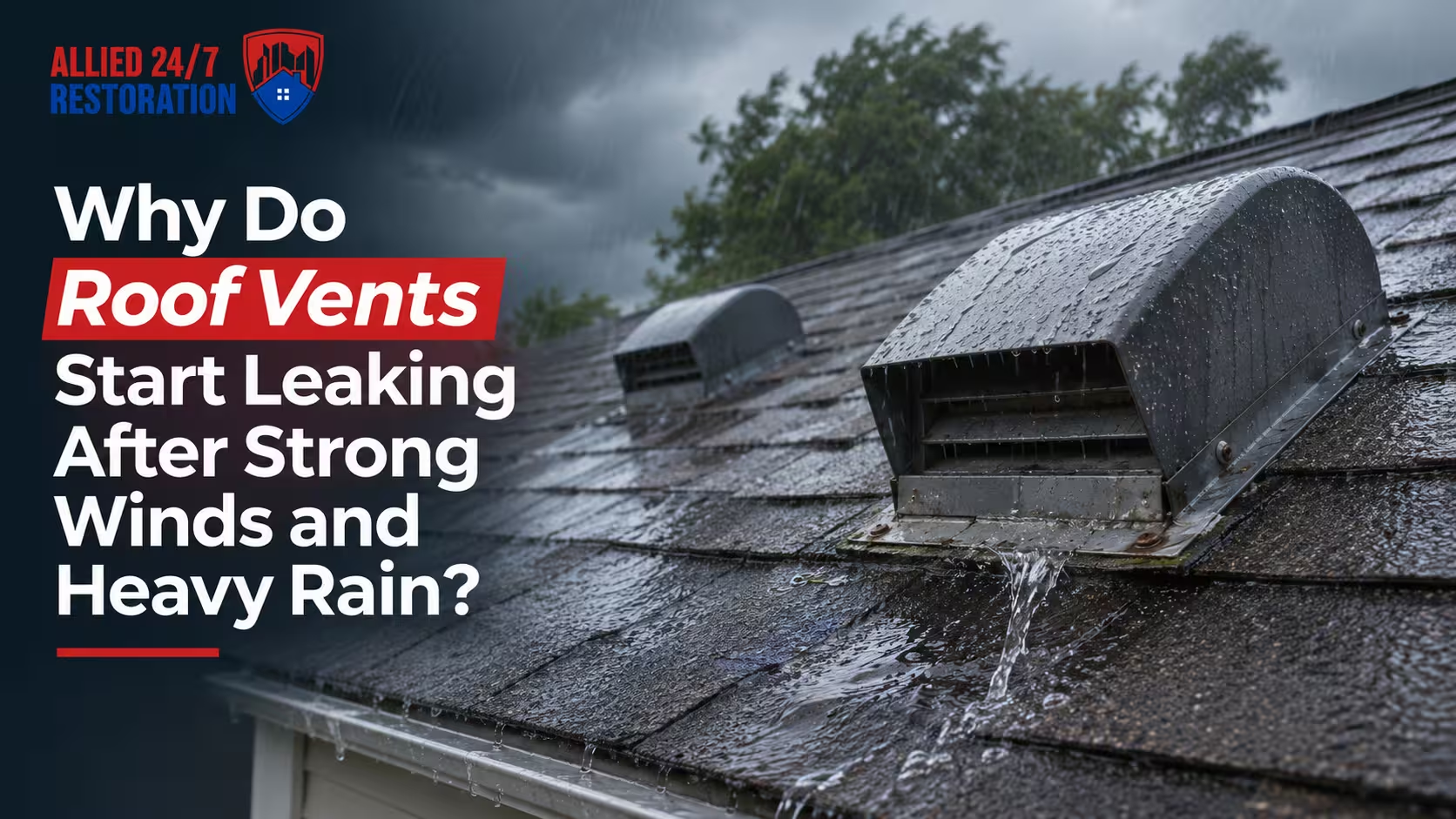
Your roof got through every normal rain this year without a drop inside. Then a storm rolls in with hard gusts and sideways rain, and now there’s water around a roof vent or a fresh stain on the ceiling below. Here’s the short answer. Roof vent leaks after wind usually happen because the storm throws water at vent openings from angles that gentle rain never reaches. That pressure finds anything already weak, like displaced flashing or a cracked vent pipe boot. Worn seals, a loose vent cover, or damaged shingles next to the opening can also let it in.
Why Do Roof Vents Leak During Strong Winds and Heavy Rain?
Roof vents are designed openings that let air escape from or enter the attic. It stays dry because the materials around it overlap so each layer sheds water onto the next. Ordinary rain falls mostly straight down, and that overlap handles it easily. A hard storm tests those connections in ways a calm shower never does.
How Does Wind-Driven Rain Reach Roof Vent Openings?
Strong gusts turn rain into a sideways spray that can blow under a vent hood or hit a vent’s uphill side. Wind can even push water up under flashing built for downhill flow. Wind direction matters too, since a vent that stays dry in a south wind might leak in a west wind. How much water gets in depends on the vent design and the roof’s condition.
Can Wind Uplift Displace Roof Vent Components?
Fast air sweeping over a roof creates suction that pulls up on vent covers and ridge vents, plus the fasteners holding them down. A well-secured vent usually rides out that wind uplift. One with rusted nails or a sloppy install can shift enough to open a gap for the rain that follows.
Which Roof Vent Components Can Allow Water to Enter?
Roof vents aren’t all built alike, so the likely leak point depends on the type. Box vents, turbines, and ridge vents are attic ventilation units. Plumbing vent pipes let sewer gases escape from your drains, and they need their own roof penetration sealing where they exit.
Damaged Roof Vent Flashing and Seals
Flashing is the metal around a vent’s base that steers water past the opening and onto the shingles. A storm can bend or lift it, and that flashing displacement may expose years of hidden corrosion. Damaged roof vent seals add to the problem because sealant cracks with age and sun. Fresh caulk might hide that for a season, but it won’t fix flashing that’s bent or installed wrong.
Cracked Vent Pipe Boots and Damaged Vent Covers
A vent pipe boot is the collar that seals a plumbing vent pipe where it exits the roof. Many boots use a rubber gasket that eventually cracks, splits, or pulls away from the pipe. Attic vents don’t use boots, but a storm can crack their covers or knock them loose. Damaged shingles or torn underlayment beside a vent can leak in the same spot.
What Signs Suggest Water Is Entering Around a Roof Vent?
Water rarely drops straight down from where it gets in. It can run along roof decking or slide down a vent pipe first, so a ceiling stain may sit several feet from the real entry point.
Interior warning signs:
- Brown or yellow stains spreading across the ceiling
- Peeling paint or bubbling drywall
- Damp spots on upper walls or ceilings
- Water dripping during a storm or shortly after
Attic warning signs:
- Damp or matted insulation near a roof penetration
- Dark moisture marks on roof decking or framing
- Water trails running down from a vent opening
- A musty smell that lingers after repeated leaks
Any of these tells you moisture is getting in somewhere. None of them proves that a particular vent is the source, and pinning that down takes a proper roof leak investigation.
How Can You Tell a Roof Vent Leak From Other Attic Moisture Problems?
Don’t blame the vent just because the wet spot sits close to it, since several problems leave nearly identical marks in an attic.
Does the Leak Appear Only During Wind-Driven Rain?
Timing is one of the best clues you’ve got. A wind-driven rain roof leak that only shows up when storms blow from one direction often points to an exposed roof penetration or weak flashing nearby. Consider that a useful clue, but not proof of the leak’s source.
Could Condensation, Plumbing, or Nearby Roof Damage Be Responsible?
Condensation forms when warm air from the house hits cold roof decking, and that attic moisture accumulation tends to spread out rather than pooling in one spot. A plumbing leak starts at a pipe connection below the roof, so it can drip with no storm at all. Damaged shingles or underlayment near the vent can leak in the same storms. Water also travels, so the first wet spot may sit well away from the entry point.
What Should Homeowners Do When a Roof Vent Starts Leaking After a Storm?
Protect the inside of the house and keep everyone safe first. The roof source can wait, and finding it is no job for a ladder in the rain. Stay off any wet or storm-damaged roof and skip risky fixes up high.
- Protect the affected area: Move furniture, electronics, and belongings away from the leak.
- Contain visible dripping: Set a bucket or bin under the drip if you can reach the spot safely.
- Watch for electrical hazards: Stay away from wet light fixtures, outlets, and wiring. If water reaches anything electrical, get qualified electrical help.
- Pay attention to ceiling damage: Keep people and pets away from any ceiling that sags or bulges with water.
- Document what happened: Take photos of the damage and note when the leak started relative to the storm.
- Arrange a qualified inspection: Have a roofing pro find and fix the exterior source, and call a restoration professional if water has soaked into interior materials.
How Can Storm-Related Roof Vent Leaks Affect the Attic and Interior?
A small gap around a roof penetration can let in more water than you’d guess, especially over several storms. Most of that roof vent water intrusion soaks into materials you can’t see from below.
What Happens When Attic Insulation and Roof Decking Become Wet?
Attic insulation soaks up water, packs down, and loses much of its ability to hold heat. Roof deck moisture is the bigger long-term worry because plywood or OSB that stays damp can swell or rot. Moisture that hangs around can also weaken framing and give mold a chance to grow. A short leak that dries quickly may do little lasting harm.
How Can Water Reach Ceilings and Interior Walls?
Water that gets past the attic follows framing and drywall screws down to the ceiling. That’s when ceiling water damage shows up as stains, soft drywall, or peeling paint. The wet area behind the drywall is often bigger than the stain, so it pays to check moisture well past what you can see.
How Is Water Damage From a Roof Vent Leak Assessed and Restored?
Fixing the roof and fixing the water damage are two separate jobs, and you need both. Patch the roof but leave the attic wet, and the damage keeps going. Dry the interior but skip the roof, and the next storm starts it over.
- Inspecting visible damage in ceilings, walls, and the attic
- Using moisture meters to find wet building materials, including areas past the stain
- Checking damp insulation, drywall, roof decking, and other reachable materials
- Deciding which materials can dry in place and which need repair or replacement
- Setting up structural drying and dehumidification when the job calls for it
- Monitoring moisture levels to track drying progress
A qualified roofing contractor should assess and repair the vent, flashing, shingles, and other exterior parts. A restoration professional assesses the interior water damage and handles structural drying.
Frequently Asked Questions
Can Strong Winds Cause Rain to Enter Through a Roof Vent?
Yes. Strong winds can push rain into vent openings, under loose vent covers, or past damaged flashing. A vent in good shape usually holds up, while a weakened one may not.
Why Does My Roof Vent Leak Only During Heavy Rain?
Heavy rain and certain wind directions put far more water against weak spots than a light shower does. That explains the pattern, but someone still needs to confirm the actual source.
Can a Roof Vent Leak Cause Ceiling and Attic Damage?
It can. Water coming in around a roof penetration may reach insulation, decking, framing, drywall, and ceilings. The damage depends on how much water got in and how long things stayed wet.
Final Thoughts
Roof vents usually leak after strong winds and heavy rain because the storm drives water at weak points like bent flashing, cracked boots, loose covers, or damaged shingles nearby. Find the real entry point before anyone starts patching. Then deal with the wet insulation or stained ceiling, since hidden moisture keeps doing damage. Allied 24/7 Restoration provides storm damage restoration, water damage restoration, and structural drying across Kalispell and the Flathead Valley, with emergency help available around the clock. If stormwater has made it inside, call the team to talk through what you’re seeing.