
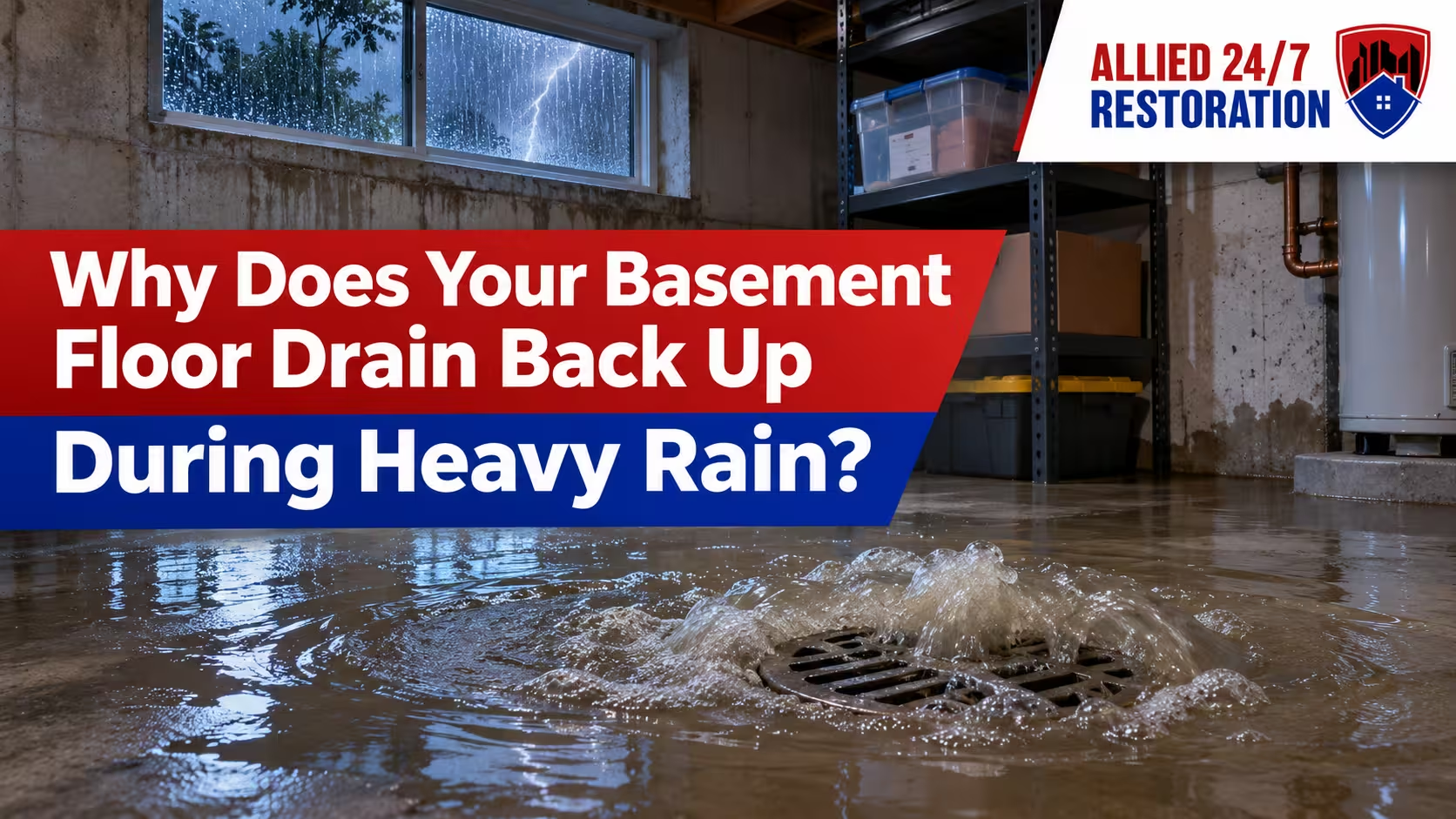
Your basement floor drain backs up during heavy rain because the pipes downstream can’t move water away as fast as it arrives. Sometimes the public sewer overloads, a condition called sewer system surcharge. Inflow and infiltration usually drive it, as rainwater and groundwater leak into pipes meant only for wastewater. A storm can also expose a clog or crack in your own line. Either way, wastewater pushes back toward the lowest opening, and that’s often the floor drain. The underlying problem may lie in your private pipes or the public sewer they connect to. A floor drain backup during rain can carry sewage, so treat that water as contaminated.
Why Does Heavy Rain Cause a Basement Floor Drain to Back Up?
Rainwater isn’t supposed to share pipes with household wastewater in most neighborhoods. Almost every sanitary sewer still picks some up during a storm, which raises drainage system pressure. Your basement sits near the bottom of that system, so its drains feel the pressure first.
What Happens When a Municipal Sewer System Becomes Overloaded?
Picture a sewer main running full during a downpour. Once it can’t move water any faster, the level climbs back into connected service lines and pushes wastewater backflow toward the lowest opening. Municipal sewer capacity varies with pipe size and system design, so one neighborhood can back up while another stays dry.
How Can Rainwater Enter Sanitary Sewer Pipes?
Inflow is stormwater pouring in through direct connections like roof downspouts or sump pumps tied into the sewer line. Infiltration is groundwater seeping through cracked pipes and worn joints once the soil is saturated. Some older cities run a combined sewer system that carries stormwater and wastewater together by design. Most communities use separate systems, where inflow and infiltration supply the extra flow.
What Are the Most Common Causes of a Rain-Related Floor Drain Backup?
Blame doesn’t always land on the city. Plenty of backups start in your own pipes, where a small defect can hide for years until storm pressure exposes it.
A Blocked or Damaged Sewer Lateral
Your sewer lateral carries everything from the house to the public sewer main. Roots, a collapsed section, or packed debris can narrow it until wastewater moves slowly even on dry days. Once a storm pushes the main toward capacity, that restriction leaves no room for error. Roots show up often in older lines, but grease and shifted joints cause sewer lateral blockage too.
A Partial Blockage in the Home’s Main Drain Line
Your main drain line collects every fixture’s water before it reaches the lateral. Grease and mineral scale build up inside it over the years. A partial drainage pipe obstruction may cause no trouble on dry days but choke once storm flow and backpressure arrive.
Cracks, Loose Joints, and Aging Drainage Pipes
Old pipes rarely fail all at once. A hairline crack, slipped joint, or sagging section can let groundwater in when the soil is soaked and catch debris that slows the flow. Many aging pipes still work fine, and a visible crack won’t always explain a backup.
An Inadequate or Missing Backwater Valve
A backwater valve acts as a one-way barrier that lets wastewater flow out but blocks it from coming back in. Wastewater flows out normally, but a flap swings shut if the sewer pushes back. Many older homes lack one, and some existing valves stick or sit in the wrong spot. Your plumbing layout and local code decide whether one fits.
How Can You Tell Whether the Backup Contains Sewage?
Your eyes and nose can’t confirm what’s in the water, and clear-looking water can still carry contaminants. Treat these signs as clues:
- A sewer-like smell around the drain
- Cloudy or discolored water, or floating debris
- Gurgling toilets or sinks when nothing is running
- Water rising up through the floor drain
- More than one basement fixture backing up
- Backups that line up with big storms
The combination of symptoms often reveals more than any single warning sign. A lone floor drain acting up may point to that drain or its trap. When the basement toilet and shower join in, suspect the main drain line or sewer lateral. Several fixtures gurgling only during storms suggests surcharge, infiltration, or another shared drainage problem.
Every floor drain trap holds a little water as a seal against sewer gas. A dry or cracked trap can cause odor, but it doesn’t explain wastewater rising during a storm. Water seeping through a wall crack or overflowing a failed sump pit is groundwater intrusion, not a sewer backup. It usually shows up along walls or floor cracks instead of bubbling up from the drain.
How Should You Respond to a Basement Floor Drain Backup?
Safety comes before cleanup. Water rising through a floor drain may hold sewage even when it looks clean, so treat it that way from the first minute.
- Get kids, pets, and everyone else out of the basement.
- Stay away from the water and any items it has contaminated.
- Keep away from electrical outlets and appliances near the standing water. If the power might be live, call your utility or an electrician instead of wading in.
- Stop using toilets, sinks, showers, and the washer, since anything you drain may come right back up.
- Skip the plunger, drain snake, and chemical cleaners. They won’t fix a surcharge and can splash contaminated water.
- Contact a licensed plumber or your local sewer department to identify the source of the backup. If sewage reached flooring or walls, book a professional restoration assessment too.
Who Should Inspect a Basement Floor Drain That Keeps Backing Up?
Repeated floor drain backups usually point to a problem that needs investigation. The real question is whether the trouble lives in your home’s plumbing, the sewer lateral, or the public main.
When Should You Call a Plumber or Request a Sewer Inspection?
A licensed plumber can check the main drain, trap, and cleanouts to pin down the cause. Many use a camera sewer line inspection to spot roots, cracks, and blockages. A camera can’t catch everything, especially in a line still holding water.
If your lateral looks clean and nearby homes are backed up in the same storm, report it to your city or sewer district. Responsibility for the lateral and public sewer varies by town, so check local rules.
What Can Help Reduce the Risk of Another Backup?
No step removes the risk entirely, but these can shrink it:
- Have the private sewer lateral inspected and cleaned when a plumber recommends it.
- Ask whether a properly installed backwater valve suits your layout and local code.
- Reroute downspouts or sump lines that drain into the sanitary sewer where rules permit.
- Report repeat sewer problems on your street to the city.
- Follow your plumber’s long-term maintenance advice.
A backwater valve can block reverse flow when a plumber installs it in the right spot, and someone keeps it clean. It won’t fix a clogged lateral. While the flap is closed, water you run inside has nowhere to go.
How Can a Sewer Backup Damage Your Basement?
The damage depends on how much wastewater came in, how long it sat, and what it touched.
- Carpets, pads, and other porous flooring rarely come clean.
- Drywall and insulation wick water above the visible waterline.
- Boxes, furniture, and keepsakes on the floor absorb wastewater fast.
- Water travels under baseboards and into wall cavities beyond the wet spot.
- A lingering basement sewage odor often means contaminated material remains.
Hidden spread is the real risk. A floor can look dry within a day while drywall and framing stay damp and contaminated, which is where odor and mold problems start.
When Is Professional Sewage Damage Restoration Necessary?
Call a restoration professional once sewage or questionable wastewater has reached finished areas or belongings. Many crews follow IICRC S500, the industry’s water damage standard. It classifies sewage as Category 3 water, the most contaminated class.
A sewage cleanup assessment comes first. Technicians map where the water traveled and use moisture meters to find hidden wet materials. They decide what to clean and what to remove, and a soaked carpet pad and drywall usually go. Then they extract water and disinfect the surfaces that stay. Air movers and dehumidifiers dry the structure while technicians log moisture readings. The exact plan depends on contamination, materials, and site conditions.
Frequently Asked Questions
Why Does My Basement Floor Drain Only Back Up When It Rains?
Rain adds water to the sewer and raises pressure in the pipes. That can overload the public system or expose a partial blockage in your own line. Only an inspection shows which one you’re facing.
Is Water Coming Up Through a Basement Floor Drain Always Sewage?
Not always, but you can’t tell by looking. Many floor drains connect to the sanitary sewer, so treat the water as contaminated until a professional says otherwise.
Can a Backwater Valve Prevent a Basement Floor Drain Backup?
It helps in the right setup. A correctly chosen and well-maintained valve limits reverse flow but can’t clear a clogged lateral or guarantee full protection.
Final Thoughts
Heavy rain usually backs up a floor drain through a surcharged sewer, stormwater leaking into sanitary lines, or a weak spot in your own pipes. Recurring backups need a plumber or your sewer authority to find the cause. Until then, handle every backup as possible sewage.
Allied 24/7 Restoration provides water and sewage damage repair in Kalispell and across the Flathead Valley. Its crews extract water and disinfect affected surfaces, then dry and rebuild the space. Call (406) 756-4357 anytime to schedule an assessment.