Most homeowners think of water damage as something obvious. A burst pipe, a flooded basement, and water sitting under the fridge. But a lot of the damage that ends up costing people money isn’t easy to see. It can develop behind a wall or beneath a floor while everything in the house still looks normal.
That’s what makes hidden water damage so easy to miss. There may be no puddle or obvious sign showing you where to look. Instead, you might notice little things that don’t seem important at first. An odor after you close the bathroom door. A patch of paint that looks a little different. A board in the hallway that creaks more than it used to. None of these signs necessarily means there’s a moisture problem, but they can be worth checking. This guide looks at where water damage in your home can occur, what you can check yourself, and when a professional inspection makes sense.
Common Signs of Hidden Water Damage
One strange detail does not always mean much on its own. A slight musty smell after a humid week or one bubble in the paint may not be a problem. Hidden water damage signs become more concerning when several of them appear together in the same area.
A musty odor that stays around even after you air out the room is often the first thing people notice. Discoloration may come next, usually as a yellowish or brownish stain that suddenly appears on a wall or ceiling. Paint that bubbles or peels for no obvious reason can be another sign. The same goes for drywall or flooring that feels soft, spongy, or slightly damp when you press on it. Warped trim, mold appearing in a corner without an obvious cause, or a fixture behaving strangely near a plumbing connection are also worth checking.
Where Hidden Moisture Tends to Show Up
Once something catches your eye, the real work is figuring out where to actually look. Hidden moisture damage doesn’t spread randomly through a house. In most residential water damage cases, it collects in the same handful of predictable places.
Behind Walls
Start with the walls closest to bathrooms, kitchens, and laundry rooms, since that’s where most of the plumbing runs. Exterior walls deserve a look too, especially after a stretch of heavy rain or a fast snowmelt. Water inside a wall cavity doesn’t just drip straight down the way you’d expect. It travels sideways, or even climbs, before it finally shows up as a stain somewhere that doesn’t line up with where the actual leak started.
Ceilings
A ceiling leak almost always begins as a small brown or yellow patch that grows slowly over days or weeks. Press gently on any spot that looks suspicious. If it feels soft or gives slightly under your fingers, water has already worked its way into the material. Ceilings sitting directly under a bathroom or kitchen are the usual suspects here, so start there before checking anywhere else.
Floors
Floors reveal moisture problems in their own way depending on what they’re made of. Hardwood tends to cup or buckle. Laminate and vinyl planks start pulling apart at the seams. Carpet that stays damp far longer than it should or feels unusually cold underfoot in one spot is often sitting on top of a wet subfloor rather than just holding onto spilled water. Cracked grout lines or tiles that have come loose can point to the same thing happening beneath tile flooring.
Under Cabinets and Around Appliances
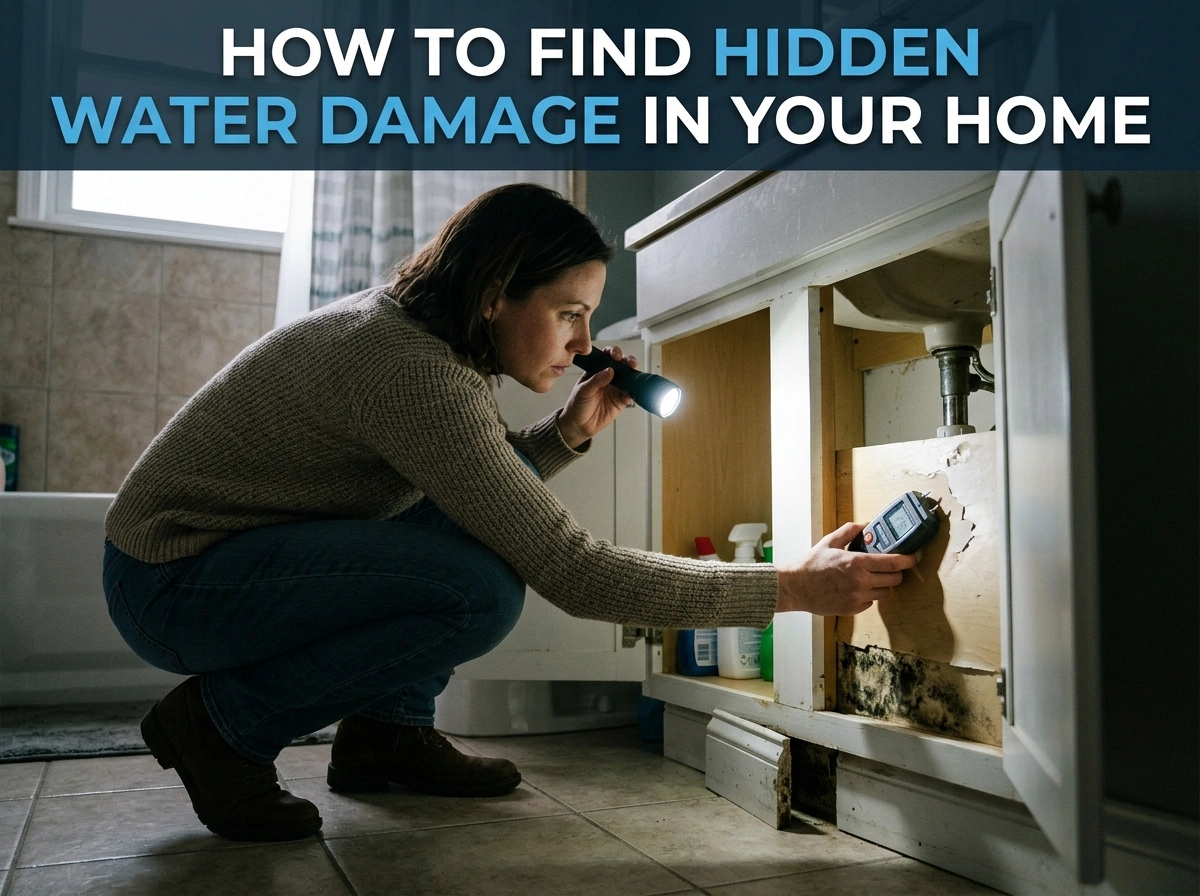
Slow leaks love to hide under sinks, behind dishwashers, and around washing machines, refrigerators with built-in ice makers, and water heaters. These are quiet leaks. The water usually drips straight into a cabinet base or a drain pan and just sits there, out of view, until the wood nearby starts to swell or a stain finally creeps out onto the visible flooring.
Can You Catch a Hidden Leak Before You See Any Damage?
Sometimes there’s an active leak somewhere in the house before any actual damage has become visible. Water leak detection at this stage is less about seeing anything and more about noticing what’s changed. A few things can tip you off before it gets that far.
Take a look at your last couple of water bills. A jump in usage that doesn’t match anything you’ve changed is worth investigating. You can also try a simple test: turn off every fixture in the house, then check the water meter. If the numbers keep moving, water is going somewhere it shouldn’t. Other clues include dripping or running sounds coming from inside a wall, condensation that keeps forming in the same spot no matter how often you wipe it down, and a stain that keeps coming back after you’ve cleaned or painted over it. It helps to remember that the leak and the damage are two separate problems. Hidden water leaks are the cause. Stains, soft spots, and warping are what you actually see, and those show up only after moisture has been sitting somewhere too long. Catching hidden leak signs early, before they turn into visible damage, is usually what keeps a small plumbing issue from becoming a bigger repair.
How to Check for Moisture Yourself
If you’ve already spotted a couple of warning signs, the next step is a basic moisture inspection. This means confirming there’s actually water present and getting a rough sense of whether the area has elevated moisture. This part of water damage detection doesn’t require special training, just a structured approach.
The most apparent place to begin is with a visual inspection. Without cutting into anything, just look carefully under good lighting; watch for any texture change, discoloration, or softness. A moisture meter goes one step further. These are small hand-held tools that use either thin pins pressed into the surface or scanning across the surface to measure the amount of moisture a particular material contains. The number may vary from reading to reading, depending on the material and the meter being used, so don’t take it as a final answer.
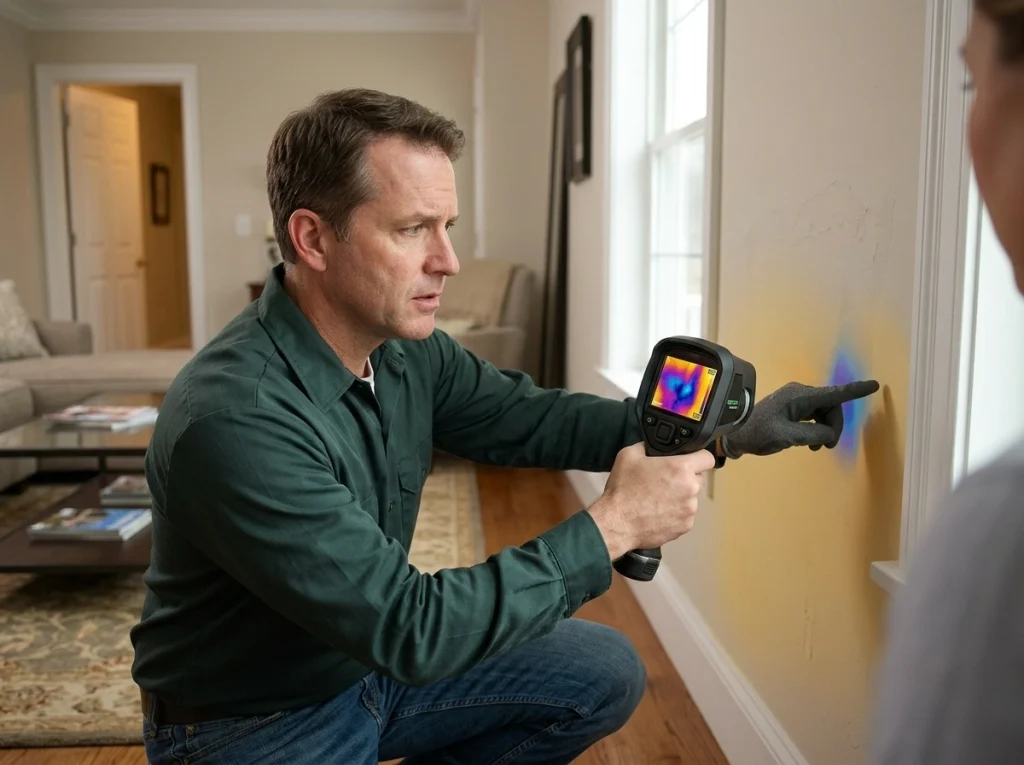
You can also compare the affected area with a similar area nearby that is undamaged. If one section of drywall reads wetter than another section of the same type of drywall a few feet away, you know something is going on. For items under finished surfaces, professional tools are typically employed. With the use of thermal imaging cameras and moisture meters, an area of a problem can be mapped without having to rip a hole into a wall just to inspect the moisture.
Which Materials Show Damage First?
Not every material reacts to moisture at the same speed, and that’s a big part of why moisture damage signs tend to show up in stages rather than all at once.
Drywall is usually first. Given enough sustained moisture, it can start bubbling or staining within a day or two. Wood trim swells and discolors, and it often pulls slightly away from whatever it’s attached to as the fibers soak up water. Flooring depends heavily on the type. Hardwood cups and buckles fairly quickly, while the subfloor underneath can stay soaked long after the surface looks fine again, which is part of why floors that dried out sometimes develop problems weeks later. Insulation is probably the hardest material to judge from inside the room, since it can hold onto water for a long stretch without giving off any visible sign at all. Framing and other structural wood can take on moisture too, and it usually doesn’t show any outward sign until things are fairly far along.
When It’s Time for a Professional Assessment
Not all the signs here are reasons for an immediate call. If the scent lingers after one rainy weekend, it may clear up once the air dries out. If the same sign appears more than once, or if it shows up with two or three other signs in the same spot, then it is a different story.
If you can’t determine where the moisture is coming from, if a wall or ceiling stays damp for more than a day or two, or if the problem seems to be spreading instead of staying in one place, it’s worth having a professional water damage inspection. This is also the case if there is a musty odor that persists after cleaning, multiple signs in one spot, or any indication that water has entered a wall cavity or subfloor. Sewage or contaminated water is a different category altogether and always requires a professional, largely because of the health risks associated with that type of contamination.
Spotting a sign only tells you something’s wrong. It doesn’t tell you how bad it is. Concealed water damage requires an accurate assessment of where the moisture is, how far it has spread through the structure, which materials have been damaged, and whether they can be dried out, repaired, or replaced.
What to Do Once You’ve Found Water Damage
A handful of practical steps make sense once you’ve found a likely problem spot, well before any assessment happens.
Stop the source if you can safely reach it. That might mean shutting off a supply valve or just moving whatever’s in the way of an active leak. Safety comes before anything else here. Steer clear of electrical outlets near wet areas, and don’t stand under a ceiling that feels soft or is starting to sag. It’s tempting to just repaint over a stain or patch a warped floorboard, but that only buries the problem rather than solving it. Snap a few photos and write down when you first noticed the issue and how it’s changed since. Once you’ve got that, scheduling a professional assessment gives you a real answer instead of a guess.
How Water & Sewage Damage Repair Handles Hidden Damage
All of the above questions bring us to one more: so what gets fixed once you know there is moisture? Allied 24/7 Restoration’s Water & Sewage Damage Repair service is designed with just that in mind.
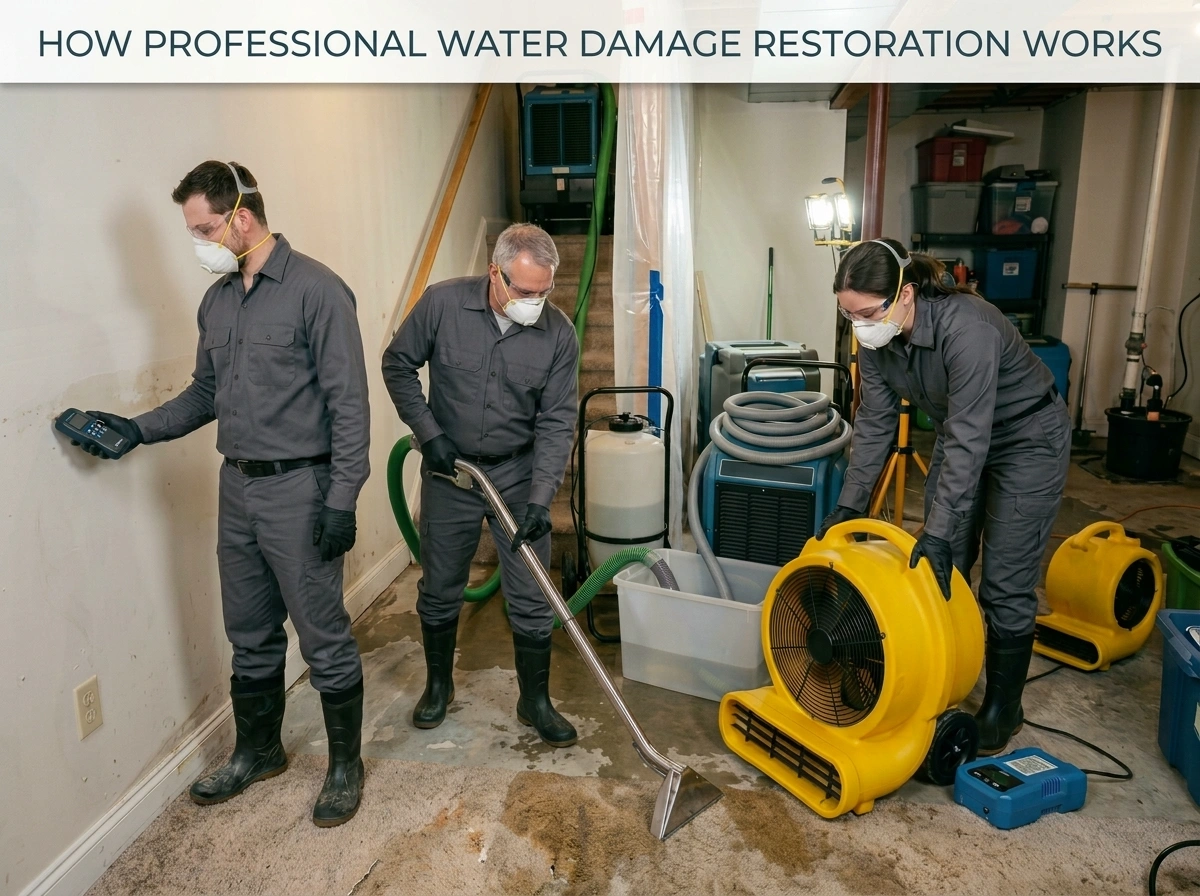
It begins with an evaluation to determine where and how far the moisture has penetrated before work is performed. Then water extraction takes place, removing anything standing or trapped within the structure. Structural drying extends the work of extraction and reaches into walls, subfloors, and ceilings that appear dry but still have water trapped inside. If sewage is involved, the water requires special cleaning and sanitization because it carries contamination risks that a normal leak does not. Once the area is dry, structural repairs address damaged trim, flooring, and drywall. Moisture and mold prevention are also addressed to help keep the same problem from returning later.
Why Hidden Water Damage Isn’t Something to Wait Out
A house can feel bone dry and still have real home moisture problems building somewhere inside its walls or floors. A faint stain, a soft patch of flooring, a smell that never quite clears—these small signs are pointing at something bigger happening out of view. Left alone, that kind of moisture keeps working on the materials around it, and mold becomes a genuine possibility the longer things stay damp. Getting it checked early doesn’t mean something has gone seriously wrong. It just means you’ll actually know what you’re dealing with instead of guessing.
Frequently Asked Questions
How can you tell if there’s water damage behind a wall?
Look for discoloration, a musty smell that won’t clear out, paint that’s peeling or bubbling, and any section of wall that feels soft or noticeably cooler than the area around it. A moisture meter can confirm what you’re seeing by hand.
What does hidden water damage actually look like?
It depends on where it is. Ceilings usually show a growing brown or yellow stain. Walls develop discoloration or soft patches. Floors can buckle or just feel damp underfoot even when nothing looks obviously wrong at a glance.
Can hidden water damage lead to mold?
Yes, and it’s one of the more common outcomes. Mold needs moisture and something organic to grow on, and drywall and insulation all qualify once they’ve stayed damp for a while.
How do professionals find damage that isn’t visible?
They usually start with a visual walkthrough, then bring in moisture meters and thermal imaging to map out damp areas behind finished surfaces, without needing to open up walls just to look.
When should you actually call for water damage repair?
Call if the moisture keeps coming back, if you can’t figure out where it’s coming from, if it seems to be spreading, or if sewage or contaminated water is involved anywhere. These aren’t situations most homeowners can safely handle solo.
Noticed Signs of Hidden Water Damage?
A stain that won’t fade, a smell that lingers, a soft wall, warped flooring—any of these are worth taking seriously. The real question is whether there’s moisture behind it and how far it’s already spread.
Allied 24/7 Restoration provides water & sewage damage repair in Kalispell, MT, including damage assessment, water extraction, sewage cleanup and sanitization, and structural repairs. Reach out to schedule an assessment and find out what’s actually happening behind the surface.