
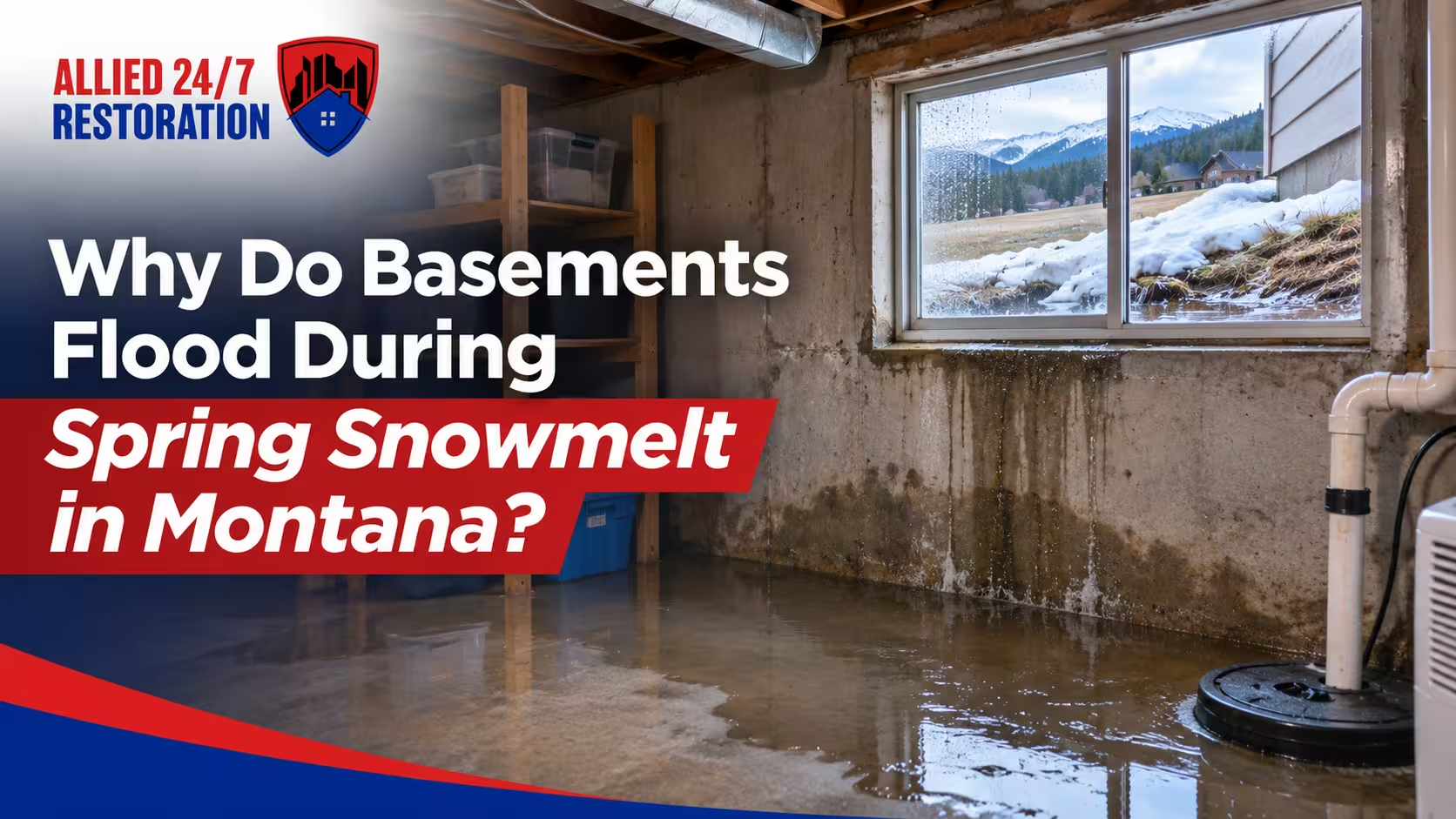
The snow along the north side of the house finally starts shrinking in March, and a few days later a dark stain creeps up the basement wall. No storm rolled through, so where did the water come from? Basement flooding during snowmelt usually traces back to the winter’s snow itself. Months of stored water let go over a few warm days, often while the soil underneath is still frozen or already soaked. A low spot, a weak joint, or a tired drain near your foundation gives that water a path. Here’s how that happens and what you can do about it.
How Spring Snowmelt Creates Basement Flooding
Every foot of snow in your yard is stored water waiting for a warm week. Whatever the soil can’t absorb or carry away ends up against your foundation, looking for a way in.
Rapid Snowmelt Creates More Runoff
A slow melt gives the soil time to drink, but a sudden warm spell doesn’t. A few warm days can turn a winter of snow into water faster than the ground absorbs it. Rain falling on old snowpack piles even more water on top. That snowmelt runoff flows downhill and pools along any wall in its path.
Frozen Ground Limits Water Absorption
Frozen soil acts a lot like pavement. Ice in the pores blocks water from sinking in, so meltwater sheets across the surface toward the lowest spot it can find. When the top few inches thaw, but deeper soil stays frozen, water soaks down a little and then spreads sideways toward your foundation.
Why Montana Homes Can Face Basement Water Problems During Spring Thaw
Montana winters stack up snow for months over deeply frozen ground, then spring shows up in fits and starts. That pattern can put water in a basement during spring thaw even in a year without heavy rain.
Winter Snow Accumulation and Changing Temperatures
A heavy winter simply means more water waiting for spring. Warm afternoons melt the surface and cold nights refreeze it, and those freeze-thaw cycles can leave an icy crust that sheds water instead of absorbing it. Your gutters, grading, and sump pump might handle a slow trickle fine but fall behind when everything lets go at once.
Local Property Conditions in the Flathead Valley
Two houses on the same street in Kalispell can have completely different springs. A yard that tilts toward the house sends runoff straight at the foundation, while one that falls away keeps it moving. Soil drainage changes from lot to lot across the Flathead Valley, and where you pile plowed snow matters too. Homes in low spots or without working perimeter drains usually see more trouble.
Common Ways Snowmelt Water Enters a Basement
Water doesn’t follow one route into a basement. Where it gets in depends on where it collects outside and what shape your foundation and drainage are in.
Foundation Cracks and Wall Joints
Hairline cracks look harmless until wet soil presses on them. Water finds those gaps and shows up as foundation seepage, usually a damp streak running down the wall. It also slips through the cove joint where the wall meets the floor slab and along seams between concrete pours.
Hydrostatic Pressure and Rising Groundwater
Hydrostatic pressure is just the weight of water pushing on whatever holds it back. Soaked soil leans on the basement walls and pushes up under the slab. Snowmelt also recharges groundwater, which can raise the seasonal water table in some areas and bring water up through floor cracks with no puddle outside. Plenty of spring leaks have nothing to do with the water table, though.
Window Wells and Poor Surface Drainage
Surface runoff is a different problem from groundwater pressure, even when the two show up together. A window well with a clogged or missing drain fills with meltwater and leaks around the frame. Bad grading and overflowing gutters steer even more water toward the wall.
Property Conditions That Make Spring Basement Flooding Worse
Snowmelt might start a leak, but your property decides how bad it gets. The same thaw can leave one basement with a damp corner and another with standing water.
Poor Perimeter Drainage and Clogged Gutters
Downspouts that empty a foot from the house keep the soil there saturated all spring. A French drain or perimeter drain directs water away from the house through a gravel-filled trench and perforated pipe. It only helps if someone designed it right and it hasn’t silted up.
Sump Pump or Discharge Problems
A sump pump pulls collected groundwater out of a pit in the basement floor and pushes it outside. A burned-out motor or a stuck float switch stops it cold, and so does a frozen discharge line or a power outage. Testing it before the thaw takes a few minutes.
Existing Foundation and Waterproofing Weaknesses
Old cracks, worn sealant, and patchy basement waterproofing don’t fix themselves over winter. Freeze-thaw cycles can widen existing gaps, though plenty of cracks start from settling or curing. The spots that leaked last spring will likely leak again.
Early Warning Signs of Basement Flooding During Snowmelt
Water intrusion rarely starts as a flood, so check the basement every few days during the melt and watch for these clues:
- Damp or dark patches along the bottom of basement walls
- Water seeping through foundation cracks or floor joints
- A wet or discolored basement floor
- A musty smell that won’t go away
- Chalky white mineral deposits on concrete or block
- Water pooling near the foundation outside
- A sump pump running far more often than usual
Any of these points to a moisture problem, but none of them proves snowmelt is the source. A plumbing leak can look the same, so note whether the signs line up with warm, melting days.
What to Do When Snowmelt Water Enters Your Basement
Once water is inside, stay safe first. Then limit the damage and find out how far the moisture reached.
Check for Safety Before Entering
Stay out of standing water that could reach outlets or appliances, and don’t touch anything electrical while you’re wet. Treat floodwater as contaminated, since it can carry sewage or chemicals. Deep water or an unclear electrical situation is a job for professionals.
Identify the Affected Areas and Water Source
Where water shows up first tells you a lot. A wet line along the cove joint points to soil pressure, while a stream from a window frame points to a full window well. A basement moisture assessment then maps how far water traveled into walls and flooring, which the entry point alone won’t reveal.
Remove Water and Begin Proper Drying
Water extraction pulls out the standing water, but that’s only the start. Drywall, insulation, and carpet pad stay wet long after the floor looks dry. Left that way, they can start growing mold within a day or two. Air movers and dehumidifiers dry them out properly, and a professional assessment can show which materials and belongings still hold hidden moisture.
How to Reduce the Risk of Basement Flooding During Spring Thaw
You can’t control how fast the snow melts, but you can control where the water goes once it hits the ground.
- Move snow away from the foundation. Shovel snow a few feet out from basement walls so big piles don’t melt right against them.
- Check gutters and downspouts. Clear them before the melt and extend downspouts several feet from the house.
- Review the property’s grading. Watch where water flows and pools during a melt, then fill low spots so the soil slopes away from the wall.
- Inspect foundation walls and window wells. Look for new cracks and failing seals, and clear debris from window well drains.
- Test the sump pump. Pour a bucket of water into the pit to confirm it kicks on, then make sure the discharge line isn’t frozen or blocked.
- Review recurring moisture problems. Water every spring calls for a drainage or basement waterproofing assessment before you spend money on the wrong fix.
None of these steps guarantees a dry basement. The right approach depends on where water collects and how it reaches your foundation.
Frequently Asked Questions
Can a basement flood from melting snow without rain?
Yes. Melting snow alone can produce plenty of runoff and saturate the soil around your foundation, especially when frozen ground keeps it from soaking in.
Why does water seep through basement walls after snow melts?
Saturated soil creates hydrostatic pressure that pushes water through any crack, joint, or weak seal in the walls.
Should I call a professional if my basement floods during spring thaw?
Yes, when water has soaked into drywall or flooring, or the space stays damp after cleanup. Call right away if electrical hazards are involved. Hidden moisture can feed mold if nobody dries it properly.
Final Thoughts
Snowmelt runoff, frozen or soaked soil, groundwater pressure, and a weak spot in the foundation can team up to flood a basement. Don’t brush off a damp wall or a musty smell, because fast water extraction and thorough drying keep a small leak from becoming a mold problem. Allied 24/7 Restoration provides water damage restoration in Kalispell, Whitefish, Bigfork, Columbia Falls, and Lakeside. If spring thaw puts water in your basement, give their team a call.