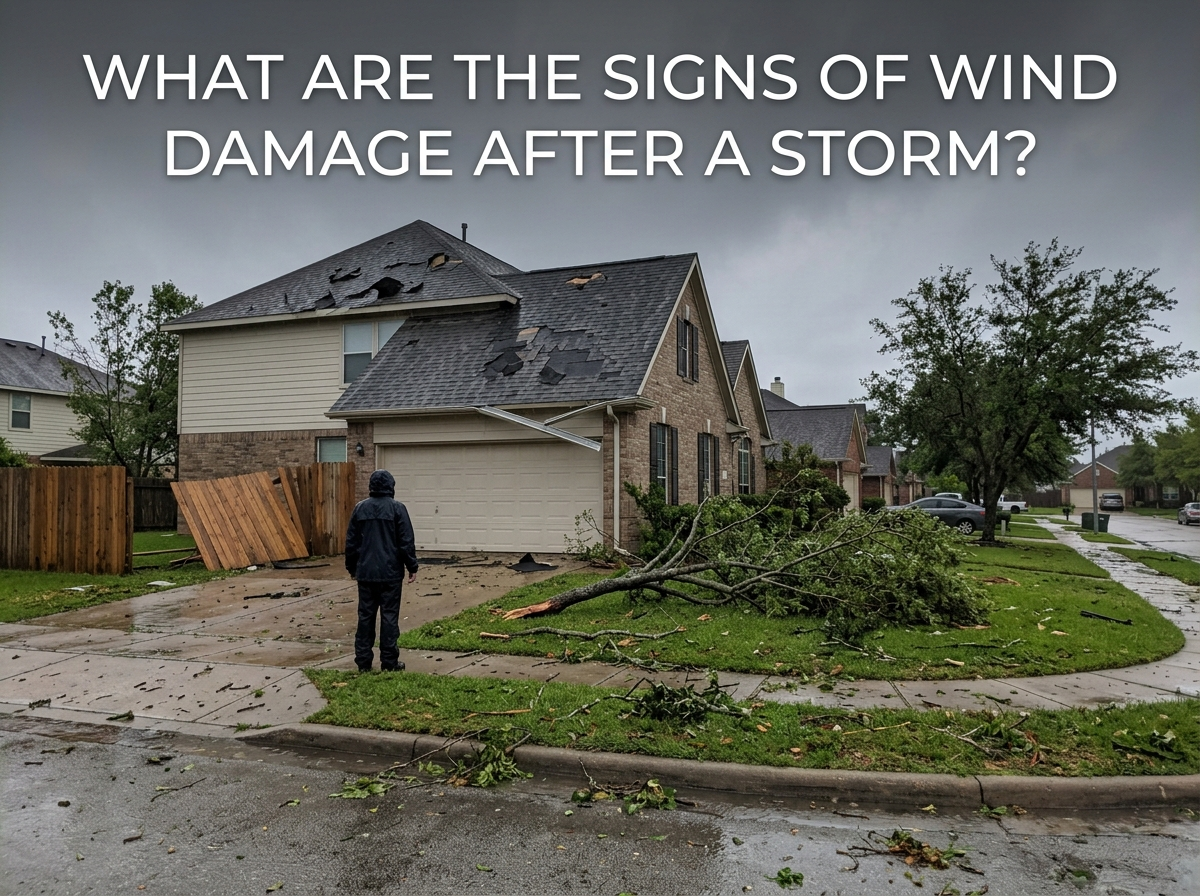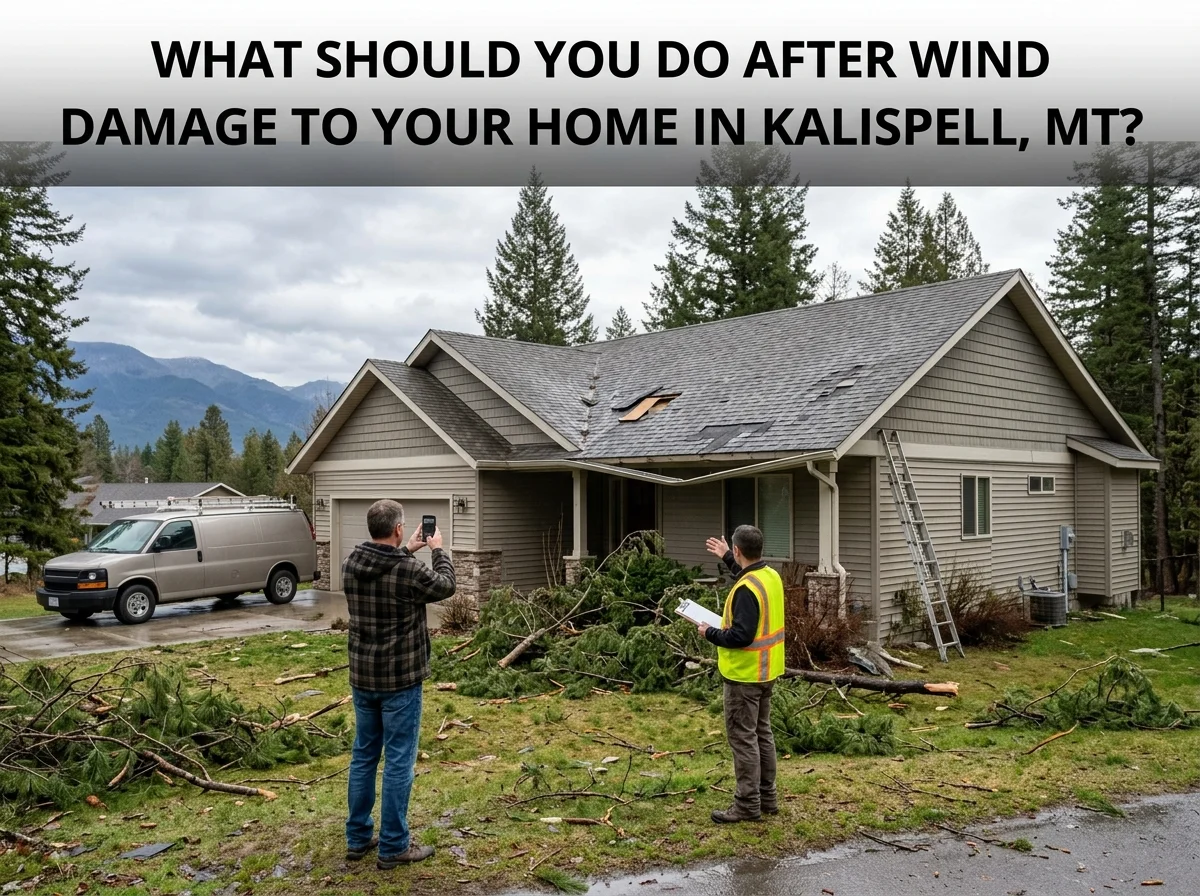
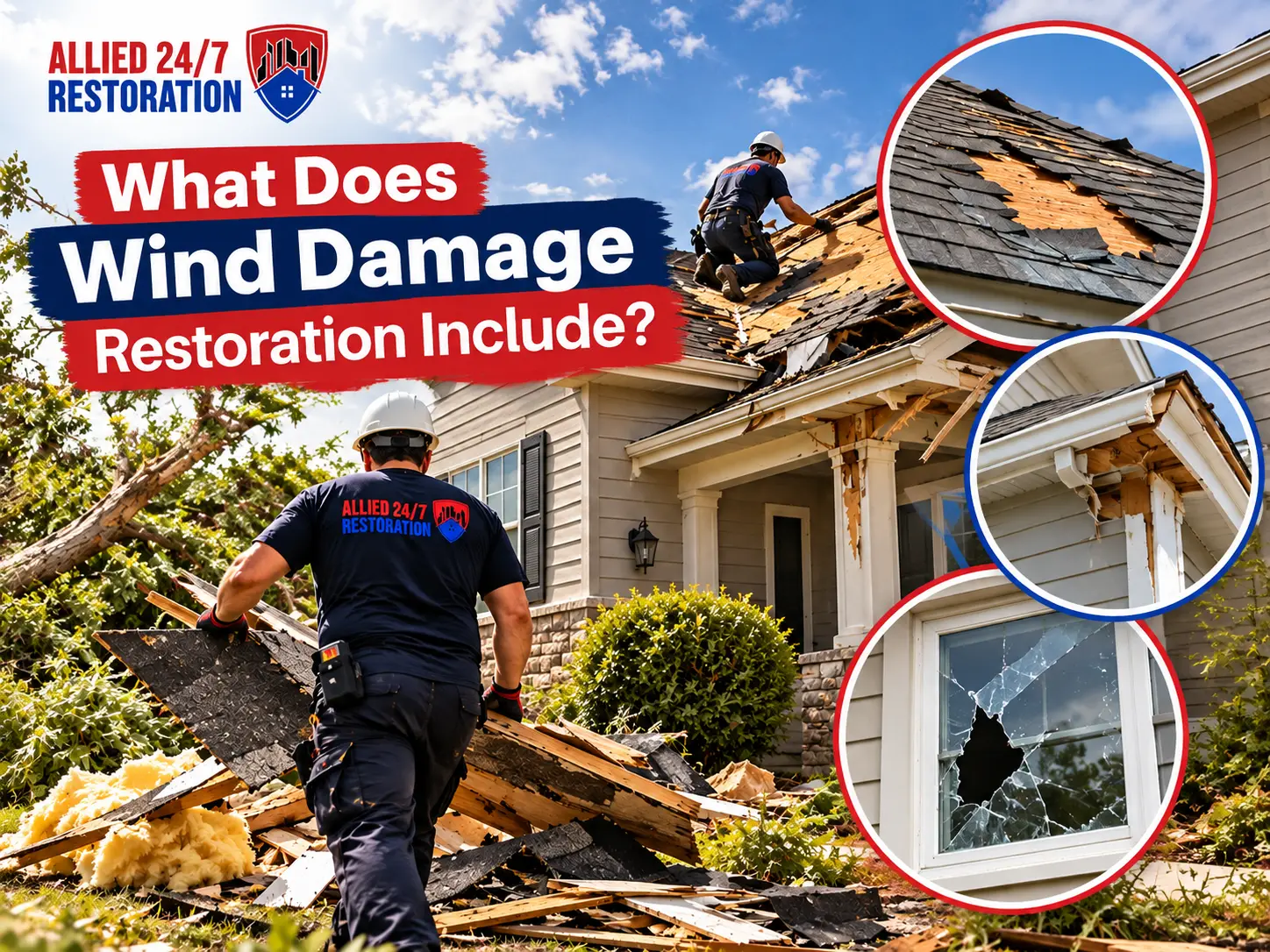
Wind goes straight for the weak spots on a house. It lifts shingles. It cracks window glass and rips siding off the wall. Doors take hits too. Once that outer shell opens up, rain- and wind-driven moisture has a direct path inside. A small gap today can mean a soaked attic next week.
So what does wind damage restoration include? It depends on what the storm broke. Your home won’t need every stage, because the damage decides the work. Still, most projects pull from the same five possible stages. Here they are in the order they usually happen:
- Property inspection and damage assessment
- Temporary protection and emergency stabilization
- Wind damage cleanup and debris removal
- Water extraction and structural drying, if moisture gets in
- Repairs and reconstruction where they’re needed
Which Services Are Part of the Windstorm Recovery Process?
Restoration is a sequence of steps. It’s not one visit. Solid wind damage restoration services follow the damage instead of a fixed menu. The scope depends on how much got hit and what the house is built from. Then there’s water. Did it find a way inside? That one question can change the whole job.
Property Inspection and Damage Assessment
Every job starts with someone walking your property and writing down what they find. The roof gets checked. Siding and windows get a look. Doors do too. Then the inspection moves inside to the ceilings and walls below the damage. Photos and notes go into a written record. That damage assessment sets the scope. Some damage is hidden on the first pass. A spreading ceiling stain or an odd roofline usually earns a closer look.
Emergency Protection and Property Stabilization
Open holes get covered first. Emergency board-up means fastening plywood over broken windows and damaged doors. That keeps weather and intruders out. Temporary roof protection usually means a heavy tarp secured over the damaged section. Neither one counts as a repair. A tarp buys you time while the full plan comes together. It was never meant to be your roof. If the shell is still sealed tight, this stage gets skipped.
Wind Damage Cleanup and Debris Removal
Debris has to go before repair work can start. Crews haul off broken limbs and torn roofing. They clear damaged materials out of the house. A clean site shows what was hiding under the mess. Big trees are a different story. A trunk on the roof may need a tree service first. If limbs are near power lines, the utility must clear the danger first, but the cleanup remains part of the property restoration. Storm damage cleanup can take an afternoon or turn into the biggest job.
Water Extraction and Structural Drying When Needed
Water is usually why a wind job gets bigger. A missing patch of shingles can let rain run into the attic. A cracked window can send it down a wall cavity. If there’s standing water, extraction equipment pulls it out first. Then comes moisture inspection. Techs run moisture meters over drywall and insulation. The subfloor gets checked too. Why? Wet material doesn’t always look wet.
High readings mean structural drying. Air movers and dehumidifiers draw moisture out of the building materials. Drying has to finish before anything gets closed up. Seal a damp wall behind fresh drywall, and you’re setting up mold. If no water got in, there’s nothing to dry. If it did, the same methods used in water damage restoration come into play.
Wind Damage Repair and Reconstruction
Repairs are where the house goes back together. That might mean new shingles on one slope. It might mean a few siding panels or one new window. Bigger hits call for reconstruction, like new roof decking or a rebuilt wall section. If framing or roof trusses took a hit, a structural engineer or other specialist may need to weigh in first. The goal is a home that’s safe and sealed. Livable again, too.
How Can Restoration Professionals Identify Hidden Windstorm Damage?
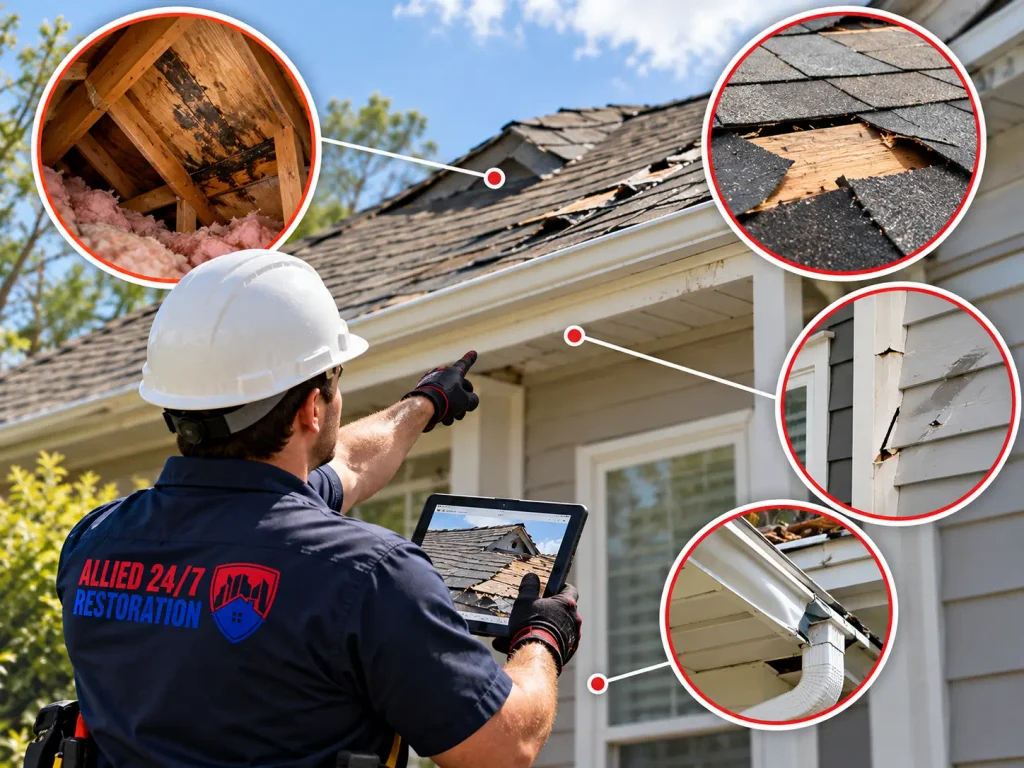
What you see from the yard isn’t always the whole story. Wind can open a gap too small to spot. Water will still find it. Hidden damage doesn’t show up on every job. When it does, it usually sits behind finished surfaces. So follow-up checks target the areas below and behind the visible damage.
Under a lifted section of roof, techs take moisture readings on the ceiling and attic insulation. Sometimes they open a small section of the wall to confirm wet material inside. A sagging ridge may need a structural look from a pro. Catching these problems early keeps secondary damage like mold and rot from piling on. No inspection catches everything on day one. Our guide to the signs of wind damage covers what to watch for.
When Is Emergency Wind Damage Restoration Necessary?
Some damage can wait for a scheduled visit. Some can’t wait at all. Emergency wind damage restoration makes sense when your house is open to the weather. It also makes sense when something on it has become a safety risk. These situations usually call for prompt professional attention:
- A roof opening or missing roofing that leaves the decking exposed
- Broken windows or exterior doors that won’t close or lock
- Water actively coming in through a storm-damaged spot
- Loose building parts or debris that could fall on someone
- Any opening where temporary protection would stop the damage from spreading
Stay off damaged roofs. Keep away from any structure that looks unstable. Treat every downed power line as live and call the utility or 911 when needed. For the steps on your end, see our post on what to do after wind damage. Restoration work picks up from there.
What Determines the Scope of Wind Damage Repairs?
Two houses on the same street can ride out the same windstorm. One needs a quick patch. The other needs a much bigger job. A good assessment sorts out why. It usually comes down to a few factors. Each one can push the scope up or keep it small:
- Extent of damage: A few lost shingles might mean one targeted repair. Damage spread across the roof and walls usually means several stages.
- Water intrusion: Wind can open the building envelope, the outer shell that keeps weather out. If water got inside, moisture mitigation joins the scope.
- Building materials: Some materials patch cleanly. Others are too worn or can’t be matched, so replacement wins.
- Structural concerns: Damaged framing calls for extra evaluation. It often means more extensive work.
- Additional project requirements: Weather and material availability can shape the schedule. Permits and specialty trades may also apply.
That’s why a fair plan starts with eyes on the property, not a phone quote. Nobody can see inside your attic over the phone. Nobody can read a moisture meter from clear across town either. A real plan only comes after a real walk-through.
Frequently Asked Questions
Here are straight answers to the questions in nearly every wind damage call. Most people want to know if the roof gets fixed. They ask about water and drying. And they want to know how big the job might get before anyone starts.
Does Wind Damage Restoration Include Roof Repairs?
It can. Wind might tear off shingles or lift the flashing. It can also damage the decking underneath. When that happens, roof repair usually becomes part of the job. The assessment decides how much work is needed. One damaged slope might only need patching. Widespread damage can point toward a larger replacement instead.
Does Wind Damage Restoration Include Water Removal and Drying?
Only when water actually got inside. Say a damaged roof or broken window let rain in. Crews may extract standing water first. Then they dry out the wet materials. Moisture readings show whether drywall or insulation is still holding water. If the building stayed sealed, drying isn’t part of the scope at all.
How Do I Know Whether My Property Needs Repairs or Full Reconstruction?
An on-site assessment answers that question. Damage limited to surface materials often needs only targeted repairs. Think shingles or siding. Damage that reaches deeper is a different matter. If the decking or framing got hit, reconstruction may be needed. The same goes for large wall sections. Structural concerns may also bring in a specialist before the final scope is set.
Get Wind Damage Restoration in Kalispell, MT
Wind damage restoration isn’t one fixed service. It shifts with the storm. Some homes need an inspection and a small fix. Others move through cleanup and drying, or all the way to a full rebuild. The right plan covers what your home needs and leaves out the rest.
Allied 24/7 Restoration provides wind damage restoration in Kalispell, MT, and nearby towns like Whitefish and Columbia Falls. The work starts with a damage assessment. Emergency board-up and temporary roof tarping follow when the house is open.
The team also handles debris removal and repairs to roofing and siding. When wind lets water inside, they take care of the drying too. The point is to figure out which stages your home needs and skip the rest. Call Allied 24/7 Restoration at (406) 756-4357 to talk through the damage.