
Mold does not always grow where homeowners can see it. In Kalispell, hidden mold can develop when moisture becomes trapped behind building materials or inside poorly ventilated spaces. Moisture can move through building materials and settle in places that receive little airflow. That is why a dry-looking surface does not always mean the area beneath it is fully dry yet. Knowing where to look can help you notice warning signs before a moisture issue causes wider damage. Hidden mold locations in Kalispell often include attic spaces, basements, and HVAC systems. Mold can also develop around roof structures and plumbing systems after leaks or water intrusion.
Common Hidden Mold Locations in Kalispell Homes
Attics and Insulation
Attic spaces can become vulnerable when roof leaks or poor ventilation allow moisture to collect. Insulation can hold dampness against roof sheathing, framing, and other materials.
Attic mold in Kalispell, Montana, may develop when warm indoor air reaches colder roof surfaces. Repeated condensation can raise moisture levels over time. Stains or a persistent musty odor can point to a moisture problem that deserves attention.
Basements and Crawl Spaces
Basement areas and crawl spaces are common moisture-prone home locations. Water can enter through foundation walls, floors, or small openings around the structure. Limited airflow can make these areas slow to dry.
Basement mold problems in Kalispell may follow flooding, plumbing leaks, or persistent humidity. Crawl spaces can face similar conditions when moisture collects beneath a home.
Behind Walls and Inside Wall Cavities
Mold behind walls can develop after a plumbing leak, roof leak, or other water intrusion entry point. A wall may feel dry on the surface while moisture remains inside. That trapped moisture can affect drywall, wood framing, and insulation.
Mold in wall cavities produces a musty odor without creating visible growth. Discolored surfaces, bubbling paint, or recurring dampness can suggest a hidden moisture source. A structural cavity mold can remain unnoticed until the damage becomes more apparent.
Under Flooring
Water can become trapped beneath flooring after flooding or plumbing failures. Under-flooring mold detection can be difficult because the affected material may look normal from above.
Warping, lifting, or persistent odors can provide useful clues. Moisture trapped below finished flooring has limited opportunity to dry. If damp subfloor materials remain wet, mold can develop out of sight and affect nearby materials.
Bathrooms and Kitchens
Bathrooms and kitchen areas naturally produce moisture through showers, sinks, and plumbing fixtures. Without adequate ventilation, humidity can linger on walls, ceilings, and other surfaces.
Bathroom mold growth in Kalispell may occur around fixtures, grout, or areas that remain damp. Kitchen mold problems can develop beneath sinks, around dishwashers, or near water connections. Pipe penetration mold issues can also occur where plumbing enters walls or cabinets.
HVAC Systems and Ductwork
HVAC systems can develop moisture problems when condensation forms around equipment or drainage does not work properly. Ductwork may also become vulnerable when moisture enters the system or nearby insulation.
Airflow obstruction areas can make some parts of an HVAC system harder to keep dry. If mold develops around equipment or ductwork, airflow may spread particles into connected spaces. Moisture around air-handling equipment should be evaluated rather than ignored.
Around Roofs, Ceilings, and Plumbing
Roof structures are important water intrusion entry points. A damaged roof allows water into ceilings, insulation, and other concealed areas. Even a small leak creates repeated dampness if the source remains unresolved.
Plumbing systems can cause similar problems. Slow leaks inside walls or floors continue for a long time before they become obvious. These moisture problems in hidden areas can support mold growth while leaving little visible evidence.
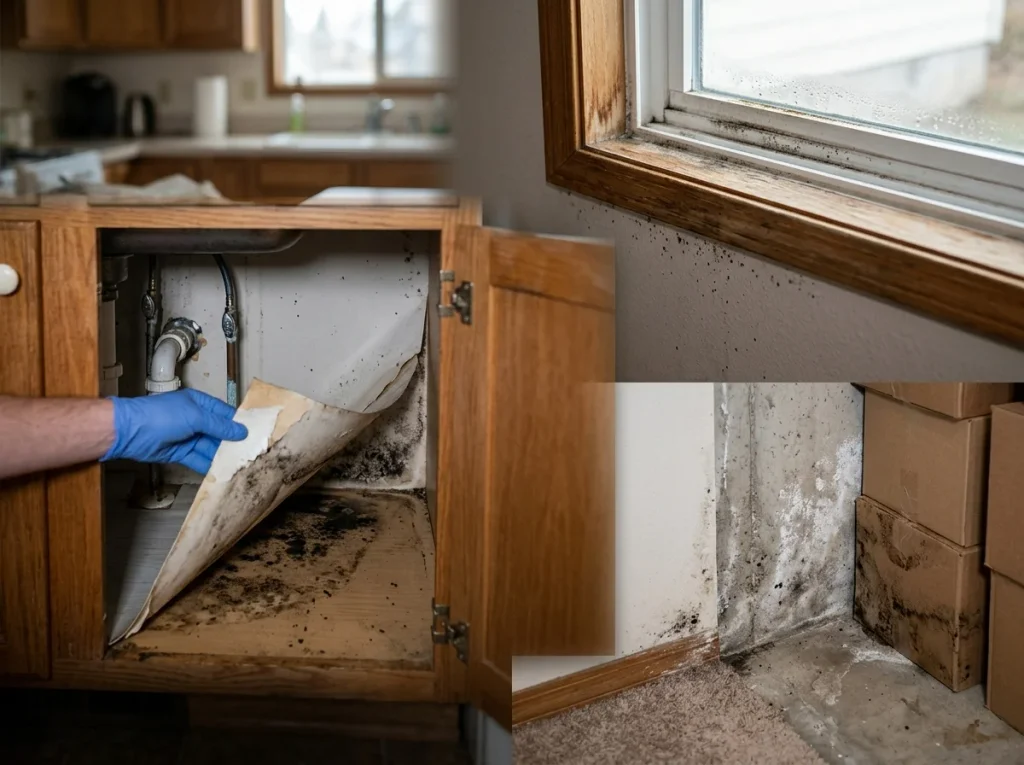
Why Mold Grows in These Hidden Areas
Mold needs moisture, a food source, and suitable environmental conditions to grow. Many concealed spaces provide these conditions. Materials such as drywall, wood, and some insulation materials can support growth when they remain damp.
Moisture can come from leaks, humidity, flooding, or ventilation. Poorly ventilated spaces hold humid air for extended periods. Condensation buildup spots can become vulnerable when warm, moist air meets a cooler surface.
Moisture barrier failures can also allow water to reach areas that are difficult to dry. In some homes, airflow obstruction can slow drying and leave damp materials exposed to prolonged moisture. Once these conditions persist, fungal colonization can begin on suitable materials.
The hidden moisture source is often what allows growth to continue. Cleaning visible mold without correcting the source can leave conditions that support recurrence.
Signs That Mold May Be Hidden in Your Home
A musty odor is a common clue that mold may be present somewhere out of sight. However, an odor alone does not confirm mold. It should be considered alongside other signs and the property’s moisture history.
Look for unexplained discoloration on walls, ceilings, floors, or other materials. Peeling or bubbling paint can indicate moisture behind a finished surface. Warped flooring also points to water trapped below the visible surface.
Damp areas that stay wet can be a warning sign. Repeated condensation or stains left after a leak also point to a moisture problem. If mold keeps coming back after cleaning, there may still be a hidden source of moisture.
When Is a Professional Mold Inspection Needed?
A professional mold inspection is useful when visible evidence does not explain the full moisture problem. This is especially true after significant water damage, recurring leaks, or flooding.
Inspection can also make sense when a persistent musty odor has no obvious source. Attics, crawl spaces, wall cavities, and HVAC areas can be difficult to assess without appropriate equipment and experience.
Homeowners should consider professional help when mold repeatedly returns after cleaning. Recurrence can indicate that moisture remains present or that affected materials were not fully addressed.
A professional assessment can consider moisture conditions, visible growth, affected areas, and possible hidden sources.
Mold Inspection and Remediation in Kalispell
When hidden mold is suspected, Allied 24/7 Restoration provides mold inspection and remediation services in the Kalispell area. We provide inspection, testing, and moisture detection to identify affected areas and possible moisture sources.
When remediation is needed, the work can include containment, mold removal, cleaning, and sanitization. Addressing the moisture source is also important because mold can return when damp conditions remain.
Allied 24/7 Restoration also addresses affected areas through restoration after mold-related damage. For homeowners in Kalispell and Flathead County, professional help can be useful when mold may be present in difficult-to-inspect areas.
Frequently Asked Questions About Hidden Mold
Where is mold most likely to hide in a home?
Mold commonly hides where moisture becomes trapped. Attics, crawl spaces, flooring, kitchens, and HVAC areas can all become vulnerable.
Can mold grow behind walls?
Yes. Leaks and water intrusion can leave wall cavities damp enough for mold to develop. Growth may remain hidden behind drywall or other finished materials.
How can you tell if hidden mold is present?
Musty odors, unexplained staining, recurring mold, moisture damage, and persistent dampness can indicate hidden mold. These signs do not confirm mold by themselves.
When should you have a home checked for mold?
Consider professional assessment after significant water damage, unexplained musty odors, or mold that returns after cleaning. Hidden areas may require closer evaluation.
Final remarks
Mold can develop in parts of a home that are easy to overlook. Attics, crawl spaces, wall cavities, flooring, plumbing areas, and HVAC systems can become vulnerable when moisture remains trapped. Paying attention to odors, stains, dampness, and previous water damage can help homeowners recognize potential problems sooner.
When hidden mold is suspected, professional inspection can help identify affected areas and moisture conditions. Allied 24/7 Restoration provides mold inspection and remediation in Kalispell, helping you move from identifying the problem to addressing it properly.