
If you have noticed a musty smell or dark spots creeping along your bathroom ceiling, you are not imagining things. Kalispell’s freeze-thaw climate creates perfect conditions for indoor mold growth, and most homeowners don’t catch it until it has already spread. The good news is that early signs of mold are easy to spot once you know what to look for. Professional mold inspection & remediation can also help stop the problem before it damages your home or your health.
The Hidden Threat: Why Mold Is Common in Northwest Montana Homes
Kalispell’s weather swings hard between deep winter freezes and heavy spring runoff. Snow melts slowly against your foundation, and rapid spring thaws push moisture into crawlspaces and basements. This constant freeze-thaw cycle gives mold spores exactly what they need: consistent moisture and organic material to feed on inside your walls.
Because new homes are constructed energy-efficient in Northwest Montana, they are great for heating costs but poor at air circulation. Moisture is released into the air when you shower or even use a wood stove. That humidity has nowhere to disperse as doors and windows are closed for months on end. It resides in the interior of your wall structure, frame and insulation, rather than venting out.
Hidden mold continues to grow behind walls, spoiling the insulation fibers over time and degrading wood framing. It can become a problem for structural lumber when it’s left unchecked, and it gradually degrades the air quality in your home. You should consult professional mold removal services promptly upon detecting the smell or noticing its symptoms because the affected area may be bigger than it looks on the surface.
5 Critical Signs You Will Experience When Your Kalispell Home Has Mold
1. Musty Odors and Airflow Recirculation
The earthy, damp odor in the basement or closet is not “old house smell”! It is caused by Microbial Volatile Organic Compounds (MVOCs) that the mold produces as it eats through the building materials. This smell can occur before mold stains are visible, and is one of the first indications of a growing mold issue.
A small mold infestation can quickly become a serious problem for your furnace or Central Air system. Mold spores get trapped in the air when it is drawn through a wet crawlspace or attic and spread to all the rooms in the house. If you notice a musty odor in the house that accompanies you from room to room, then your HVAC system could be the culprit.
2. Condensation and frost build-up on the window.
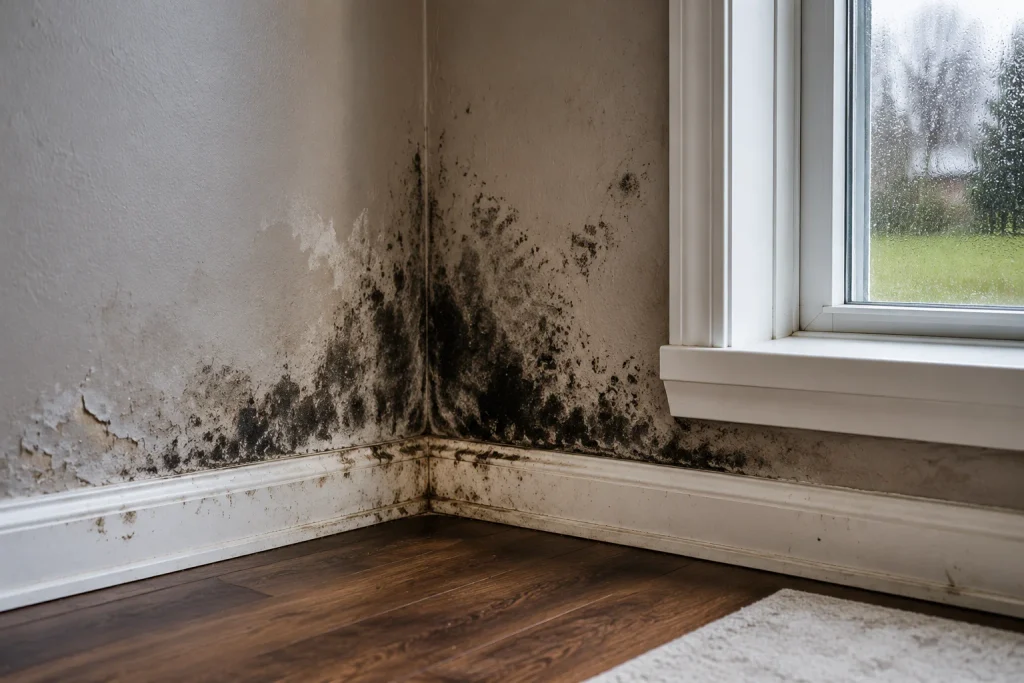
In negative degree weather, double pane windows and older window sills will have trouble. When warm indoor air comes in contact with the cold outside glass and frame, condensation forms on the glass along the sash and runs down on the sill. That repeated moisture exposure results in black mould growing around window edges and the drywall surrounding the window.
3. Visual Surface Discoloration and Biofilms
Active mold colonies show up differently depending on where they’re growing. On wood and drywall, look for velvety or powdery patches in black, green, or gray. On grout and tile, it often appears slimy and dark, almost like a thin film. Any unexplained discoloration in a damp area deserves a closer look.
Here are the highest-risk zones in Flathead County homes:
- Crawlspaces & Basements: Unsealed dirt floors or damp concrete foundations absorbing ground moisture from spring thaws.
- Attic Sheathing: Warm interior air escaping into cold attics, causing roof deck condensation and dark staining.
- Utility Rooms: Leaking water heaters, washing machine lines, or condensation lines from high-efficiency furnaces.
4. Structural Warping and Water Damage History
Bad paint, spongy or soft drywall, and warped baseboards are all signs of excess water inside the wall cavity for too long. These don’t just sound like cosmetic problems. These are indications that water damage has been occurring for extended periods of time and is deep enough to have affected the building materials below, sometimes resulting in the kind of mould that a homeowner’s cleaning regimen cannot reach.
5. Indoor Allergic Reactions
If you have a cough, congestion, or itchy eyes that worsen inside and clear up outdoors, it may be a sign of mold exposure. Mold spores are irritating to the respiratory system and often can cause or intensify asthma symptoms, particularly in children and the elderly. These health risks gradually build up, and that’s why they often go unnoticed in many homes for months.
Visual Inspection vs. Hidden Mold: Where Is It Hiding?
Not every mold issue is something you can scrub away with a bottle of cleaner. Here is how surface mildew compares to deeper structural mold problems.
| Indicator Category | Surface Mildew (DIY Manageable) | Deep Structural Mold (Requires Inspection) |
| Affected Area Size | Less than 10 sq. ft. (e.g., shower tile grout) | Greater than 10 sq. ft. or inside wall cavities |
| Surface Penetration | Non-porous surfaces (glass, tile, sealed metal) | Porous materials (drywall, insulation, subfloor) |
| Moisture Source | Temporary humidity (bath shower steam) | Active pipe leak, groundwater, or roof intrusion |
| Primary Health Hazard | Minor, localized irritation | Airborne spore dissemination via HVAC ductwork |
Critical Assessment Note: Never tear into drywall or pull up carpet if you suspect hidden mold behind it. Disturbing a dry mold colony releases millions of airborne spores into your living space almost instantly, turning a contained problem into a house-wide one.
DIY Testing Kits vs. Professional Mold Inspection in Kalispell, MT
False Positives Are a Common Issue With Home Testing Kits
Store-bought petri dish kits sound convenient, but they’re unreliable for a simple reason: mold spores exist naturally in outdoor and indoor air everywhere, including perfectly healthy homes. Set a plate out and it will almost always grow something. These kits can’t tell you where moisture is coming from, how bad the problem is, or whether your air samples fall within a safe range.
Advanced Diagnostic Tools Used by Certified Inspectors
A professional mold inspection in Kalispell MT relies on equipment that goes far beyond a petri dish:
- Infrared Thermal Imaging: Detecting hidden moisture pockets behind walls and under floors by reading surface temperature variances.
- Calibrated Moisture Meters: Pinpointing exact relative moisture levels inside structural wood framing and drywall.
- Air & Surface Spore Sampling: Lab-analyzed cassette air samples that compare indoor spore counts against outdoor baseline controls.
How does a Professional Mold Inspection & Remediation in Kalispell work?
Step 1: Comprehensive Mold Inspection in Northwest Montana
Certified technicians begin at the top of the house and make their way down, starting in the attic before moving through the house to the crawlspace. The purpose is to identify all water sources, map the water-damaged area, and establish a clear scope of work. This is the difference between guessing and being able to create a proper, effective remediation plan.
Step 2: Cross-Contamination Prevention
Technicians use physical containment barriers to prevent access to the work area before any removal is made. Negative air machines fitted with HEPA filters draw air from within the area, causing the pressure to be lower inside than out. This will prevent mold spores from being spread in bedrooms or hallway areas or other unaffected areas while working.
Step 3: Safe Removal & Mold Damage Restoration
Muddy carpet, drywall and insulation that cannot be salvaged are removed and bagged for disposal. All remaining structural framing is sprayed with antimicrobial solutions and thoroughly HEPA vacuumed to collect any remaining spores. This step is for both the visible growth and the microscopic spores on the surrounding surfaces.
Full-service mold damage restoration starts when the affected area is clean and dry. This involves repairing the drywall, replacing the flooring and reinstalling the insulation to restore your home to pre-loss conditions. One crew performing both mold remediation in Kalispell MT, and restoration results in fewer contractors to manage and a quicker recovery to normal.
Preventive Action Plan for Northwest Montana Homeowners
Small habits go a long way toward protecting your home from future mold problems.
- Keep indoor relative humidity levels below 50% during winter months using high-capacity dehumidifiers.
- Run bathroom exhaust fans for at least 20 to 30 minutes after showering to clear residual moisture vapor.
- Inspect roof flashing, gutters, and downspouts every autumn to ensure melting snow drains away from the foundation.
- Seal crawlspaces with heavy-duty vapor barriers and consider conditioned encapsulation to block ground moisture.
- Service furnace filters and HVAC systems twice annually to maintain proper airflow across ductwork.
Frequently Asked Questions
Will the cold winters in Montana kill mold in unheated attics or crawlspaces?
No. Mold spores do not die in cold weather conditions; they just go dormant until warmer temperatures and moisture return in the spring.
When should I schedule a professional mold inspection in Kalispell, MT?
Book one right after an active water leak or when buying or selling a property. Common problem signs include persistent musty odors or if household members develop unexplained respiratory symptoms indoors.
Is mold damage restoration covered by standard homeowner’s insurance in Montana?
It depends on the cause. Mold from sudden events like a burst pipe is often covered, while growth from long-term neglect usually needs a separate policy rider.
Get a Local Mold Inspection You Can Trust
Allied 24/7 Restoration provides professional mold inspection & remediation across Kalispell and Northwest Montana, backed by 24/7 emergency service for residential and commercial properties. Reach out today for a thorough assessment and get the peace of mind that comes with knowing your home is safe.