Mold can develop quickly after a leak, flood, plumbing failure, or period of high indoor moisture. In Kalispell homes, winter moisture, roof leaks, condensation, and water damage can create conditions where mold spreads behind walls or under flooring. Cleaning visible growth is only part of the job. Professional mold remediation focuses on finding the moisture source, containing the affected area, removing damaged materials, and cleaning the structure safely.
What Professional Mold Remediation Actually Involves
Professional mold remediation is a controlled process rather than a simple cleaning service. The team first determines where mold is present and why it developed. That assessment guides the remediation protocol procedures used for the property.
The goal is not to make unrealistic claims about removing every mold spore. The goal is to remove mold contamination where practical, prevent its spread, and correct the conditions that support continued growth. That approach helps protect clean areas while reducing the chance of recurring problems.
What Happens During Professional Mold Remediation in Kalispell?
1. Inspecting the Mold and Tracing the Moisture Source
The process starts with a detailed inspection before work begins on site. A technician looks for visible growth, musty odors, staining, water damage, and areas where moisture may be hidden. Moisture meters can help identify damp materials behind or near affected surfaces.
Finding the source of moisture is critical. A damaged supply line, roof leak, poor ventilation, condensation, or previous flooding may keep materials damp. Source moisture elimination must happen before the project can be considered complete.
The team also determines the extent of the affected area. Mold behind drywall may require a limited opening to inspect the wall cavity.
2. Building a Remediation Plan Around the Affected Area
Once the scope is clear, remediation contractors establish a work plan. The plan identifies materials that can be cleaned, materials that require removal, and areas that need protection. The team also selects appropriate containment materials and personal protective equipment.
The level of control depends on the size and location of the contamination. An isolated bathroom problem may need a different setup than widespread growth following water damage. The plan also supports cross-contamination prevention. Workers should control movement between affected and clean areas.
3. Isolating the Work Area to Prevent Mold Spread
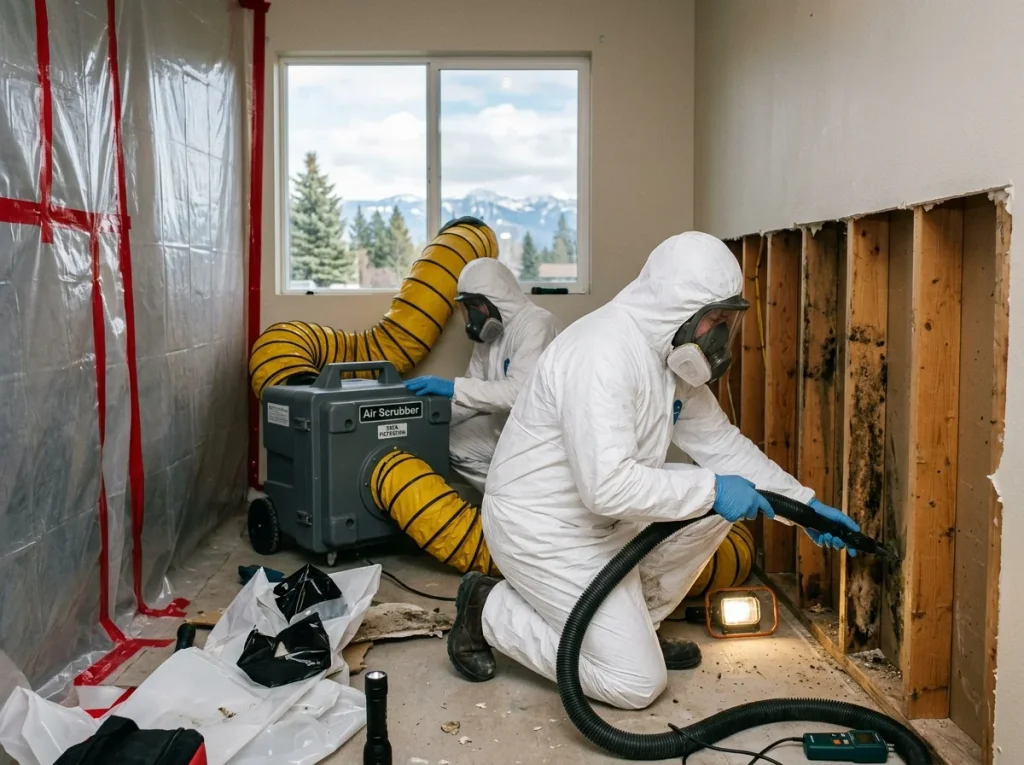
Containment procedures for mold removal rely on designs to keep disturbed particles from moving into unaffected spaces. Depending on the project, workers may use plastic containment barriers, sealed openings, and controlled entry points. Negative air pressure systems can help keep air moving toward the contained area rather than into clean rooms.
Affected area isolation creates a controlled workspace. Proper containment barrier setup must work with the airflow plan for the project. This setup is especially important when drywall, insulation, or other materials must be disturbed.
4. Filtering Air While Contaminated Materials Are Disturbed
Removing mold-damaged materials can release particles into the air. Professional crews use HEPA filtration systems to capture fine airborne particles during remediation. HEPA filtration mold remediation may include portable air scrubbers positioned within the containment area. These machines pull contaminated air through high-efficiency filters before returning filtered air to the work area or exhausting it according to the project plan.
Air scrubbing technology supports the containment strategy while workers remove materials and clean surfaces. Ordinary fans are not a substitute for this equipment because uncontrolled airflow can move particles into clean spaces.
5. Removing Materials That Cannot Be Salvaged
Some porous building materials cannot be effectively cleaned once mold has deeply affected them. Mold-damaged material removal may include sections of drywall, insulation, carpet, padding, or other materials depending on the contamination.
Workers remove these materials carefully to limit disturbance. They place waste into appropriate bags or containers and follow material disposal procedures for the project.
Insulation removal services may be needed when insulation has absorbed water or developed extensive contamination. Flooring materials can also require removal when moisture has reached the subfloor or padding.
Not every affected material needs to be discarded. The decision depends on its condition and extent of contamination.
6. Cleaning Remaining Surfaces and Treating the Area
After damaged materials are removed, the remaining structure must be cleaned. Professional mold spore cleanup procedures may include HEPA vacuuming and damp wiping of suitable surfaces.
The cleaning method depends on the material and the type of contamination. Workers avoid simply spreading residue across nearby surfaces. Decontamination procedures are performed within the controlled work area to reduce the chance of cross-contamination.
Antimicrobial treatment for mold may be used when appropriate. Antifungal treatments applied to a surface do not replace physical removal and cleaning. Chemical treatment is only one part of the process.
Material encapsulation methods may also have a role in certain situations. Encapsulation should not be used to hide active contamination or replace removal when contaminated material cannot be safely restored.
7. Drying the Structure and Controlling Moisture
Cleaning alone will not solve a mold problem if the building remains damp. Moisture control during remediation is therefore a major part of the work.
Professionals may use dehumidification equipment to reduce indoor humidity and help affected materials dry. Moisture readings can show whether walls, floors, or other structural materials have reached an acceptable dry condition.
Moisture remediation strategies depend on the source. A leak may require plumbing repairs. Condensation may require ventilation improvements or humidity control. Water intrusion from outside may require repairs to roofing, drainage, or other building components.
The solution must address why mold developed.
8. Final Cleanup and Post-Remediation Verification
Once removal and cleaning are complete, the crew performs a final inspection. The work area should be checked for remaining visible contamination, moisture problems, debris, and areas that need additional cleaning.
A post-remediation inspection in Kalispell can help confirm that the planned work has been completed. Verification testing protocols may be appropriate for some projects, especially when testing was part of the original scope or when independent verification is requested.
Air quality monitoring may be considered when conditions warrant it. Testing is not automatically required for every project.
How Long Does Professional Mold Remediation Take in Kalispell?
The professional remediation timeline depends on the size of the affected area, materials involved, moisture conditions, and restoration needs. A small isolated area may be handled faster than contamination spread through several rooms.
Drying can also affect the schedule. Materials must be adequately dry before reconstruction begins. Rushing this stage can leave moisture behind and create conditions for mold to return.
How Much Does Mold Remediation Cost in Kalispell?
In Kalispell, professional mold remediation commonly falls around $1,250 to $3,250 for a typical project, although larger or more complicated jobs can cost more.
A small area may only require containment, removal, and surface cleaning. Costs increase when mold has spread behind drywall, into insulation, crawl spaces, or other hard-to-reach areas. Drywall replacement, insulation removal, moisture repairs, and reconstruction can add to the final bill.
The actual price should be based on the affected area and the work required to remove the mold and address the moisture source. An on-site assessment can provide a more accurate scope and estimate.
What Happens After Mold Remediation?
Restoration after mold remediation begins once the affected structure is clean and dry. Depending on the project, restoration companies may replace drywall, insulation, flooring, trim, or other removed components.
The restoration and reconstruction phases should follow the remediation work rather than cover unresolved moisture or contamination. New drywall replacement materials or flooring materials should only be installed after the area is ready.
When Should You Hire a Professional Mold Remediation Company?
Professional help makes sense when mold covers a large area, keeps returning, involves hidden moisture, or affects porous building materials. Professional remediation is also important when containment is needed.
Allied 24/7 Restoration provides mold remediation services in Kalispell, MT, with a process built around assessment, containment, controlled removal, cleaning, moisture control, and restoration. The team can help determine the scope of the problem and the work needed to restore the affected area.
Frequently Asked Questions
How long does mold remediation take in Kalispell?
Most mold remediation projects take 1 to 5 days, depending on the size of the affected area, mold severity, and drying requirements.
How much does mold remediation cost in Kalispell?
Mold remediation can cost a few hundred to several thousand dollars, depending on the affected area, materials that need removal, and the extent of the mold damage. An inspection can determine the actual scope.
Can I stay in my home during mold remediation?
Sometimes. You may be able to stay if the affected area is small and contained. For extensive mold growth or work involving HVAC systems or multiple rooms, temporary relocation may be necessary.
Does mold remediation remove all mold?
No. It removes active mold growth and addresses the moisture problem that caused it. Since mold spores are naturally present in the air, the goal is to reduce mold to normal background levels.
What happens after mold remediation is finished?
The area is cleaned, dried, and inspected to confirm the mold problem has been properly addressed. Any remaining moisture issues should also be corrected to help prevent mold from returning.
Professional Mold Remediation in Kalispell, MT
A successful remediation project does more than remove visible mold. It identifies the moisture problem, controls the affected area, removes materials that cannot be salvaged, cleans the remaining structure, and prepares the property for restoration.
If you suspect mold after water damage or ongoing moisture in your Kalispell property, Allied 24/7 Restoration can assess the affected area and help determine the appropriate next steps. Professional remediation keeps the work controlled from the first inspection through final cleanup and restoration.