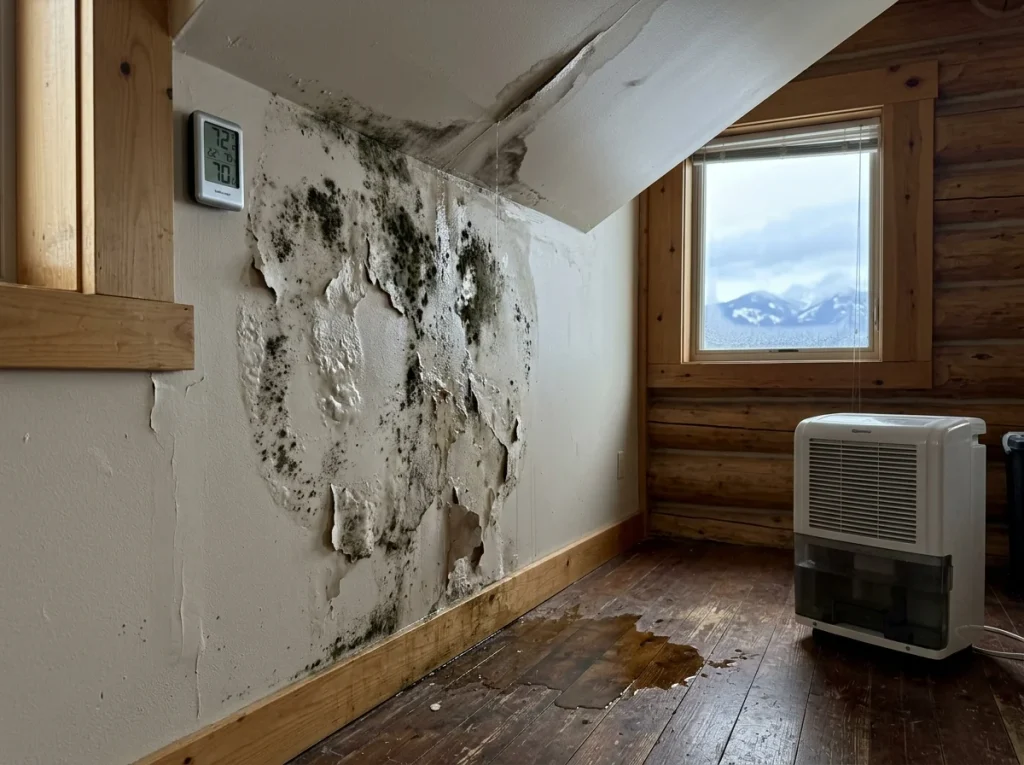
Removing standing water does not mean the water damage is over. Mold growth following water damage in Kalispell can begin when moisture remains inside building materials or indoor air stays humid. Mold spores are common in homes and buildings. They need moisture and suitable conditions to develop. Wet drywall, damp insulation, and flooring can hold water after a leak or flood. If those materials stay damp, mold can develop. The risk increases when drying is incomplete or the source of moisture remains active.
Why Does Mold Grow After Water Damage?
Mold needs moisture, oxygen, a food source, and suitable environmental conditions. Many building materials contain or collect organic matter that can support fungal growth. Water damage changes these conditions by adding moisture to places that are normally dry.
Moisture Provides What Mold Spores Need to Grow
Mold spores can settle on many surfaces without visible growth. When enough moisture is available for long enough, spores can germinate. This process depends on water availability, temperature, material type, and other environmental factors.
Hidden moisture remains even when surfaces appear dry. Damp drywall, wood, carpet padding, and settled dust support growth when conditions remain favorable. This makes moisture control after water damage an important part of preventing mold.
Wet Materials Can Hold Moisture Longer Than Expected
Materials vary in how quickly they absorb and release moisture. Drywall can retain moisture within its gypsum core and paper facing. Insulation can stay damp inside wall and ceiling cavities even after nearby surfaces feel dry. Wooden structures also absorb water and release it slowly.
Carpet and padding hold water below the visible surface. Flooring, subflooring, and baseboards remain damp after a leak or flood. These differences in moisture retention make visual inspection alone unreliable.
What Conditions Encourage Mold Growth After Water Damage?
Mold development depends on more than the presence of water. Lingering dampness, elevated humidity, and suitable temperatures can all support fungal growth.
Lingering Moisture
The longer materials remain damp, the more time mold spores have to germinate. A small leak can become a larger concern when moisture stays inside a wall, flooring, or around a baseboard.
Drying should address visible water and absorbed moisture. If water saturation remains high inside a material, the surface may feel dry while deeper areas stay damp.
High Humidity
Humidity levels after flooding can remain elevated even after standing water has been removed. High relative humidity slows evaporation and keeps building materials damp for longer.
A damp room releases moisture into nearby areas. This can make overall moisture control harder and may prolong drying.
Poor Air Circulation
Air circulation helps move moisture away from wet surfaces. Poor airflow leads to slow drying in enclosed rooms, wall cavities, and areas behind furniture.
Air movement alone cannot remove moisture trapped inside materials. Effective drying must address both the surrounding air and the affected building components.
Temperature and Dampness
Temperature conditions affect moisture evaporation and microbial activity. Warm and damp conditions support fungal growth. Cooler areas dry more slowly when airflow and humidity are not controlled.
When Does Mold Start Developing After Water Damage?
Mold can begin developing within 24 to 48 hours when water damage leaves materials damp. This is not a fixed deadline. The timeline depends on moisture levels, material type, temperature, and drying speed.
Porous materials such as drywall, carpet padding, and wood can hold moisture after surfaces appear dry. If trapped moisture remains, mold spores may germinate and begin colonizing the material.
Quick, thorough drying is key to mold prevention after water damage. Removing visible water is not enough. Moisture behind drywall or inside insulation can continue supporting mold growth.
Which Materials Can Retain Moisture After Water Damage?
Drywall materials require close attention after water exposure. Drywall can absorb moisture through both its paper facing and gypsum core. If it remains damp, moisture can persist after the surface dries.
Insulation materials can retain water inside the wall and ceiling cavities. Drying becomes difficult when the affected area cannot be reached directly.
Wooden structures absorb water and release it over time. Framing, trim, and other wood components remain damp after leaks or flooding.
Carpet and padding can retain moisture below the surface, while flooring and subflooring may trap water between layers. Baseboards also absorb moisture along the bottom of walls.
These materials have different moisture retention rates. The material type and level of water absorption should guide drying decisions.
Where Can Moisture Remain Hidden?
Water can travel beyond the place where it first entered. It moves behind walls or along framing before becoming visible again.
Common hidden areas include spaces behind baseboards, inside insulation, around plumbing connections, and near HVAC systems. Water can also remain below the flooring or within the subflooring.
Moisture can also remain near pipe penetrations and under fixtures. These areas may receive less airflow than open surfaces. That can slow evaporation and make hidden dampness harder to detect during a basic visual inspection after a leak occurs.
Moisture intrusion sources should be identified before drying is considered complete. A continuing leak or seepage problem can recreate damp conditions after cleanup.
What Causes Mold to Spread After Water Damage?
Mold colonization in homes can continue when moisture remains available. Once growth becomes established, nearby damp materials can provide additional areas for growth.
Continued moisture exposure is a major concern. Inadequate drying can have the same effect. A recurring leak can keep affected materials damp and extend the mold colonization timeline.
Poor moisture control also contributes to secondary mold damage. Contaminated materials need careful handling during cleanup. Air movement can carry spores or particles from affected areas. Restoration work should account for these contamination spread patterns.
How Can You Prevent Mold After Water Damage?
Preventing mold after water damage starts with stopping the moisture source. Repair the leak or other source before focusing on long-term drying.
Remove standing water as soon as possible and begin drying affected rooms and materials promptly. Use proper air circulation and dehumidification to help remove remaining moisture.
Control indoor humidity while drying continues. Check affected materials instead of judging dryness by appearance alone. Pay attention to wall cavities, flooring layers, insulation, and other areas where moisture may remain hidden.
Materials that cannot be dried adequately may require removal or specialized handling. The longer moisture remains in affected materials, the greater the opportunity for mold to develop, so thorough and timely drying is essential.
When Should You Consider Professional Water Damage Restoration?
Professional water damage restoration services are appropriate when water affects several areas or materials remain damp. They can also help when moisture is hidden or drying is difficult.
Visible mold or a persistent musty odor can provide another reason to seek professional assessment. Floodwater or contaminated water may require specialized procedures rather than routine household cleanup.
Allied 24/7 Restoration provides 24/7 water damage services in Kalispell. Our team responds quickly and delivers professional restoration services focused on minimizing further property damage. We help identify affected areas and determine where additional drying may be needed.
Frequently Asked Questions
1. Can I prevent mold if I dry my home within 24 to 48 hours?
Quick drying can reduce the risk of mold growth. However, affected materials must be dried thoroughly. Moisture trapped inside drywall, flooring, or other porous materials can still create conditions that support mold growth.
2. Should I replace drywall after water damage?
Not always. Drywall that can be dried properly may not need replacement. Severely damaged or contaminated drywall may require removal. The decision depends on how much water the drywall absorbed, how long it remained wet, and the type of water involved.
3. Can a dehumidifier remove moisture after water damage?
A dehumidifier can lower indoor humidity and support the drying process. It does not remove moisture trapped inside walls or flooring. These materials require additional drying methods or moisture testing.
4. What should I do if my home smells musty after water damage?
A persistent musty odor indicates that moisture remains somewhere on the property. Check areas near the original water damage for damp materials or hidden moisture. If the source is difficult to locate, a professional moisture assessment can help identify affected areas.
5. Can water damage cause mold even if there is no visible mold?
Yes. Mold can develop in concealed areas such as behind drywall, beneath flooring, or inside insulation. Visible surfaces may look clean while moisture remains trapped inside affected materials.
6. Is mold assessment needed after every water leak?
Not every small leak requires a professional mold assessment. It becomes more important when materials remain wet for an extended period, moisture may be hidden, drying is incomplete, or musty odors or visible mold are present.
Take Action to Reduce Mold Risk
Mold growth after water damage is mainly driven by moisture that remains under favorable conditions. Removing visible water is only part of the process. Complete drying also requires attention to abscesses and hidden moisture.
If your Kalispell property has experienced water damage, Allied 24/7 Restoration is available 24/7 to respond quickly and help minimize further damage. Early action can help reduce mold risk.