Most plumbing problems don’t need a restoration. Your drain runs slow, you call a plumber, they clear it, and you’re done. Sewage backups don’t work that way. Once wastewater shows up somewhere, it shouldn’t—in a tub, on the basement floor, anywhere, really—you’re not dealing with a clogged pipe anymore. You’re dealing with contamination. That’s a whole different problem, and it requires a different solution.
A lot of people treat a sewage backup like a bad version of a blocked sink. They grab a mop, figure they’ll take care of it, and move on. That’s usually a mistake. Sewage damage cleanup isn’t only about getting the water out of the house. It’s about knowing what got contaminated, what can still be saved, and what has to be torn out and thrown away. Here’s how to tell a normal plumbing hassle from an actual sewage problem and what happens once someone qualified actually gets called in.
Warning Signs That Point to a Professional Sewage Cleanup Service
A few of these show up on their own. More often, you’ll notice two or three of them together before you realize what’s actually going on.
Persistent or Unexplained Sewage Odor
The bad odor alone does not always mean there is a serious problem. If a fixture has not been used for quite some time, the water in the drain trap can evaporate. Once the trap dries out, sewer gases can enter through the drain and create a strong odor. Run some water through the fixture to refill the trap, and the smell should usually go away.
The important thing to watch for is a foul sewage odor that keeps coming back, especially when the trap is not dry, or the odor appears along with other signs on this list. When a dry trap is not the cause, there may be another plumbing problem, such as poor drainage, a venting issue, or a restriction farther down the line.
Wastewater Backing Up Through Floor Drains or Low Fixtures
You flush the toilet, and the tub down the hall starts filling. You run a load of laundry, and the floor drain in the basement starts bubbling instead of doing its job. Neither of those is a coincidence. When something blocks the line downstream, water backs up and comes out wherever it can, and that’s almost always whatever drain sits lowest in the house.
Gurgling or Bubbling Drains
There’s a reason drains gurgle, and it comes down to air. When something blocks the flow in the pipe, water pushing past that restriction displaces air that has nowhere else to go, so it pushes back up through the nearest open drain. That’s the gurgle. It sounds like nothing, and a lot of people ignore it for months. If it keeps happening, it’s telling you something.
Multiple Slow Drains at the Same Time
One slow drain—don’t worry about it. Hair and soap scum build up; you plunge it or snake it, and life goes on. It’s a different story when your kitchen sink and the shower all start acting up around the same time. That usually points to one blockage feeding all three, somewhere they share a line. It doesn’t necessarily mean the main sewer line is the source of the problem. Sometimes it’s a branch line serving just those fixtures.
Repeated or Recurring Backups
If you’ve had a backup and then had it happen again a few weeks later, the actual problem never got fixed. Something is still going on down there, whether it’s a tree root working its way in, a section of pipe that’s partially collapsed, or buildup that keeps narrowing over time. Every time it happens again, that’s another round of contaminated water sitting somewhere in your house.
Damp Spots or Staining You Can’t Explain
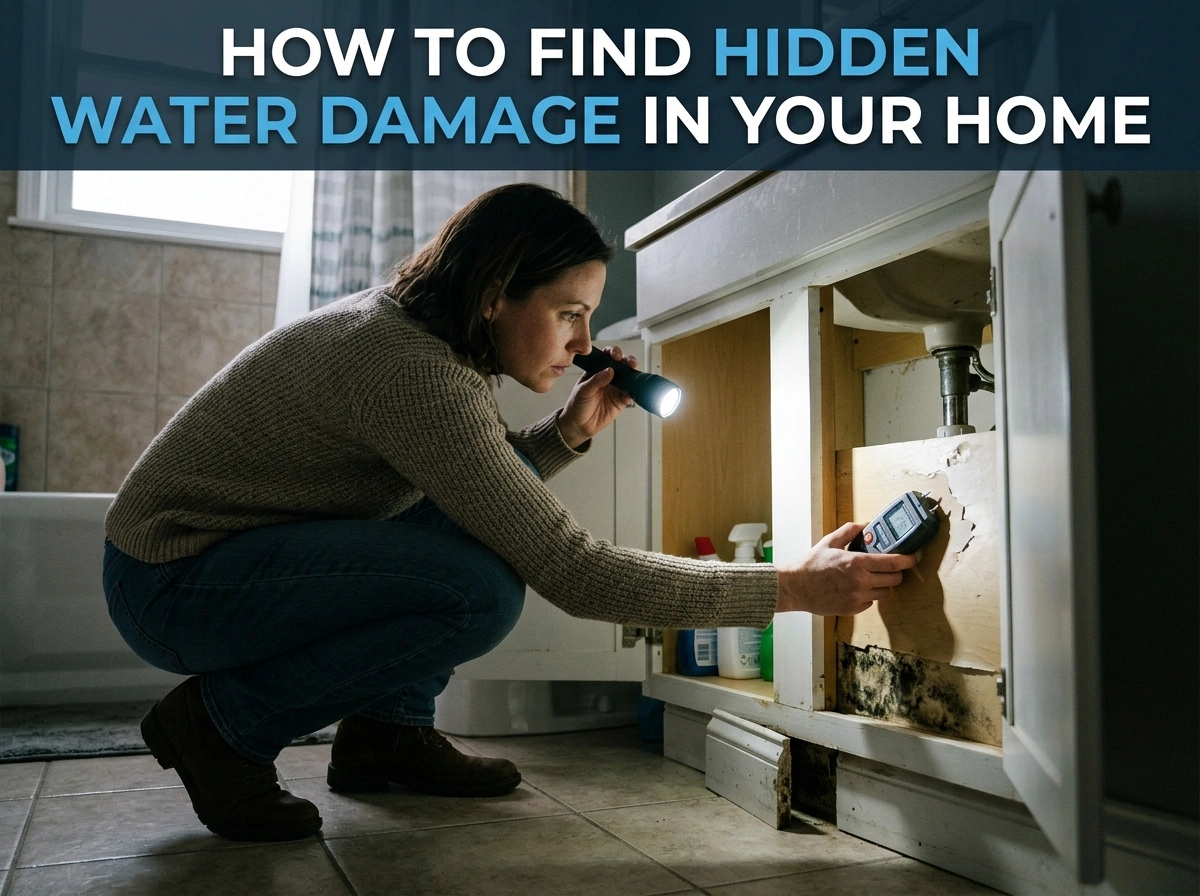
On its own, a damp patch in the carpet or a stain on the ceiling doesn’t mean sewage. Plenty of regular leaks look the same. It’s a different story when that damp spot shows up next to a sewage smell, discolored water, or a backup you already know about. Put those together, and you’re probably not looking at a clean water leak anymore.
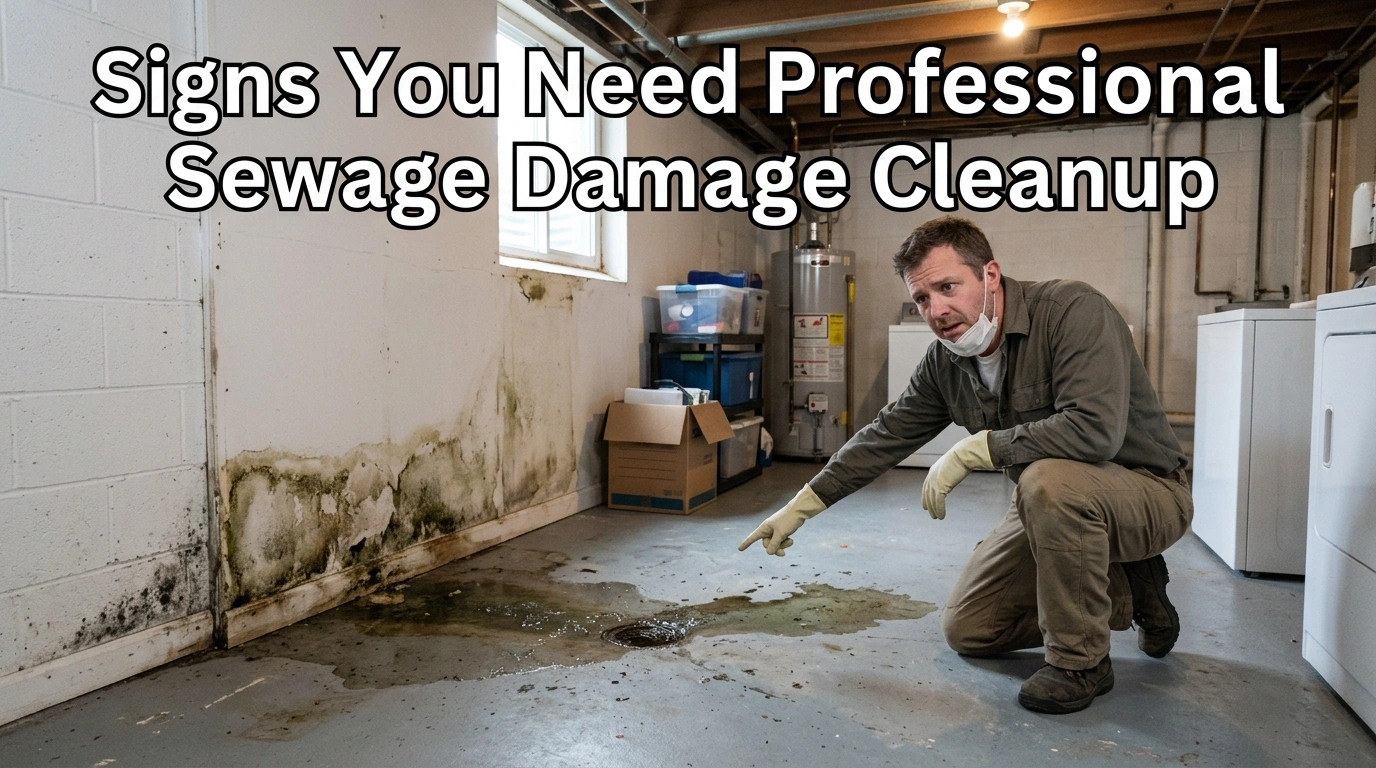
Visible Sewage, Discolored Water, or Leftover Residue
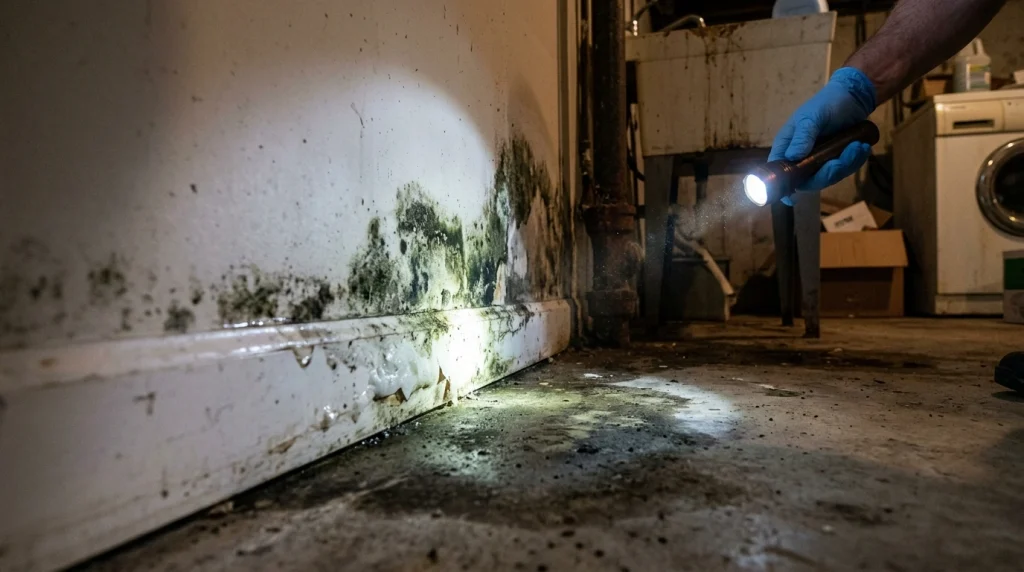
Gray or brown water in the tub. A toilet that won’t clear no matter how many times you flush it. Actual sewage on the basement floor. There’s no gray area here, no pun intended. And even once the water’s gone, if there’s a film or residue left behind on the floor or baseboards, that’s not just grime you can wipe away. It’s a sign the surface was in contact with contaminated water and still needs to be dealt with.
Why Sewage Contamination Is a Different Kind of Problem
Restoration people generally think about water in terms of how dirty it is. Clean water, like from a burst supply line under the sink, is a nuisance. It’s not great for your floors, but it’s not carrying anything dangerous. Water from a sewer backup is a different story, because it’s already been in contact with waste, and that means bacteria and other stuff you don’t want in your house.
Here’s the part that surprises people. Drywall and carpet padding soak up whatever touches them, so a wall or a section of carpet can look completely dry and clean on top while still holding contamination underneath. That’s why professional cleanup isn’t just extracting water and calling it a day, and it’s part of the reason some materials get pulled out instead of cleaned. More on that further down.
What to Do Before Help Arrives, and What Not to Do Yourself
Before even considering cleanup, a couple of things are important if you are in the middle of an active backup. Avoid having children and pets in that area. Until the blockage has been resolved, do not let water run anywhere on the same line, as you will simply be pushing even more water into the area that already has too much in it. If the water is near any outlet or plugged item, move away from the water. That’s an electrical hazard now, not a cleanup job.
As for handling the actual cleanup yourself, understand what you’re up against. Public health guidance points to rubber gloves and eye protection as the starting point for anyone working around contaminated water. Whatever’s under your kitchen sink and a dust mask from the hardware store isn’t that. It’ll cut down on some exposure, sure, but it doesn’t come close to what a trained worker is actually equipped with, and once sewage has soaked into your flooring or drywall, that gap matters a lot more than people expect.
What Happens When Cleanup Is Delayed
Wet material sitting around after a sewage backup is a good environment for bacteria, especially if it’s warm and humid in the house. That’s the real reason drying things out fast isn’t optional. Subflooring softens the longer it stays wet. Drywall near the water starts crumbling at the edges. The EPA’s guidance on water damage generally points to drying things out within 24 to 48 hours where you can, mainly to keep mold from getting a foothold, though how it plays out depends a lot on the conditions in your house.
Waiting also just gives the problem more room to spread. Contaminated water and moisture don’t stay put. The longer it sits, the more materials it reaches that weren’t part of the original mess, and that means more gets torn out and rebuilt once someone actually starts the work.
What Professional Sewage Damage Repair Involves, Step by Step
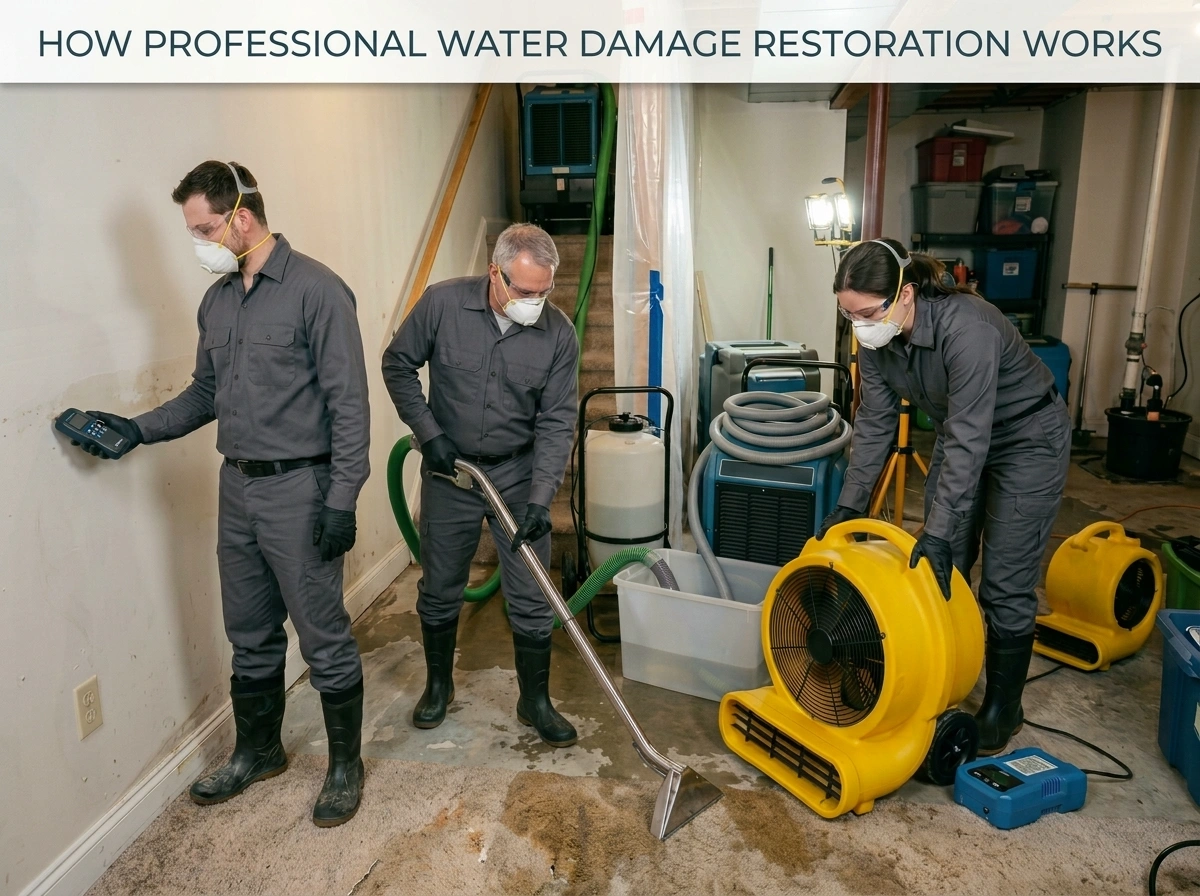
Pulling the water out is the easy part, honestly. A restoration team starts by figuring out where the contamination came from and how far it traveled, because that’s what tells them what actually needs to be sealed off, cleaned, or removed.
- Assessment and containment: Someone walks the space, figures out how far things spread, and seals off that area so the rest of the house stays clean.
- Extraction: Wastewater and any debris get pumped out with equipment made for contaminated water. It’s not the wet vac you’ve got in the garage.
- Cleaning and disinfection: Whatever can be safely cleaned gets treated with disinfectants meant for this kind of contamination, not just general household cleaner.
- Removing what can’t be saved: Certain porous materials come out entirely instead of getting cleaned. There’s more on why below.
- Drying and checking the moisture: Air movers and dehumidifiers run, and someone actually checks the moisture level with a meter before calling it done, instead of assuming a few days of fans did the trick.
- Putting it back together: Flooring, drywall, and whatever else came out get replaced so the space is usable again.
One thing worth knowing: none of this fixes whatever actually caused the backup. If it was a cracked pipe, roots, or a stubborn clog, that’s a plumber’s job, separate from the cleanup itself.
What Materials May Need to Be Removed?
Not everything has to be removed just because contaminated water reached it. Materials such as tile, sealed concrete, and some plastics usually do not absorb much water, so they can often be cleaned and dried properly.
Drywall, carpet padding, and upholstered furniture can absorb contaminated water into their fibers or structure. If sewage water has been absorbed by these materials, it can be challenging to fully clean them. Whether a material needs to be removed depends on factors including the duration of the exposure, the nature of the contamination, and whether the material can be effectively cleaned. A specialist will evaluate the affected materials and decide which can be restored and which must be removed.
Choosing a Sewage Cleanup Company You Can Rely On
Plenty of companies say they do water damage repair. Fewer of them actually handle sewage the way it is supposed to be handled. Ask straight up whether hazardous material cleanup is something they do regularly, because it takes different tools and different methods than a regular flooded basement.
Speed matters more here than with most home repairs, since the longer contaminated water sits, the more it spreads. A company that can actually show up fast, nights and weekends included, keeps the damage from growing while you’re still figuring out what happened. It’s also worth finding out if they’ll help with your insurance claim, since coverage depends on your policy and what caused the backup, and whether they work with a plumber for the actual repair, since fixing the plumbing isn’t something a cleanup team typically handles themselves.
Frequently Asked Questions
How fast does sewage damage need to be cleaned up?
As fast as you can manage it. The EPA’s guidance on water damage points to that 24- to 48-hour window for drying things out, and sewage is no exception. The longer it sits, the more it spreads.
Is sewage backup covered by homeowner’s insurance?
Depends on your policy and what caused it. Some cover it outright; some need an approval added first. Having a written assessment from a qualified cleanup professional helps a lot when you’re having that conversation with your insurer.
Can I stay in my home during sewage cleanup?
Depending on how much of the house got hit. A technician can usually tell you after they’ve looked around whether it’s contained to one area or whether it makes more sense to stay somewhere else for a bit.
What’s the difference between water damage and sewage damage cleanup?
A burst pipe mostly needs extraction and drying. Sewage needs that plus real disinfection, and depending on what got soaked and for how long, some of it might need to come out entirely rather than just getting cleaned.
Does cleanup also fix what caused the backup?
No, not by itself. Cleanup deals with the water and the materials it affected. Whatever actually caused the backup—a clog or a bad section of pipe—that’s a separate repair.
Get Help From Allied Restoration
Catching signs of sewage early is usually the difference between a manageable cleanup and a much bigger repair. Allied Restoration handles residential sewage cleanup with trained technicians and equipment designed for contaminated water and helps with the insurance side of things. If any of this is happening in your home, get help from a professional. Contact a professional to assess the issue before it escalates. Reach out to Allied Restoration for an inspection or emergency response, day or night. Call (406) 756-4357 now to get help.