You walk into the kitchen at 6 a.m. to make coffee, and your socks are wet before your brain even catches up. For a second, you just stand there, waiting for your eyes to explain what your feet already know. Then you see it. Water is pooling along the baseboard near the sink, and when you crouch down to look, the supply line under the cabinet has worked itself loose and has been dripping steadily, spreading slowly across the tile as if it has been at this for hours. Maybe it has.
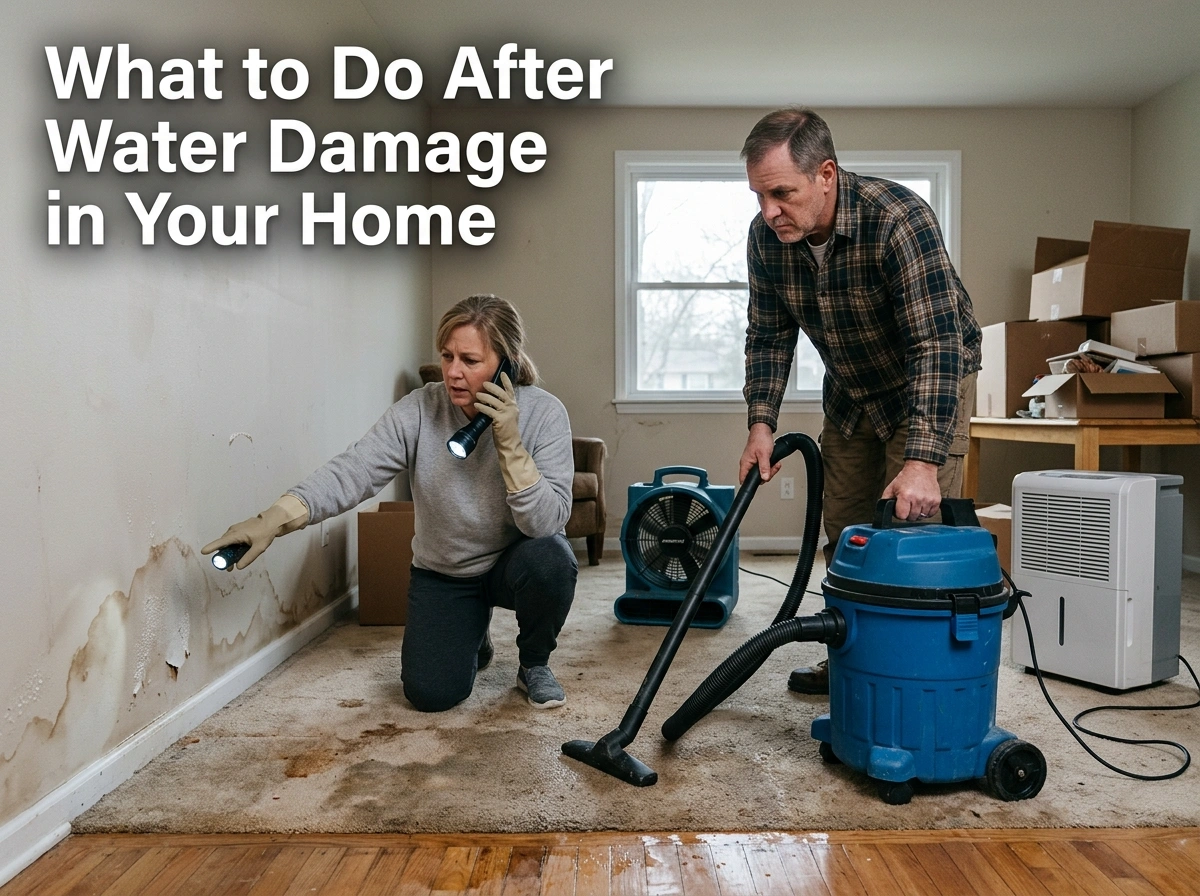
If you are reading this because water damage is already happening in your home, skip the coffee for now. Your first priority is safety, followed by stopping the water source and limiting how far the damage can spread. The right steps can help protect your home and make the cleanup easier. If the damage has already affected flooring, walls, cabinets, or other building materials, professional water damage repair may be needed to prevent the problem from getting worse. So let’s walk through what to do after water damage, in the order you should handle it.
First Steps to Take in the 10 Minutes After Water Damage
Your first impulse is going to be to grab things: photo albums, shoes, whatever is closest to the water. That instinct is wrong, or at least it’s early. Before you save a single object, find the water source and stop it if you can. A burst pipe, a failed water heater, an overflowing washing machine — whatever it is, shutting off the source can slow the damage down. Everything else is managing what has already happened.
If you can safely reach your main water shutoff, use it. If the water is anywhere near outlets, light switches, or your electrical panel, do not walk through it. Standing water and electricity are a dangerous combination, and no amount of urgency is worth that risk. Turn off power to the affected area at the breaker if you can do it from a dry location. If you would have to step into water to reach the breaker, call an electrician instead.
The One Thing Almost Everyone Gets Wrong First
Here is the part nobody tells you clearly enough. People spend their first ten minutes trying to rescue belongings instead of controlling the source. It feels productive because you are doing something with your hands, but a soaked photo album can usually be dried or restored later. An open water source cannot wait. Stop the water first. Save things second.
| Quick note: if your electrical panel is anywhere near the affected area, do not touch it with wet hands or while standing on a damp floor. Call an electrician or your utility company if you are unsure; this is one place where it genuinely is not worth guessing. |
Documenting the Damage Before You Touch Anything
Once the water is under control, and only once it’s under control, take out your phone. Photograph everything before you move a single item or start mopping up. Wide shots of the room, close-ups of wet drywall and anything that looks affected. Video works even better because it captures water depth and movement in a way photos sometimes miss.
This step matters more than people realize until they are three weeks into an insurance claim wondering why their payout seems low. Adjusters work from documentation, not from your memory of how bad it looked that morning. The homeowners who get fair settlements are usually the ones who slowed down just long enough to document the affected areas before cleanup began, even while everything in them was screaming to just start cleaning.
Water Extraction and Drying: Why Speed Beats Perfection
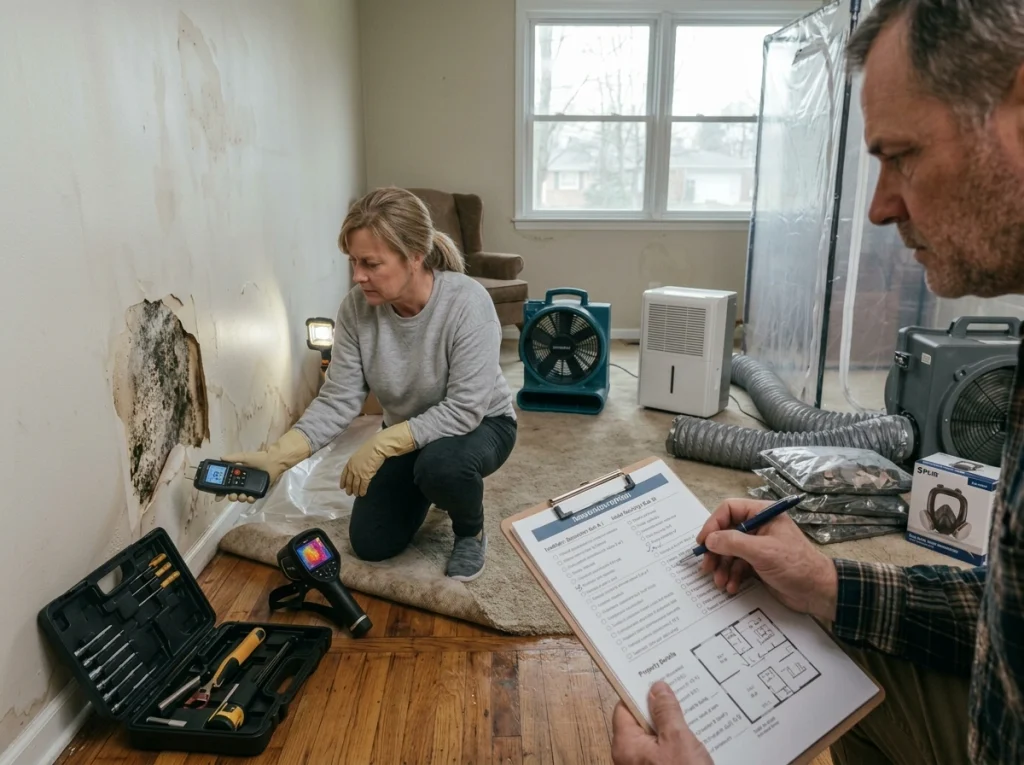
There is a clock running that most people don’t know about until someone tells them, usually too late. Mold can begin developing within 24 to 48 hours in the right conditions, and Montana homes with their mix of humidity swings and tightly sealed construction are not immune to that timeline just because the outside air feels dry.
Standing water is the obvious problem, but it is not the only one. Once visible water is gone, moisture is often still sitting inside walls, under flooring, and in structural materials where you cannot see it. This is where a lot of DIY cleanup efforts fall short. A fan and an open window will handle surface moisture. They will not pull water out of a subfloor or out of insulation behind drywall.
What Dry Actually Means, and It’s Not What Your Eyes Tell You
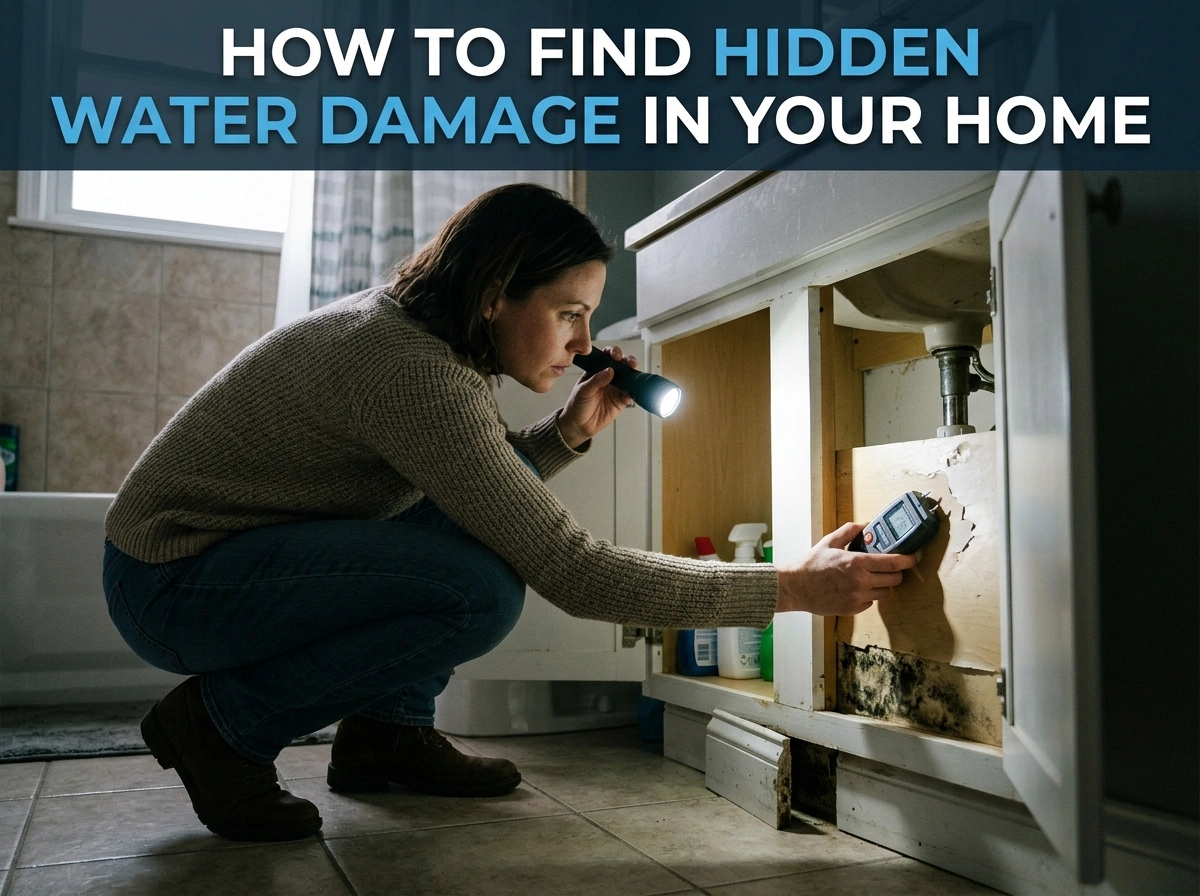
A room can look completely dry and still be holding enough moisture to grow mold within days. Professional drying involves moisture meters that measure what’s happening inside materials, not just what the surface looks like. That’s the difference between a space that feels dry to the touch and one that has actually reached safe moisture levels all the way through.
| Pro tip: if a room smells faintly musty a few days after everything looks dry, trust your nose over your eyes. That smell usually means moisture is still trapped somewhere you can’t see, and it is worth having it checked before it becomes a bigger problem. |
Structural Damage You Can’t See Yet
This is the part that catches people off guard weeks later. Wet drywall doesn’t always fail immediately. It can hold its shape for days before it starts to soften, bubble, or sag. The same goes for flooring, subfloors, and ceilings below an upstairs leak. Wood swells slowly. Ceiling drywall can hold water above it for longer than seems possible before it finally gives.
“It looks fine now” is one of the more dangerous sentences in the entire aftermath of home water damage, because fine now doesn’t mean fine in two weeks. If you noticed water intrusion in one area, it’s worth having the surrounding walls, ceilings, and flooring checked even if they look untouched, especially if the water had any real amount of time to travel before you found it.
The Insurance Conversation Nobody Prepares You For
Everyone tells you to call your insurance company, and that’s correct advice, just incomplete. What often gets left out is timing and detail. Call early, but call after you’ve documented the damage and stopped the water source, not before. Insurance companies work off the evidence you give them, and a claim backed by clear photos, a documented timeline, and a professional assessment tends to move faster and land closer to what the repair actually costs.
This is also where working with a restoration company that understands the claims process helps more than people expect. Allied 24/7 Restoration works directly with insurance providers, which means the documentation and reporting side of things gets handled by people who do this daily instead of homeowners trying to figure it out for the first time while also dealing with a wet living room.
When to Call a Professional Versus When You’re Fine on Your Own
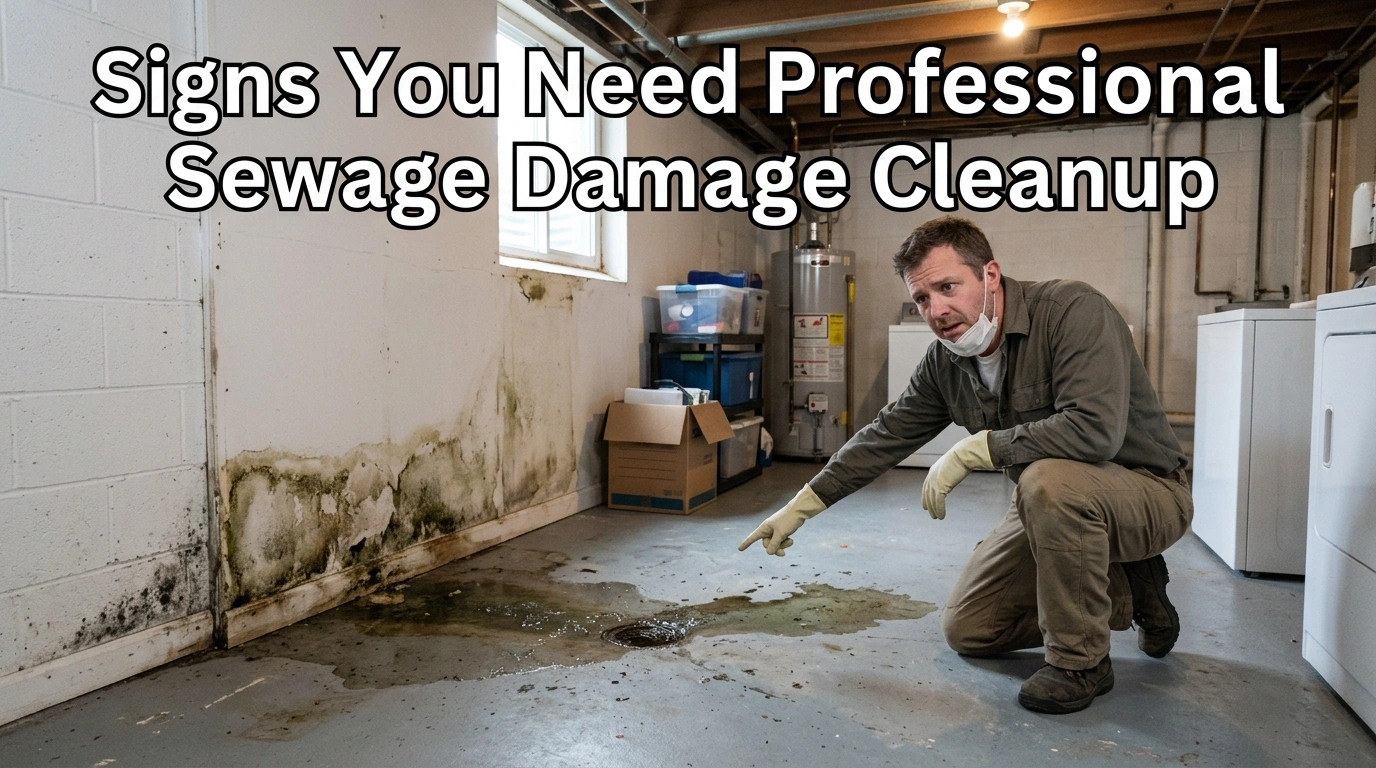
Not every water incident needs a restoration company. A small spill that you catch immediately, dry within the hour, and that never touches flooring or walls is usually something you can manage yourself. The line starts to matter once water has been sitting for more than a short while, once it’s touched drywall or flooring, or once you’re dealing with a source you couldn’t fully control, like a pipe that burst overnight or a water heater that failed while you were away.
That kitchen scene from the start of this piece happens more often than people think, and it’s usually the middle of the night or early morning when it’s discovered, which is exactly why 24/7 response exists in the first place. Someone has to answer the phone at 6am, and a lot of companies simply don’t.
What Actually Happens When You Call Us
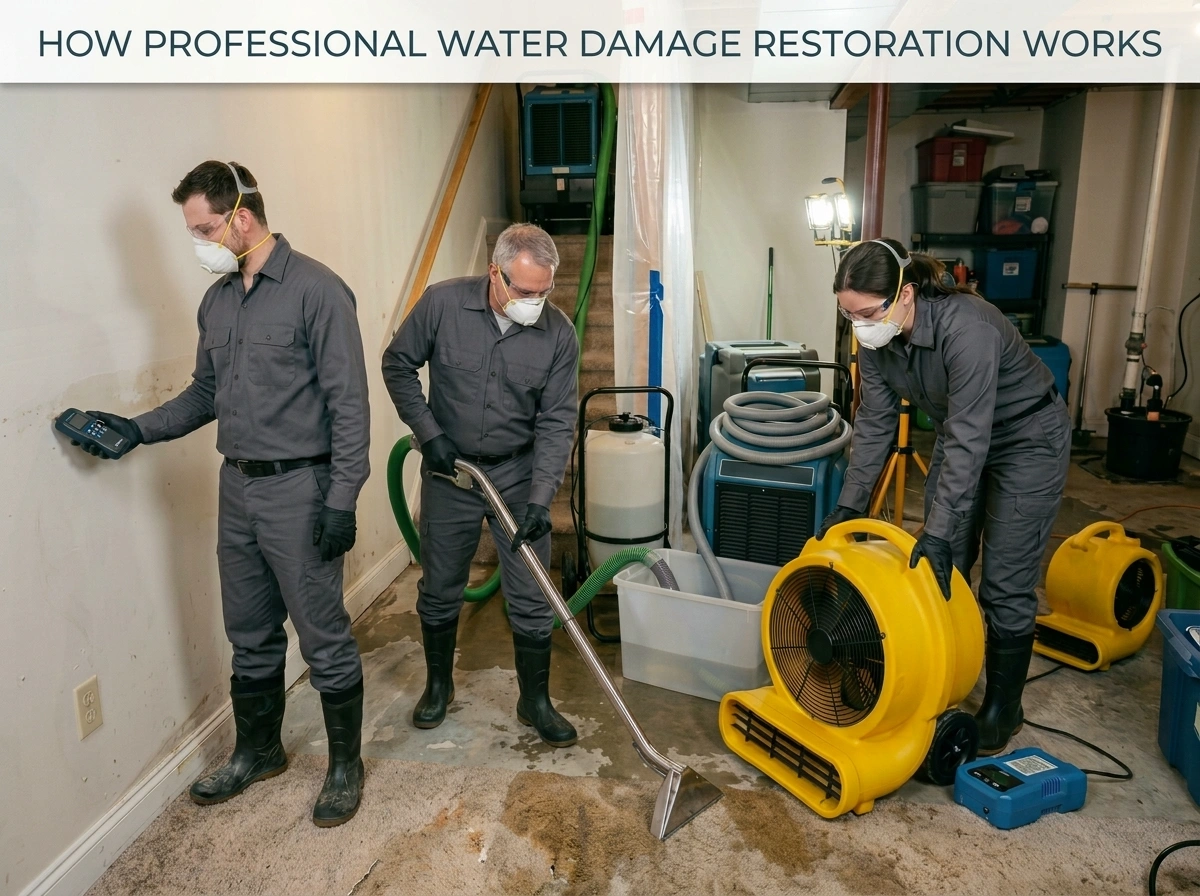
When Allied 24/7 Restoration gets a call, the first priority is getting a technician to assess the water source and affected areas as quickly as possible, because that early window is the one that determines how much of your home ends up needing repair versus just drying. From there, extraction equipment removes standing water, moisture readings are taken throughout the space, not just where it’s visibly wet, and a drying plan gets built around what the readings actually show rather than a guess.
If you’re in Kalispell or the surrounding area, whether that’s Whitefish, Columbia Falls, Bigfork, Evergreen, or one of the nearby communities, that response covers your area too. You can read more about how the water damage process works on our water damage repair page.
What Stays With You After the Water’s Gone
Here’s something that doesn’t show up in most articles about water damage. Even after everything is dry, the repairs are done, and the insurance paperwork is finally closed, you’ll probably walk past that spot in your kitchen or bathroom for a while and just look. Check the floor. Glance at the ceiling. It’s a strange, quiet kind of aftermath that nobody warns you about, and it’s completely normal. It fades eventually.
If you’re standing in it right now, the short version of everything above is this. Stop the water, document what you see, and don’t wait to get someone out to check it properly, even if it doesn’t look that bad yet. Allied 24/7 Restoration answers calls day and night at (406) 756-4357, and if you just need someone to walk you through what you’re looking at before you decide anything, that conversation costs you nothing.
FAQs
How long does it take for water to cause damage?
Quicker than you can imagine. When materials are wet, drywall begins to absorb water within hours, and mold can begin to grow within 24 to 48 hours after materials become wet.
Is water damage really covered by insurance?
This is subject to your policy and the cause of the damage. Sudden events, like a pipe bursting, may be covered, while other forms of water damage may not be. Photographs taken early can also be useful to document the damage for your claim.
What should the first thing be after water damage?
Turn off the water in a safe manner. Avoid getting near any standing water near appliances or electrical equipment. After it’s deemed safe, photograph and record the damage before cleaning up.
How quickly can everyone get out of this situation?
We’re available 24 hours a day and service Kalispell and the surrounding areas. Water damage can occur anytime, and we are available 24 hours to respond.