

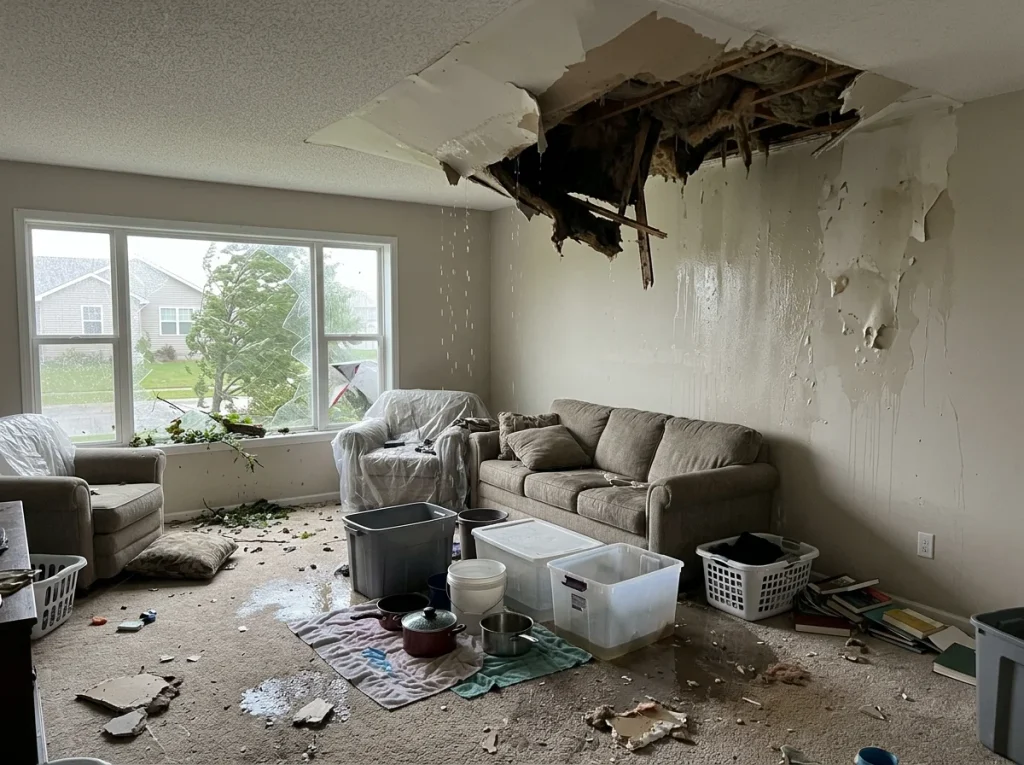
Yes, wind damage can cause water damage inside a home. The connection is usually simple: wind damages part of the exterior, and rain gets through the weakened area. A large hole in the roof is not necessary for this to happen. Missing shingles, loose flashing, or a broken window provide enough of an opening for water to enter.
Sometimes the first sign is not visible outside. After a storm, a homeowner might notice a new stain on the ceiling, damp drywall, or moisture around a window. These signs are easy to overlook if the weather has already cleared. Understanding how wind damage allows water inside helps you know what to look for and what steps to take next.
How Can Wind Damage Let Water Into Your Home?
The wind does not have to tear apart an entire roof to create a path for rain. Damage to one part of the exterior may be enough to let water through. Once rain gets behind the roof covering, siding, or another protective surface, it may travel through the structure before becoming visible inside the home.
Roof Damage
Roof damage is one of the more common ways a windstorm leads to water intrusion. Strong gusts may lift or remove shingles and expose the layers underneath. Rainwater can then reach areas that are normally protected. Even a small damaged section deserves attention because water does not always appear inside during the first rainfall.
Flashing is another area that matters. It is installed around places such as chimneys, roof edges, and other roof penetrations to help direct water away from vulnerable areas. Strong winds can loosen or bend flashing, creating space for rain to get beneath it. A roof leak might start as a small amount of moisture and become more noticeable during a later storm.
Other Exterior Openings
Water does not have to come through the roof. Wind-damaged siding, broken windows, and damaged exterior seals also create entry points for rain. Siding damage is particularly easy to miss because a cracked or displaced section might not look serious from the ground. Behind the siding, however, wind-driven rain may reach the wall assembly.
A broken window is usually easier to notice, but the glass itself is not the only concern. Damage around the frame, sill, or seal may allow water to enter even when the window still appears intact. The same applies to loose trim around doors and other exterior openings. Small gaps may become more noticeable when rain is being pushed against the house by strong winds.
What Signs Point to Water Damage After a Windstorm?
The first clue is often something that was not there before the storm. A fresh ceiling stain, damp patch on a wall, peeling paint, or moisture around a window deserves attention. The fact that the rain has stopped does not mean the affected materials are dry. Water may remain behind surfaces where it is difficult to see.
Some signs are less obvious than a visible water stain. A room might develop a musty smell, or drywall near an exterior wall might feel softer than usual. Insulation in an attic could also become damp without water reaching the living space below. These changes are worth checking when they appear soon after a windstorm.
Watch for:
- New stains on ceilings or walls
- Damp or soft drywall
- Wet insulation
- Moisture around windows or exterior walls
- Peeling paint or damaged finishes
- Signs of a roof leak
- A new musty smell
| Pro Tip: Water may travel before it leaves a visible stain, so the stain may not show the original entry point. Water can travel along roofing materials or inside a wall before it becomes visible. That is why treating only the visible stain does not always address the full extent of the moisture problem. |
What Happens When Wind-Related Water Damage Is Left Untreated?
A leak does not stop being a problem simply because the visible water is gone. Materials that became wet during the storm still need to dry properly. Drywall may swell or soften, insulation may hold moisture, and wood framing may remain damp even when the surface feels dry. Hidden moisture is especially difficult to identify without checking the affected area.
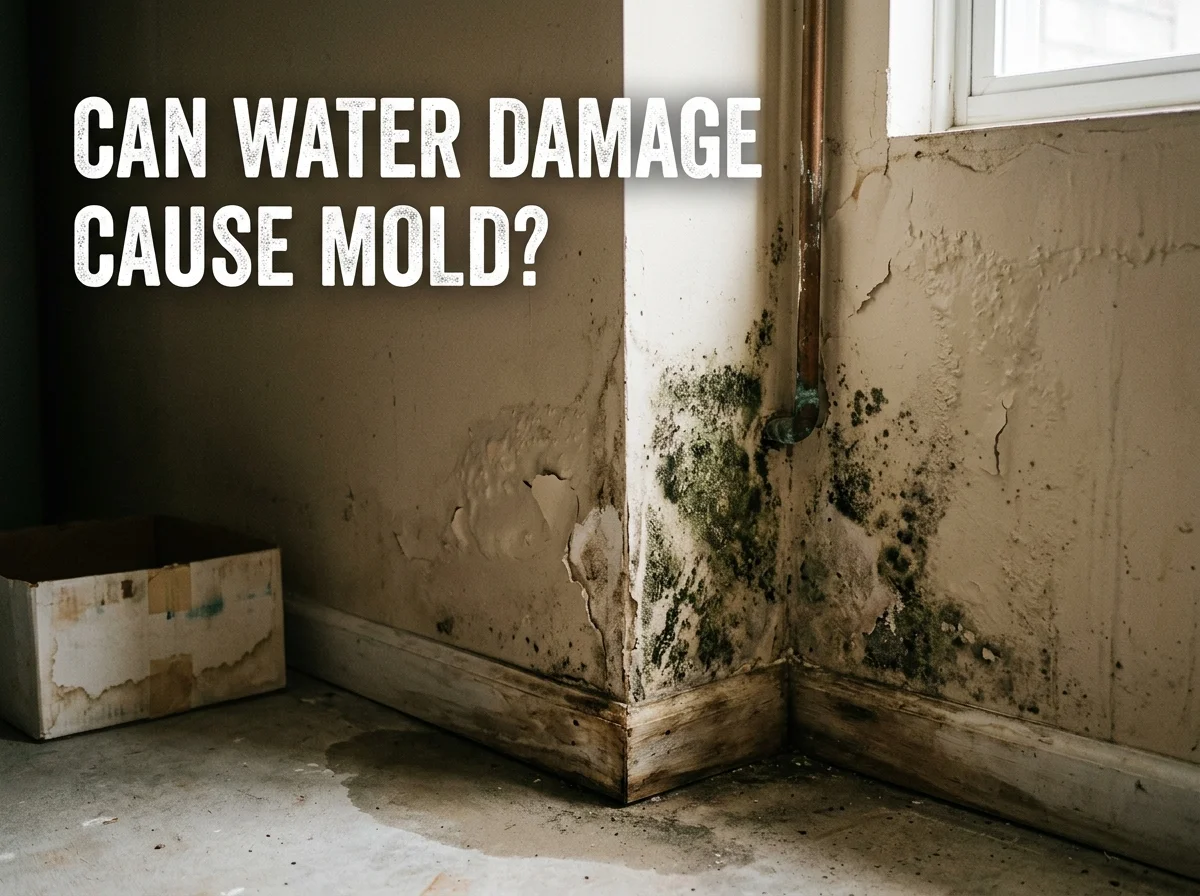
Water may also travel away from the original entry point and affect flooring, paint, trim, or other finishes. Moisture trapped inside walls, ceilings, or other enclosed spaces is harder to notice and address. Damp conditions may also create an environment that supports mold growth. The longer moisture remains hidden, the more difficult it becomes to determine what has actually dried.
Which Parts of a Wind-Damaged Home Should Be Checked for Moisture?
The area that looks wet is not always the only area that needs attention. Water entering through a roof opening can travel along framing or insulation before reaching the ceiling. Water that gets through a window leak may travel down into the wall beneath the frame. Damaged siding may affect the wall cavity even when the drywall inside still looks completely normal.
Depending on where the exterior damage occurred, areas that need to be checked include:
- Attic and roof areas
- Ceilings and upper walls
- Insulation
- Drywall near the suspected entry point
- Areas around damaged windows or siding
- Flooring below an affected wall or ceiling
Moisture meters are often used during restoration work to identify damp materials that are not obviously wet. That matters because a surface that feels dry does not always mean the material underneath has dried. Homeowners should also avoid climbing onto a damaged roof or entering an unsafe attic simply to investigate. Storm debris and unstable materials may create additional hazards.
What Should You Do After Wind Damage Lets Water Inside?
The first priority is safety. After dealing with any immediate hazards, take steps to protect your belongings, document the damage, and have the affected areas inspected. Getting rid of the visible water is only the beginning. It is also to prevent further exposure and determine whether moisture has reached materials that need professional drying.
Make the Area Safe First
Water near outlets, light fixtures, and appliances needs to be taken seriously. Stay out of wet areas when an electrical hazard is possible. Never walk through standing water to reach an electrical panel. If the panel is in a completely dry and safe location, follow appropriate electrical safety procedures. Otherwise, leave the area and contact a qualified professional.
Protect Belongings and Document the Damage
If the room is safe to enter, move furniture and other belongings away from the wet area. A bucket under an active drip may help protect the floor, provided you do not have to enter an unsafe area to place it. Avoid climbing onto the roof to find the source, especially when shingles or other materials are wet or damaged.
Take photographs before cleanup begins when it is safe to do so. Photograph exterior damage, ceiling stains, wet walls, damaged windows, roofing problems, and affected belongings. These pictures provide a useful record when discussing the loss with your insurance company. Keeping a simple record of what happened and when you noticed the damage may also help during the restoration process.
Arrange an Inspection and Drying
A stopped leak does not necessarily mean the inside of the house is dry. If water reached drywall, insulation, or other building materials, those areas need to be checked for remaining moisture. Drying and dehumidification may be needed when materials have absorbed water, particularly when moisture has reached areas that are not easy to see.
The exterior opening also needs to be addressed so additional rain does not enter while the interior is being dried. Fixing the outside problem without dealing with moisture inside leaves part of the damage unresolved. Likewise, drying an interior stain does not solve an exterior opening that continues to allow water into the home.
When Should You Call a Professional Restoration Company?
A small amount of water on an exposed surface is different from water that has entered a ceiling, wall, or flooring system. Professional help becomes more important when the source is unclear, the affected area is extensive, or moisture may have moved into areas that are difficult to inspect. It is also appropriate when storm damage makes the exterior unsafe to access.
Wind damage restoration involves more than cleaning up a visible stain. The likely source of the water needs to be identified, affected materials need to be assessed, and remaining moisture needs to be addressed. For homeowners looking for wind damage restoration in Kalispell MT, a restoration company should explain what was found, where moisture is present, and what drying or cleanup work is needed.
How Are Wind and Water Damage Addressed Together?
Wind and water damage are connected, but they are not exactly the same problem. Wind may damage the roof, siding, or windows first. Rain then enters through the damaged area and creates interior water damage. By the time a homeowner notices a ceiling stain or damp wall, both the exterior opening and the resulting moisture need attention.
Fixing the damaged exterior does not remove water that has already entered the home. On the other hand, drying an interior ceiling does not solve an exterior problem that is still allowing rain inside. A complete response looks at where the water entered, which materials were affected, and whether those materials have dried properly.
Frequently Asked Questions
How does wind damage cause a roof leak?
Wind may lift or remove shingles or disturb flashing around vulnerable roof areas. Once the protective surface is compromised, rain can reach the layers below. A leak may appear during the same storm or become noticeable later when additional rainfall reaches the damaged section of the roof.
What should I look for inside my home after a windstorm?
Look for new ceiling or wall stains, drywall, peeling paint, or other changes that appeared after the storm. A musty smell may also deserve attention, especially when it is new. Not all moisture produces an obvious puddle or visible leak.
Can water enter through damaged siding?
Yes. Loose, cracked, or displaced siding may allow wind-driven rain behind the exterior covering. Moisture can then reach the wall assembly without immediately producing a visible stain indoors. Damage around nearby trim and exterior seals should also be checked when water intrusion is suspected.
What should I do if I find water after a windstorm?
Stay away from wet areas where electricity may be involved, and never walk through standing water to reach an electrical panel. If the area is safe, move belongings away from the affected space and photograph the damage.
Does wind-related water damage need professional restoration?
Not every small leak requires extensive restoration. Professional assessment becomes more important when water has reached walls, insulation, flooring, or other materials that may hold hidden moisture. It is also worthwhile when the source is difficult to identify, or the storm has left the exterior too dangerous to inspect yourself.
What Should You Do Next If Wind Damage Leads to Water Intrusion?
Wind damage may start the problem, but rain entering through that damage is what brings water into the home. A damaged roof, section of siding, flashing, or window needs attention, along with any moisture that has already reached the interior. Addressing both parts of the problem helps prevent a manageable leak from becoming a larger restoration issue.
Allied 24/7 Restoration services homeowners in Kalispell, MT, with restoration needs following storm and water damage. If you discover a new ceiling leak or another sign of water intrusion after a windstorm, contact Allied 24/7 Restoration to have the affected area assessed. A proper assessment helps determine where the moisture is located and what cleanup is needed.